
Reviewed · MOUNT KENYA TREKS
4 Days Mount Kenya
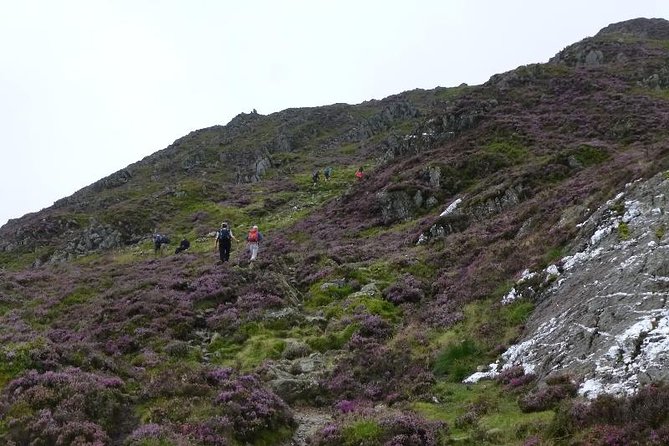
Mount Kenya’s finest scenery arrives on foot, and this four-day Chogoria-to-Sirimon trek gives you a strong sample of it. You walk past Nithi Falls, Mugi Hills, the Gorges Valley, Lake Michaelson, giant groundsels, and lobelia before reaching Point Lenana for sunrise. It is a real high-altitude trek, not a gentle park outing.
I like the smart route design: Chogoria provides the dramatic approach, while Sirimon offers a more gradual descent through Mackinder’s Valley. I also like that private transport, park fees, and all listed meals are included, which makes the $990 price easier to judge.
The main concern is the pace. Day three begins at 3 a.m. and can involve 11 to 12 hours of walking, while day two lasts about nine hours. You need solid fitness, proper mountain gear, and a willingness to accept simple overnight conditions.
Key points before you book
- Point Lenana at sunrise: The summit morning begins around 3 a.m., with the reward of sunrise from Mount Kenya’s trekking peak.
- Chogoria’s standout views: Expect Nithi Falls, clear rivers and springs, Mugi Hills, Gorges Valley, and Lake Michaelson.
- A private four-day trip: Only your group takes part, with pickup and private transport included.
- A long summit day: Day three includes the summit, breakfast at Shimpton’s Camp, and a lengthy descent to Old Moses.
- Meals and park costs are covered: Breakfast, lunch, dinner, fees, and taxes are included, but mountain gear and hotel accommodation are not.
- Guide experience matters: Duncan is named in the trip feedback, with particular praise for organization, food, pacing, and summit planning.
Why the Chogoria to Sirimon route works
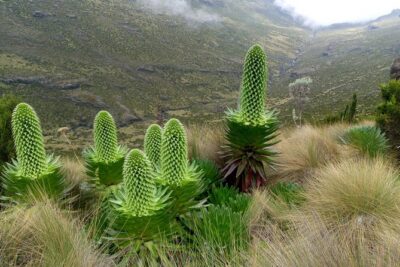
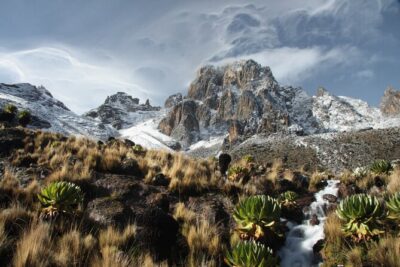
The route combines two of Mount Kenya’s most appealing sides. You climb by Chogoria, known for waterfalls, rivers, open mountain views, and the Mugi Hills, then descend by Sirimon, where giant groundsels and lobelia add a distinctly high-mountain feel.
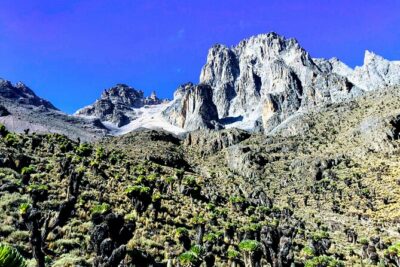
That route choice matters. A mountain trip can be tiring without offering much visual change, but this one has a series of clear markers. The lower bamboo forest gives way to open country. Later, you reach the Gorges Valley and the dramatic view toward the peaks. On the descent, the plant life becomes part of the show.
The trip does not take you to Batian or Nelion, Mount Kenya’s technical summits. Its high point is Point Lenana, the trekking summit, reached before sunrise on day three. That is important when setting expectations. You are signing up for a serious hiking route with a rewarding summit, not a technical climbing expedition.
Because this is a private activity, your group is not tied to strangers’ pace. That gives the guide more room to manage walking speed, food breaks, water refills, and the difficult summit morning. It does not make the route easy, but it can make a demanding schedule more manageable.
More Mount Kenya treks:
- Climbing Mount Kenya 5 Days Via Chogoria Route
★ 5.0 · 44 reviews - Conquer Mt Kenya in 4 Days Sirimon to Chogoria Route Adventure
★ 5.0 · 16 reviews - 4-Day Mount Kenya Trekking with Pick Up
★ 5.0 · 14 reviews
Day one: Nairobi to the bamboo forest
The day begins at 7:30 a.m. with pickup in Nairobi. You drive toward Chogoria town, where lunch is provided before a four-wheel-drive vehicle carries you farther up the mountain.
That vehicle transfer is one of the practical strengths of the itinerary. It cuts out part of the lower approach, leaving you with about three hours of walking to the Mount Kenya Bandas. You begin through bamboo forest, a cooler and more sheltered start than walking every lower section from the road.
The first day is short by mountain standards, but do not treat it as a throwaway day. It gets you onto the route without using your energy too early. After the drive and hike, dinner and an overnight stay at the Bandas give you a base before the longer second day.
The supplied details do not specify the exact room setup or bedding, so you should confirm what is provided and bring the mountain gear you need. Hotel accommodation in Nairobi is not included, and mountain equipment is also excluded from the price.
Day two: Mugi Hills, Gorges Valley, and Minto’s Camp
Day two starts early. You need to reach Minto’s Camp before dark, but the plan also allows time for the route’s best scenery. The walking time is about nine hours, making this the day when a steady pace matters most.
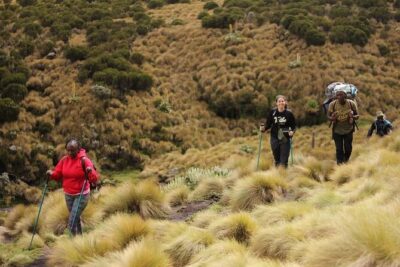
The route includes the Giant Billiards Table, Mugi Hills, and the Gorges Valley. You also get views toward Mount Kenya’s higher peaks and the broad plains below. These names are not just decoration on a program. They give you natural points to pause, take photographs, drink, and check how you are handling the altitude.
A picnic lunch is provided, with stops to drink and refill your water bottles. That sounds simple, but it is central to the day. You should not wait until you feel thirsty or worn out before drinking. The long hours and rising elevation make a calm pace more useful than racing ahead.
Minto’s Camp is the overnight point. Dinner follows the walk, and you sleep at the campsite before the pre-dawn summit attempt. The setting is a major part of the experience, but campsite comfort is likely to be basic. The information provided does not promise private rooms, showers, or other comforts, so ask the operator if those details matter to you.
Day three: a 3 a.m. start for Point Lenana
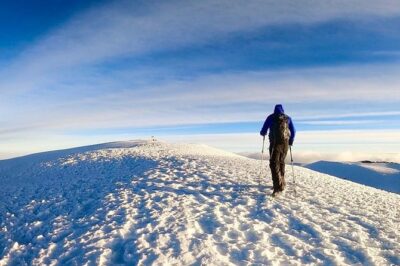
This is the hardest and most rewarding day. You leave around 3 a.m. so you can reach Point Lenana for sunrise. The early start is not a gimmick. It is built around the timing of the summit view, and it also leaves enough daylight for the long descent.
The final approach is likely to feel demanding because you are walking in darkness and at high altitude. Your headlamp, warm layers, gloves, and properly broken-in boots matter here. Mountain gear is not included, so this is one area where cutting corners can spoil the day.
Reaching Point Lenana at sunrise is the trip’s central moment. You get the satisfaction of a summit reached under your own power, followed by changing light over Mount Kenya and the plains below. The exact visibility depends on weather, which is why the operator reserves the option to cancel or reschedule the activity in poor conditions.
After the summit, you descend to Shimpton’s Camp for breakfast. That meal comes after the most demanding part of the morning, so it should be a welcome pause before the route continues toward Old Moses.
The descent follows the Sirimon route through Mackinder’s Valley. The day lasts around 11 to 12 hours of walking, so you should understand the full commitment before booking. The route is described as gradual and exciting, with giant groundsels and lobelia along the way, but a gradual descent is not the same as an easy day.
You spend the night at Old Moses. By then, tired legs are normal. The smart approach is to protect your energy from the start, keep your pack organized, and use every food and water stop properly.
More 4-Day Safaris in Nairobi:
- Private 4 Day Mount Kenya Treks
★ 5.0 · 4 reviews - 4 Day Mount Kenya Trek Up Chogoria Down Sirimon
★ 5.0 · 4 reviews - 4 Days Kenya Safari
★ 5.0 · 3 reviews - 4 Days Safari Lake Nakuru NP Naivasha and Masai Mara
★ 5.0 · 132 reviews
Day four: the gentle walk to Sirimon Gate
After breakfast, you make the final descent to Sirimon Gate. This takes about two hours, or up to three at a slower pace. A vehicle meets you there for the return journey to Nairobi.
This last morning gives you a useful buffer after the summit day. You are still walking, but the schedule is far less punishing than day three. The vehicle transfer also avoids making you walk the entire way back to Nairobi, keeping the four-day format practical.
The return drive can be tiring, especially after several long days on foot. Still, finishing at Sirimon Gate rather than adding another mountain night makes sense for people working with limited holiday time.
What the $990 includes, and what it does not
At $990, this is not a budget day hike. It is a private, four-day mountain trip with transport from Nairobi, park-related costs, food, guiding, and overnight mountain arrangements included in the stated package.
The listed inclusions are:
- All fees and taxes
- Private transportation
- Four lunches
- Four breakfasts
- Four dinners
The value depends on what you would otherwise need to arrange yourself. Private transport is useful because the route starts at Chogoria and ends at Sirimon Gate. Those are different access points, so arranging your own transfers could be awkward and time-consuming.
Meals also remove a sizeable part of the planning. You do not need to organize four days of breakfast, lunch, and dinner on the mountain. The trip feedback gives particular praise to the food and to the way the team kept people supplied with food and water.
You still need to budget for mountain gear, soft drinks or alcohol, and hotel accommodation. The gear exclusion is the biggest practical point. The supplied information does not say that boots, waterproofs, sleeping bags, warm clothing, or other equipment are available for rent, so ask Equatorial Star Adventure & Safaris before you arrive.
The package is private, but the details do not state a maximum group size. If you care about pack support, confirm exactly what is included. Some trip feedback refers positively to porters, but porter services are not separately listed among the inclusions provided here.
The guide and the value of a private group
Duncan is the guide named in the available trip feedback. His role appears especially important on the summit day, when route timing, food, water, and pacing all need attention. Other comments also praise the wider Equatorial Star team for being friendly, flexible, and professional.
That matters because Mount Kenya is not simply a matter of walking a marked path. You have to start the summit approach at the right time, reach Point Lenana near sunrise, descend safely, and still cover a long distance afterward. A guide who can adjust the pace and plan the day is worth paying for.
The private format should suit you if you want your own group to share the experience. It can also help if members of your party walk at a similar speed and have a common goal. On the other hand, a private trip does not remove the physical demands. You still need to be ready for long days, cold conditions, and altitude.
The activity requires a moderate level of physical fitness. Given the stated nine-hour second day and 11 to 12-hour third day, I would treat that requirement seriously rather than reading it as a casual recommendation.
Weather, altitude, and preparation
The operator requires good weather for the trip to run. If poor weather causes cancellation, you are offered a different date or a full refund. That is useful protection, but it does not guarantee clear views on the day you hike.
Pack for changing conditions. You need proper mountain clothing, reliable footwear, protection from rain and cold, and a way to carry water. The route includes exposed viewpoints and a pre-dawn summit walk, so light clothing and city shoes are not suitable.
Use the included water stops wisely. The plan specifically allows time to drink and refill bottles, and the team has been praised for keeping food and water available. Carry enough capacity for the route, then confirm the exact water arrangements with the operator.
Start training before you arrive. Long uphill walks, regular weekend hikes, and time on uneven ground are more useful preparation than a single burst of gym exercise. The difficult part is not only climbing. Day three asks you to descend for many hours after the summit, when tired knees and feet can become a problem.
You should also plan for the 3 a.m. start. Eat and rest properly at Minto’s Camp, keep your summit clothing ready, and avoid burying essential items at the bottom of your pack.
Who will enjoy this trek most
I would recommend this trip to you if you want Mount Kenya’s major trekking scenery in four days and have limited time in Kenya. The route gives you a waterfall, forest, open mountain views, a summit sunrise, and a different descent route without requiring a longer expedition.
It suits an active private group that values organization and included transport. It is also a good match if you want a guide to handle the route while you focus on walking and scenery.
I would be cautious if you dislike early starts, basic campsites, or long walking days. The summit morning is not optional in spirit, since the itinerary is built around sunrise at Point Lenana. If you need a relaxed mountain holiday, this schedule is too compressed.
The four-day format is already demanding. A separate trip comment describes a three-day Lenana climb as a push, which supports the practical point here: do not shorten this plan unless you understand what you are giving up in sleep, pacing, and recovery.
Booking details that matter
Pickup is offered from Nairobi, and the stated start time is 7:30 a.m. The experience uses a mobile ticket and confirmation is provided at booking. It is also listed as being near public transportation, though private pickup is the more useful option for this route.
You can cancel for a full refund if you do so at least three full days before the local start time. Cancellations or changes within three days are not refunded or accepted under the stated terms.
The experience provider is Equatorial Star Adventure & Safaris. Before paying, I would confirm the exact pickup point, sleeping arrangements, equipment options, guide assignment, and porter arrangements. Those questions do not change the route, but they can make a major difference to comfort and packing.
Should you book the four-day Mount Kenya trek?
Book it if you want a serious but compact Mount Kenya adventure, especially one that reaches Point Lenana and uses Chogoria for the ascent and Sirimon for the descent. The scenery is the main reason to choose it, while the private transport, included meals, and guide support make the $990 price more defensible.
Do not book it simply because four days sounds short. Day two is long, and day three is tougher. If you arrive fit, bring suitable mountain gear, and accept simple overnight conditions, this route offers an unusually full Mount Kenya experience in limited time.
FAQ
Where does the Mount Kenya trek start?
The trip starts in Nairobi, with pickup offered at a stated start time of 7:30 a.m.
How long is the experience?
The trek lasts approximately four days.
Which routes are used?
The itinerary climbs Mount Kenya by the Chogoria route and descends by the Sirimon route.
Does the trek reach Point Lenana?
Yes. The schedule includes a pre-dawn start on day three to reach Point Lenana for sunrise.
Are meals included?
Yes. Four breakfasts, four lunches, and four dinners are listed as included.
Is transportation included?
Yes. Private transportation is included, including the transfer from Nairobi toward Chogoria and the return from Sirimon Gate to Nairobi.
Is mountain gear included?
No. Mountain gear is not included. Soft drinks, alcohol, and hotel accommodation are also excluded.
Just added around Nairobi
- Visit kibera Slum the chocolate city★ 4.8 · 3 reviews
- Day Tour to Nairobi national park, Elephants, and Giraffe Center★ 3.5 · 8 reviews
- Explore local Market matatu ride & Make Kenyan Cuisines with a home cook★ 5.0 · 8 reviews
- Kibera Slum Tour with a Local★ 5.0 · 15 reviews
- Urban Forest Tour in Nairobi★ 5.0 · 7 reviews
- Vegans special safari★ 4.5 · 4 reviews
- Private Mini Safari Tour in Nairobi★ 5.0 · 6 reviews
- Private Kenyan Cooking Class in Nairobi with a Local★ 5.0 · 3 reviews
Mount Kenya Treks, compared.
4 Days Mt Kenya Climb, Chogoria Route up and out Sirimon route
Read our review →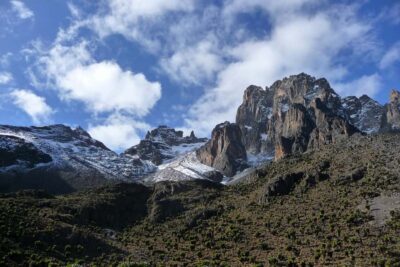
5 Days Mount Kenya Climbing Via Chogoria Sirimone Route
Read our review →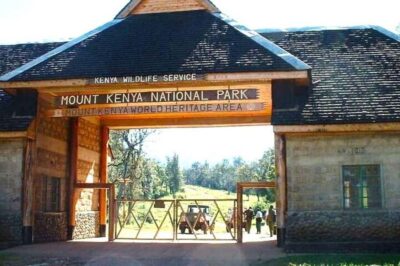
Browse the lists this tour appears in