
Reviewed · CYCLING TOURS
Diani Beach: Village tour on a bike with hotel pick-up
Diani’s best cultural moments happen away from the resort strip. This four-hour bike tour takes you into local streets, a market, a public school, a village home, mangrove areas and a traditional herbalist. You pedal slowly enough to notice daily life, with guides such as Hamisi, Justino and Herbert helping you along the way.
I like the close-up access to ordinary places, especially the school visit and time with a local family. I also like the small-group feel reported by recent participants, with three guides accompanying a group of seven and two guides looking after a party of two. The main consideration is that this is a real bike ride, not a gentle vehicle tour: roads can be hilly and bumpy, and donations may be requested at several stops, though they are optional.
Key points before you book
- A four-hour ride beyond the beach resorts: You see Ukunda and nearby village areas by bicycle, not through a car window.
- A school visit with a useful purpose: School supplies are more helpful than sweets, according to practical advice from the experience.
- Real local stops: Expect a market, village home, coconut climbing, cashew preparation and local cooking.
- A traditional herbalist visit: The herbalist explains local healing methods and practices.
- Guided riding with safety support: Bikes, safety gear, bottled water and hotel transfers are included.
- Some physical effort is required: The route can be uneven and hilly, so comfortable clothing and shoes matter.
Why cycling reveals a different side of Diani
Diani is known for its long beach, hotels and water activities. This tour points your handlebars inland, where the pace changes and the scenery becomes more personal. You pass through local streets, market areas and village paths, stopping often instead of rushing from one attraction to the next.
That slower speed matters. From a vehicle, you may see a market or school and move on. By bike, you can stop for photographs, walk through the market and ask your guide how people use the places you are seeing. You are not simply collecting sights. You are getting a basic look at how people shop, study, cook and work in the Diani area.
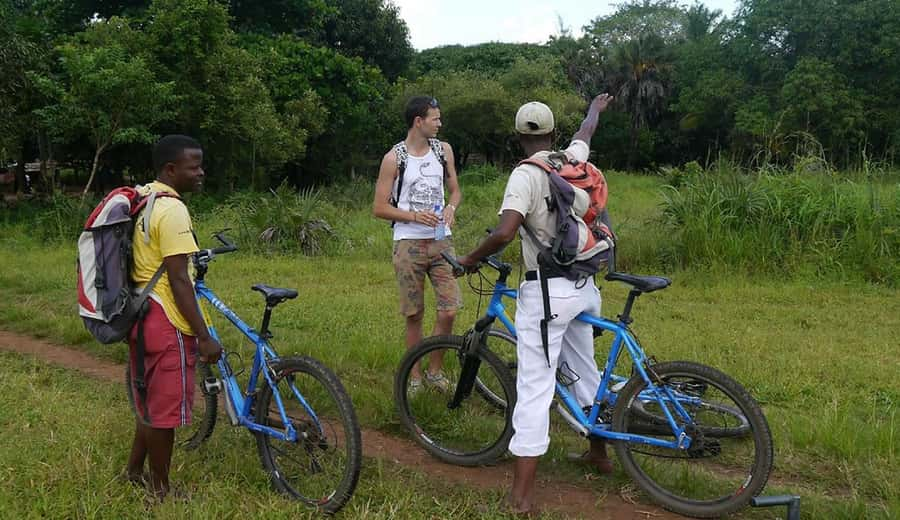
The route is described as safe for cycling, with guides riding alongside you. Still, safe does not mean effortless. The roads are sometimes uneven, and some sections are hilly. You should be comfortable balancing on a bicycle and handling a four-hour outing with stops.
The tour costs $64 per person. That is a fair price if you value hotel transport, a private bike, safety equipment, bottled water, guiding and access to several community stops in one morning or afternoon. It is less appealing if you only want a short recreational ride beside the beach.
More Bike Tours in Diani Beach:
- Day Trip: Hell’s Gate Bike Ride & Lake Naivasha Boat Ride
★ 4.4 · 251 reviews - Hell’s Gate National Park Private Bike Tour from Nairobi
★ 5.0 · 192 reviews - Half-Day Scenic Bike Tour
★ 5.0 · 75 reviews
Starting at Diani Bazaar with a safety briefing
Pickup is provided from any accommodation in Diani. You should wait in the hotel lobby 10 minutes before the arranged time and tell your concierge that a pickup is coming. The operator communicates with you to arrange the details, so keep your phone available before the tour.
The first listed stop is Diani Bazaar, where you receive a safety briefing of about 20 minutes. This is useful rather than wasted time. You can get comfortable with the bike, hear how the ride will work and ask about the road conditions before setting off.
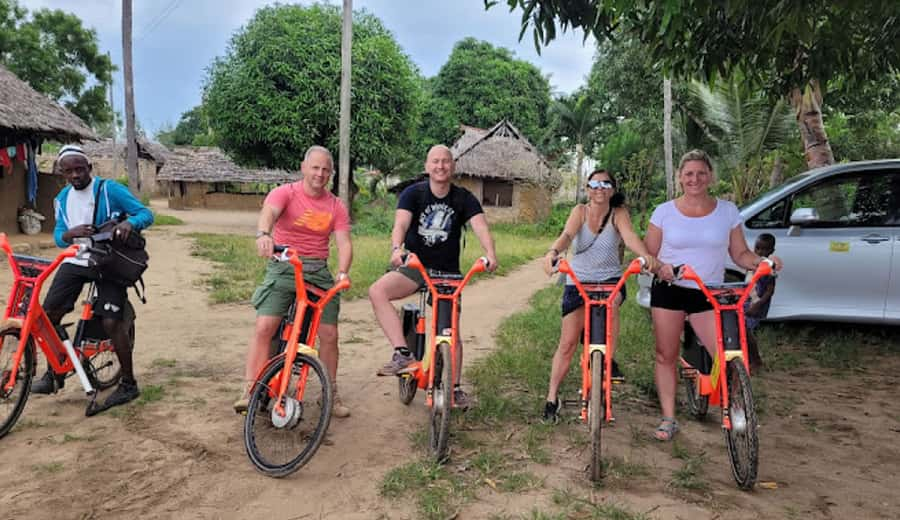
Bikes and safety gear are included. The information does not specify the exact type of bicycle for every departure, but recent experience includes electric bikes. An electric bike can reduce the strain on hills, though it does not turn the outing into a passive ride. You still pedal, and rough stretches remain rough.
Wear shoes that stay secure on your feet. Loose beachwear is not ideal for riding, walking through a market or visiting a school and family home. Bring sun protection and a small personal snack, since snacks are not included. Bottled water is supplied, but other drinks are not.
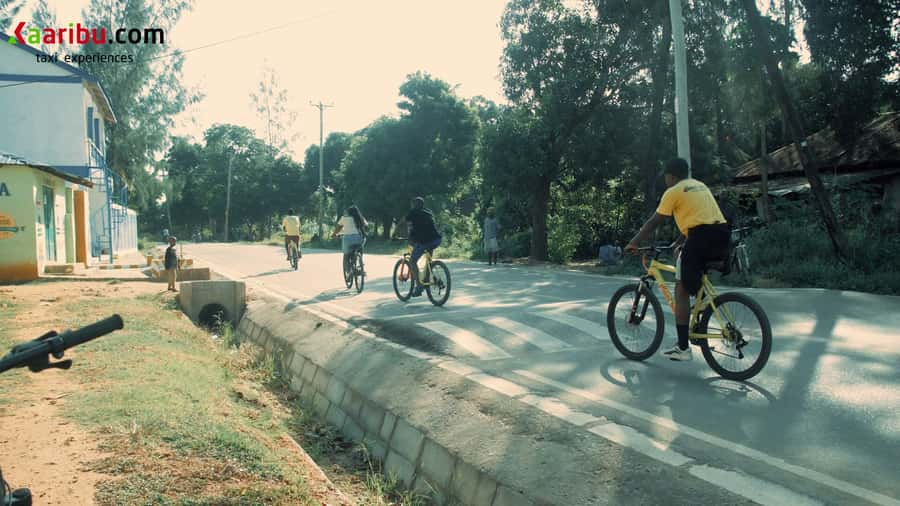
Riding through Ukunda and local streets
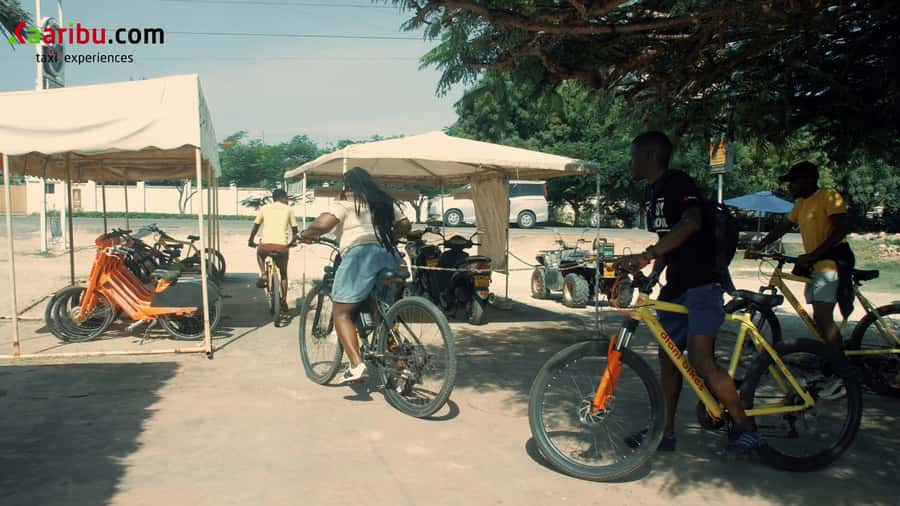
The route includes Ukunda, with a photo stop and guided sightseeing lasting around 30 minutes. Ukunda gives you a useful contrast with the resort zone. Instead of polished hotel grounds, you see the working town that supports much of the coast’s daily life.
Your guide is important here. Local streets can feel confusing if you do not know the area, and the guide helps you ride in a controlled group. The experience includes English guiding, while the activity information also refers to local guides who may speak German or French. Confirm your preferred language when booking if that matters to you.
Recent outings have used more than one guide for a small group. That arrangement is helpful on a bicycle route because the group can stay together more easily, and someone can remain near the front or back. The guides also answer questions about life in Kenya, rather than simply pointing out buildings.
You will have chances to stop for photographs. Take them, but also allow yourself time to watch what is happening around you. A market lane, a schoolyard or a family kitchen often tells you more about a place than a formal sightseeing stop.
Reading daily life at the local market

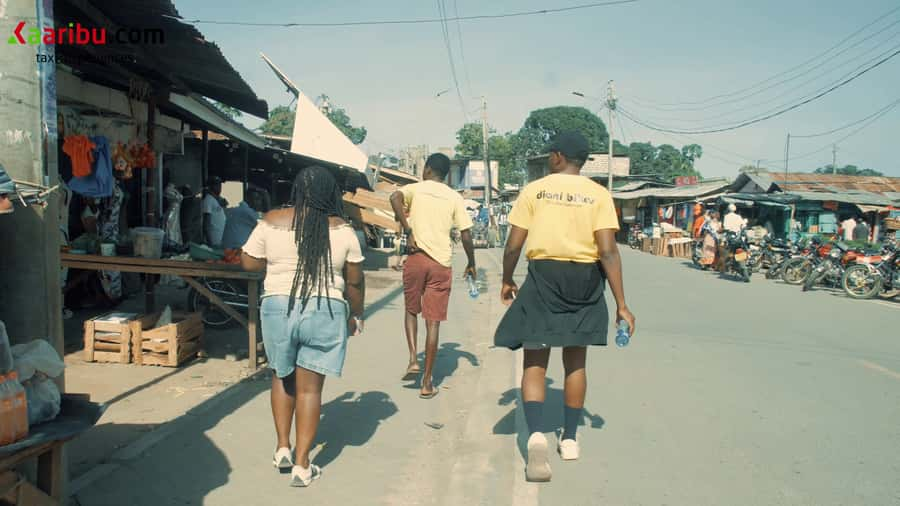
The market visit is one of the most grounded parts of the tour. You walk among stalls selling local groceries and see how people buy and sell everyday food. This is not presented as a staged cultural show. It is a working market, so your guide can explain what you are looking at and how local trade operates.
Expect this stop to be sensory and active. You may see produce, hear bargaining and need to keep aware of people moving around you. The tour description does not promise a shopping allowance or specific products, so treat the market primarily as a place to observe and learn.
This is also where a little cultural courtesy goes a long way. Ask before taking close photographs of people or their goods. Follow your guide’s lead, keep the group moving when needed and avoid treating the market like a photo set.
The market visit is especially valuable for anyone staying in a beach hotel. It gives you a better sense of the town behind the holiday services. I would not book this tour solely for shopping, but I would consider the market an important part of the cultural picture.
A few more Diani Beach trips worth comparing
- Dhow Adventure to Wasini Island & Kisite Marine Park
★ 4.6 · 337 reviews - PILLI PIPA DHOW, the genuine product, snorkeling tour to Kisite Marine Park
★ 4.5 · 217 reviews - Full-Day Special Wasini Island Tour with Snorkeling and Lunch
★ 4.5 · 184 reviews - Mombasa: Kisite Park Private Cruise with Breakfast and Lunch
★ 4.7 · 181 reviews
Meeting students at a public primary school
The tour includes a visit to a local public primary school attended by children from the surrounding community. For many people, this becomes the most affecting stop because it puts daily education at the center of the experience.
You should approach this visit with respect. A school is not an attraction in the usual sense. Children and teachers are carrying on with their day, and your presence should remain quiet and considerate. Follow the guide’s instructions about where to walk, what to photograph and how to interact.
A practical tip is worth taking seriously: bring school supplies if you want to offer something useful. Pencils, notebooks and similar materials are specifically suggested as more helpful than sweets. Do not assume that giving anything is required. The tour itself does not list donations as an included or compulsory part of the visit.
This stop can also help you understand the difference between a short cultural encounter and a meaningful one. You are not there to judge the school by standards from home. You are there to see a local institution, listen to your guide and recognize the work being done by teachers and families.
Time at the village home
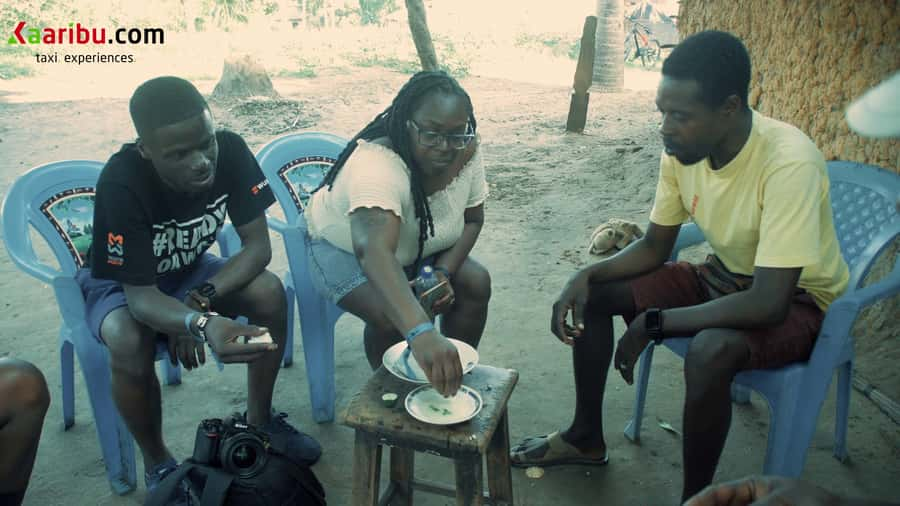
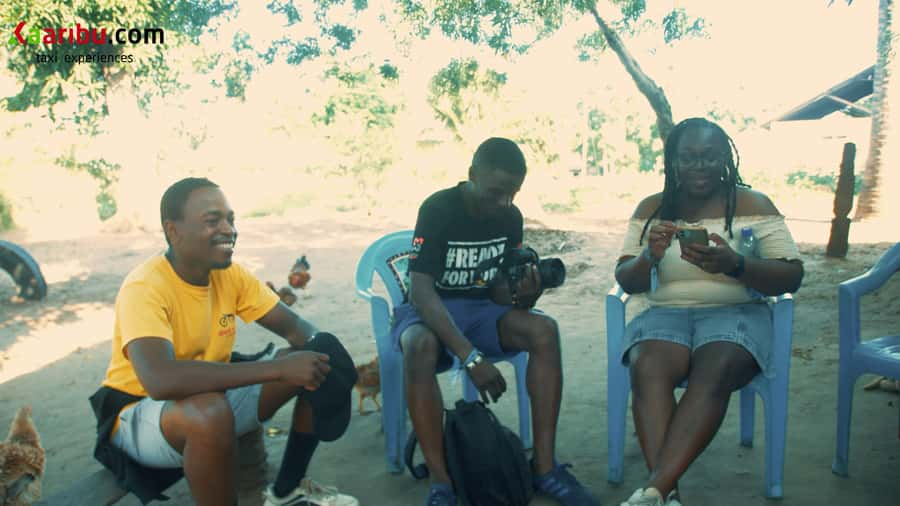
The village stop brings the tour closest to household life. Activities can include preparing local food, working with cashew nuts and meeting a local family. You may also see a coconut palm demonstration and try climbing the tree under local supervision.
The coconut climbing is memorable, but it is not for everyone. It calls for balance, strength and confidence. Do not feel pressured to attempt it, especially if you have any concern about your grip, mobility or comfort at height. Watching the demonstration can be just as interesting.
Cooking provides a more useful kind of cultural contact. Food preparation shows how a home works, what ingredients are familiar and how people share tasks. The information does not promise a full meal on every departure, although one outing included lunch with a local family. Bring a snack because food is not included as a standard part of the tour.
Cashew preparation is another small but telling detail. It gives you something practical to watch and discuss, rather than a general talk about village life. Ask your guide questions, but let the family set the pace. The best approach is curious, polite and willing to listen.
The experience is designed to feel welcoming, yet you should still remember that this is someone’s home. Ask before photographing people or rooms, and do not treat a private household as an open display.
Learning from the traditional herbalist
The visit to a traditional herbal doctor, also called a bush doctor or herbalist, is included in the price. You receive an explanation of traditional healing techniques and local plant-based practices.
This stop is best understood as cultural education, not medical advice. Traditional healing is part of the community’s knowledge, but the tour does not present the herbalist as a substitute for modern medical care. Listen to the explanation, ask respectful questions and keep an open but sensible mind.
For many people, the herbalist visit adds depth because it introduces a way of understanding health that differs from what you may know at home. It also shows how local knowledge can be passed from one generation to another.
You may hear the term bush doctor used casually during the outing, but the setting is not described as a theatrical performance. Treat the person you meet as a local practitioner sharing knowledge. That attitude makes the visit more rewarding for everyone.
Several stops may invite a small donation. Donations are optional, and you should budget only what you are comfortable giving. If you wish to contribute, carry a few small notes rather than feeling obliged to buy anything at every stop.
Passing the mangrove forest
The route includes a mangrove forest and a look at conservation efforts. Mangroves matter because they protect coastal areas and provide habitat for marine life. The tour does not give a detailed scientific program, so expect a short introduction rather than a specialist nature walk.
The mangrove section adds a useful environmental note to a tour otherwise focused on people and community life. You see that the coast is more than sand and hotel frontage. Natural areas support local livelihoods and need care.
Do not expect a long forest hike. This is a bike tour with several cultural stops, and the mangrove area is one part of the route. The value lies in seeing how conservation fits into the wider Diani area, then connecting that idea with what you see in the villages and market.
How hard is the four-hour ride?
The tour lasts four hours, including stops, walking and demonstrations. That makes it manageable for a reasonably active person, but it is not a zero-effort excursion.
The route can include hills and bumpy roads. One recent outing used electric bikes and still required physical effort. If you rarely cycle, ask about the bike type and route before booking. The supplied information says the tour is not suitable for pregnant women or people with mobility impairments.
Comfortable clothes and shoes are the basic requirements. I would also bring sunscreen, a hat that fits securely and a small snack. Bottled water is included, but you should not count on other drinks being provided.
The guides are there to help you ride safely, and small groups appear to receive close attention. That is a real advantage over an unguided rental, especially when the route leaves the familiar hotel area.
Who will get the most from this tour?
I would choose this outing if you want to meet local people, see ordinary parts of Diani and ask questions about life in the area. It suits couples, families with older children who can ride confidently and small groups looking for something more personal than a standard sightseeing drive.
It is also a strong choice for repeat visitors who have already spent time on the beach. The school, market, village, herbalist and mangroves give you a fuller sense of the region.
I would think twice if you dislike uneven roads, physical activity or informal community visits. This is not a polished theme park experience. Some stops may feel less structured than a museum, and donations may be requested along the way. The ride also has more cultural contact than a typical half-day excursion, so you need to be comfortable entering public and family spaces respectfully.
The guides are a major part of the experience. Hamisi and Justino are named in one detailed account, while Herbert is singled out in another. The core service is English, and the activity also lists German and French-speaking guide availability, so confirm the language arrangement in advance.
Is the $64 price fair?
At $64 per person, the price covers a lot in four hours: hotel pickup and return, bicycle rental, safety gear, bottled water, a guide, the market tour and entry to the herbalist. You also receive access to a school, village, mangrove area and other community stops.
The strongest value comes from combining several small experiences in one guided route. Hiring transport separately would make the day less simple, and an ordinary bike rental would not provide the local introductions or safety support.
The price does not include snacks, extra drinks or optional donations. Those costs should not surprise you, but they are worth planning for. You can keep them modest if you choose.
Free cancellation is available up to 24 hours before the activity, and you can reserve now and pay later. Starting times depend on availability, so check the schedule before building the rest of your Diani plans around it.
Should you book the Diani village bike tour?
Book it if you want to pedal beyond the resort area and see Diani through local streets, a school, a market, a family home and a traditional herbalist. The close guide support, hotel transfers and small-group attention make the $64 price reasonable for an active cultural outing.
Bring a school-supply donation only if you want to offer one, carry a snack, wear proper shoes and expect hills and rough patches. If you want a quiet beach ride or have limited mobility, choose another activity. If you want real contact with daily life and do not mind working a little for it, this is one of the more useful ways to spend half a day in Diani.
FAQ
How long does the Diani village bike tour last?
The activity lasts four hours, including cycling, walking and visits to the market, school, village, mangrove area and traditional herbalist.
Is hotel pickup included?
Yes. Pickup and drop-off are included for accommodations in Diani. Wait in the hotel lobby 10 minutes before the scheduled time and tell your concierge that someone is coming to collect you.
What language does the guide speak?
The activity provides a live English-speaking guide. The included information also lists local English, German and French-speaking guide availability, so confirm your preferred language when arranging pickup.
Are bikes and safety equipment provided?
Yes. Bike rental and safety gear are included. Recent departures have used electric bikes, though the ride can still require physical effort.
What should I bring?
Bring comfortable shoes and comfortable clothing. A snack is also sensible because snacks are not included. Bottled water is provided, but other drinks are not.
Can I make a donation during the tour?
You may be asked for a small donation at some stops, but donations are optional. Bringing school supplies is suggested if you would like to support the school visit, and supplies are considered more useful than sweets.
Is the tour suitable for everyone?
No. It is not suitable for pregnant women or people with mobility impairments. The route can be hilly and partly bumpy, so you should be comfortable riding a bicycle for several hours.
Just added around Diani Beach
- 10-Days Kenya Wildlife Private Safari and Mombasa Diani Beach Holidays★ 5.0 · 5 reviews
- 2 Days Private Safari in Tsavo from Diani Beach with Pick Up★ 4.5 · 4 reviews
- From Mombasa Airport: Diani transfer in a minivan (5 pax)★ 4.5 · 13 reviews
- Wasini Dolphin Snorkeling★ 3.5 · 8 reviews
- Dolphin Watch & Snorkeling at Kisite Marine Park & Wasini Island★ 3.5 · 11 reviews
- Day Tour to Tsavo East National Park from Mombasa or Diani★ 5.0 · 5 reviews
- Overnight Safari to Tsavo East National Park from Mombasa/Diani★ 5.0 · 4 reviews
- 3 day Diani Beach To Tsavo East & West★ 5.0 · 5 reviews
Cycling Tours, compared.

Day Trip: Hell’s Gate Bike Ride & Lake Naivasha Boat Ride
Read our review →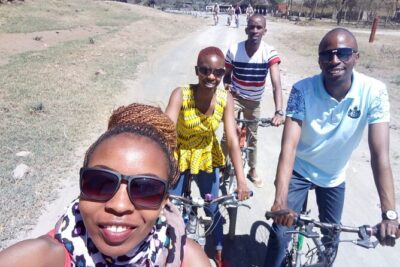
Hell’s Gate National Park Private Bike Tour from Nairobi
Read our review →
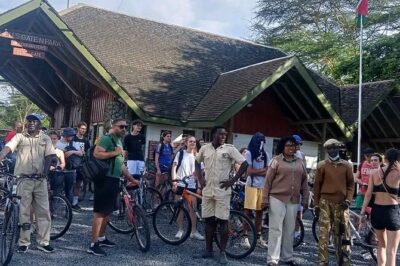
Bike Tour at Hell’s Gate National Park, Boat Ride at L. Naivasha
Read our review →
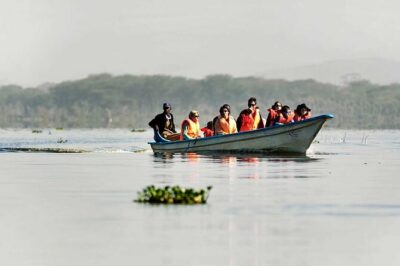
1 Day Bike Tour to Hell’s Gate And Lake Naivasha
Read our review →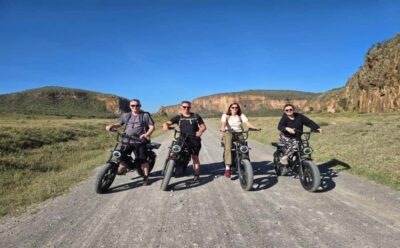
Browse the lists this tour appears in