
Reviewed · KENYA & TANZANIA SAFARIS
13-Day Private Wildlife Safari Tour of Kenya and Tanzania
The best thing about this safari is the sheer sweep of it. In 13 days, you move from Samburu’s dry northern country to the Mara, cross into Tanzania, then follow the wildlife trail through the Serengeti, Ngorongoro Crater, and Tarangire. This is a private Kenya and Tanzania circuit, not a quick park sampler.
I like the generous time in the Mara and Serengeti, where morning and afternoon drives give you more than one chance to find cats and herds. I also like the mix of stays, from lodges to tented camps, plus the quiet change of pace at Lake Victoria. Guides including Martin in Kenya and Hashim Mkya in Tanzania have been associated with Asili safari trips.
The trade-off is distance. Some days involve long drives, border formalities, and packed schedules, so this suits you best if wildlife matters more than leisurely hotel time. Accommodation names can also change to a similar property, so confirm the final camp list before paying.
Five details that shape this safari
- Seven major wildlife areas: Samburu, Lake Nakuru, Maasai Mara, Serengeti, Ngorongoro, Tarangire, plus a stop at Lake Victoria.
- A genuinely private format: Only your group takes part, with a safari vehicle and guide arranged for your party.
- Unlimited game drives: Morning, afternoon, full-day, and picnic-lunch options keep the schedule focused on wildlife.
- A useful mix of wildlife zones: Look for northern specialties in Samburu, rhinos at Nakuru, predators in the Mara and Serengeti, and large elephant herds in Tarangire.
- A border crossing by road: The route enters Tanzania through Isebania, adding time but avoiding a separate flight between the two countries.
- A strong final approach: Olduvai Gorge and Ngorongoro Crater bring archaeology and geology into a trip otherwise centered on animals.
A private safari with a big geographic reach
At $8,086 per person, this is a serious purchase. The value lies less in a single attraction and more in the amount of ground covered, the private arrangement, park access, accommodation, meals listed along the route, and repeated game drives. You are paying for a 13-day network of parks rather than a one-reserve stay.
A private trip also gives you some control over the rhythm. On the Mara days, you can take lunch out in the savannah or return to camp. That choice matters. A picnic keeps you close to a promising area, while camp lunch gives you a break from the vehicle.
The route begins at 7:00 a.m. from Standard Street in Nairobi, with pickup offered. The stated ending is in Arusha around noon on Day 13. Since the trip crosses an international border and covers long road sections, I would confirm the exact pickup point, vehicle arrangements, final accommodation, and border requirements before departure.
More safaris that cross into Tanzania:
- Ultimate 12 Days Private Safari Tour in Kenya and Tanzania
★ 5.0 · 60 reviews - 12 Days Best Of Kenya and Tanzania Safari – Luxury
★ 5.0 · 36 reviews - 12 Days Kenya and Tanzania Budget Private Safari from Nairobi
★ 5.0 · 28 reviews
Day 1: Nairobi to Samburu and the Ewaso Nyiro
The opening drive heads toward Mount Kenya before reaching Samburu National Reserve. Lunch is scheduled at Samburu Sopa Lodge, followed by an afternoon game drive and an overnight stay there.
Samburu feels different from the better-known grassland parks farther south. The reserve is shaped by the Ewaso Nyiro River, permanent springs, dry country, and forested areas. That mix supports elephants, lions, leopards, hippos, crocodiles, buffalo, reticulated giraffes, and Grevy’s zebra.
The journey from Nairobi and the afternoon drive make this a full first day. You will not be easing into the safari with a quiet resort afternoon. Still, Samburu earns its place early in the route because it adds species and scenery you may not see later.
Day 2: Two game drives in Samburu
You spend the second day in Samburu, with morning and afternoon drives. This is a smart use of time because the reserve is not just a one-look stop on the way to the Mara.
The named highlights include reticulated giraffe and Grevy’s zebra, both especially appealing if you want more than the standard Big Five checklist. Birding is another strong point, with more than 365 species identified in the reserve.
I would treat the midday break as useful rather than wasted. The heat can build, and two shorter drives let you search at different times of day. The guide’s skill matters here, especially when looking for cats, river wildlife, and less common northern species.
Day 3: Rhinos and birdlife at Lake Nakuru
After breakfast, the route continues to Lake Nakuru National Park, with lunch en route and an afternoon drive. The park covers about 180 square kilometers, so it is a more contained wildlife stop than the Mara or Serengeti.
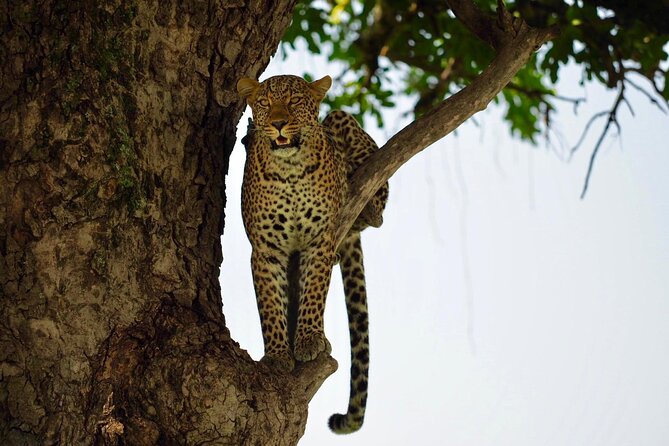
Lake Nakuru is known for white and black rhinos, with white rhinos noted toward the southern end of the park. You might also find warthogs, waterbuck, buffalo, reedbuck, and the occasional leopard.
Birdlife is a major reason to include Nakuru. More than 400 bird species have been recorded here. Even if your main goal is lions and elephants, the lake adds a different kind of safari interest and breaks up the long sequence of large grassland reserves.
The drawback is another travel-heavy day. You get only an afternoon drive, so Nakuru is a focused stop rather than a leisurely exploration of the entire park.
A few more Nairobi trips worth comparing
- Nairobi National Park Half-Day Tour; Free Wi-Fi connection
★ 5.0 · 878 reviews - Nairobi: National Park & Optional Elephants & Giraffe Center
★ 4.8 · 874 reviews - NAI NAMI: Nairobi Storytelling Tour with Street Children
★ 5.0 · 792 reviews - Nairobi National Park Half-Day Game Drive
★ 4.5 · 738 reviews
Days 4 to 6: Three nights in the Maasai Mara
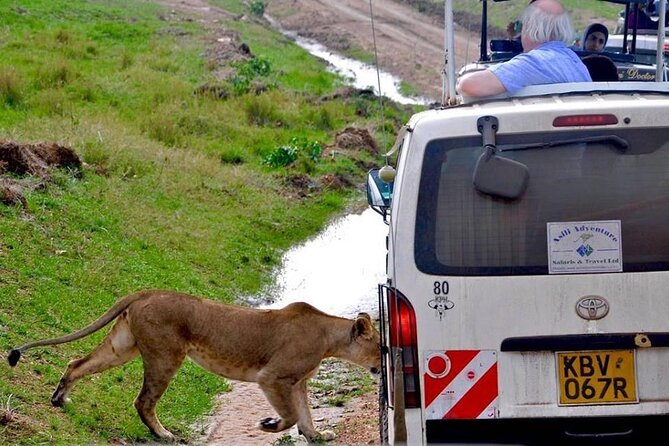
Day 4 crosses the scenic Great Rift Valley toward Maasai Mara National Reserve. After lunch at camp, you take an evening game drive and stay at Enkorok Mara Camp.
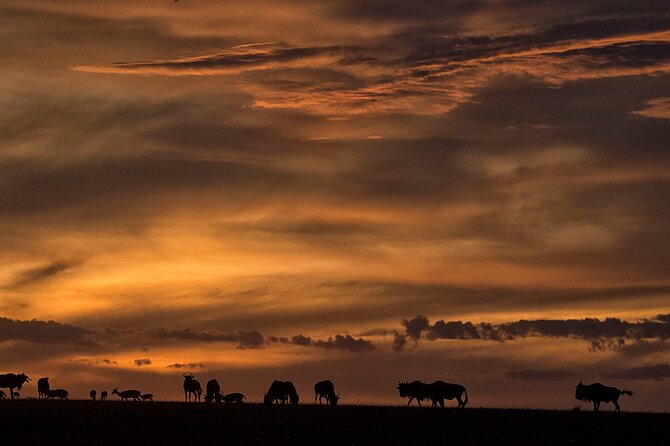
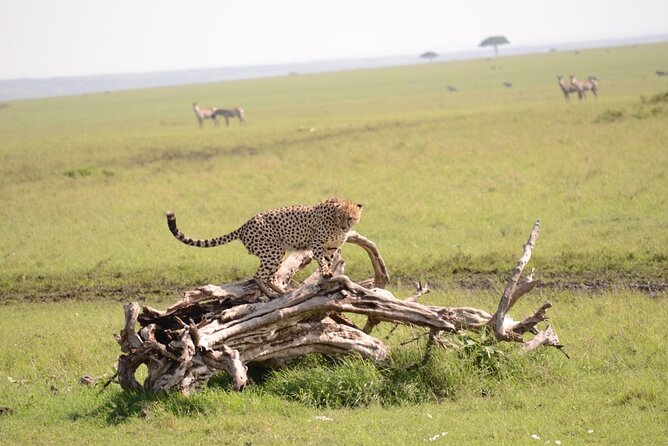
The Mara is the trip’s main predator country. Lions, cheetahs, and leopards are prominent, while elephants, buffalo, giraffes, zebras, wildebeest, and many other animals fill out the picture. The reserve also connects to the greater migration system, where roughly a million wildebeest and 200,000 zebras make the yearly movement.
The famous river crossings are seasonal, so you should not book this trip expecting a crossing on demand. Even without that spectacle, three days here give you a strong chance to see the Mara in more than one mood.
Day 5 is devoted to exploring the reserve, with the drama of big-cat territory and large herds at the center. Day 6 offers another full day, and you can either stay out with a picnic lunch or return to camp. I like that flexibility. A full field day is best when animals are active far from camp, while returning for lunch gives you a physical reset.
Three nights is one of the itinerary’s strongest choices. It reduces the feeling that you have arrived, taken a single drive, and left again. It also gives the guide time to respond to recent sightings instead of following a rigid one-day plan.
Day 7: Crossing into Tanzania at Isebania
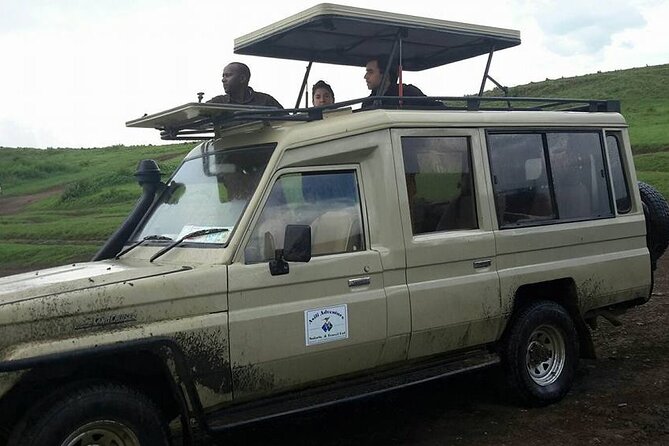
After breakfast, you leave the Mara for the Isebania border and continue into Tanzania. This is one of the least glamorous parts of the journey, but it is also what makes the cross-border route possible by road.
The day leads to Speke Bay Lodge on the southeastern shore of Lake Victoria. The lodge is described as a small village spread along the lake, surrounded by open country, and it is about 15 kilometers from Serengeti National Park.
A boat ride provides a welcome change after several days in a safari vehicle. Lake Victoria also gives the route a cultural and geographic pause before the Serengeti. The day is listed at about 12 hours, so keep your expectations realistic: this is mainly a transfer day with an activity attached.
Days 8 and 9: Entering the Serengeti through Ndabaka Gate
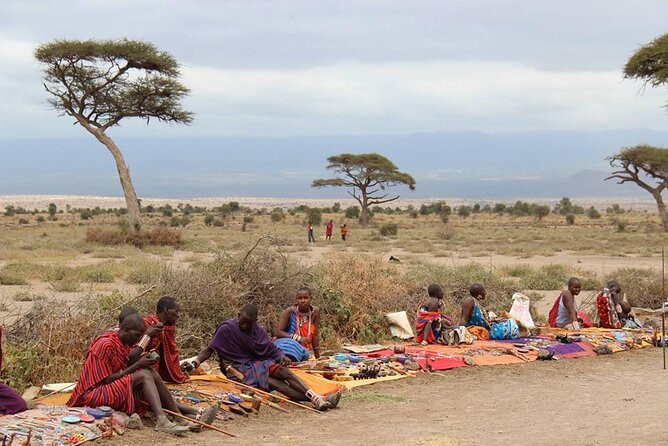
Day 8 enters Serengeti National Park through Ndabaka Gate for a full-day drive, with a picnic lunch. The route heads toward the western corridor, an area linked to the great migration and known for broad open country.
The Serengeti is Tanzania’s largest national park, covering about 14,736 square kilometers. Its scale changes the feel of the safari. You may spend time driving between sightings, but the reward is the sense that the animals are moving through a huge, functioning ecosystem rather than a small enclosed viewing area.
Day 9 brings another full day with morning and afternoon drives. The park supports wildebeest, zebra, Thomson’s and Grant’s gazelles, impala, topi, eland, buffalo, giraffe, and warthog. Predators include lions, leopards, cheetahs, hyenas, golden jackals, and bat-eared foxes.
The Serengeti is also where patience pays. A leopard may be hidden in a tree, a cheetah may be distant, or a lion may be surrounded by other vehicles. A private setup can help you discuss how long to stay at a sighting, though the guide still has to follow park rules and road conditions.
Accommodation is listed at Mawe Tented Camp or a similar property. Confirm what similar means for your departure dates, especially if the type of tent, bathroom arrangement, or location matters to you.
Day 10: From Serengeti wildlife to Olduvai Gorge
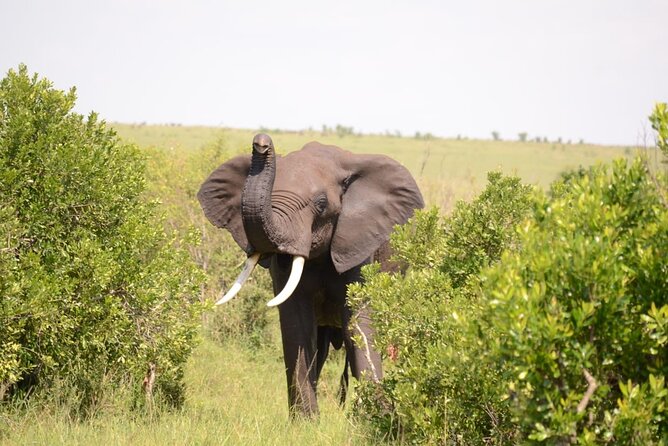
The day begins with a morning drive, followed by breakfast at camp and a journey south toward Ngorongoro Crater. Wildlife viewing continues along the way, interrupted by a picnic lunch.
Olduvai Gorge adds a human-history layer to the trip. Rock beds here record a sequence reaching back about two million years, and hominin remains dating to more than 1.75 million years have been found in the area. Fossil footprints more than three million years old are also associated with the site.
There is a museum where you can see more about the excavations. This stop will appeal most if you like connecting the animals around you with the much older story of human development. If your priority is uninterrupted game viewing, the stop does take time from the park.
The overnight is planned at Ngorongoro Rhino Lodge or a similar property. Again, confirm the final name and location in advance.
Day 11: A full day inside Ngorongoro Crater
After an early breakfast, you descend about 2,000 feet by four-wheel-drive vehicle into Ngorongoro Crater with a picnic lunch. The crater is the trip’s most concentrated wildlife setting, with steep walls enclosing a broad floor.
A full day here gives you time to search rather than simply drive down, take a quick look, and leave. The crater is often called Africa’s Eden and is the main draw for many visits to northern Tanzania.
The ascent comes later, followed by dinner and an overnight at Hhando Coffee Lodge, Ngorongoro Farm House, or Farm House Valley. The range of possible names matters because these are not identical properties. Ask which one is confirmed, especially if crater views or a particular style of accommodation are important to you.
Day 12: Elephants and dry-country wildlife in Tarangire
The final major park is Tarangire National Park. After breakfast and the drive there, lunch is followed by an afternoon game drive and an overnight at Tarangire Roika Tented Camp.
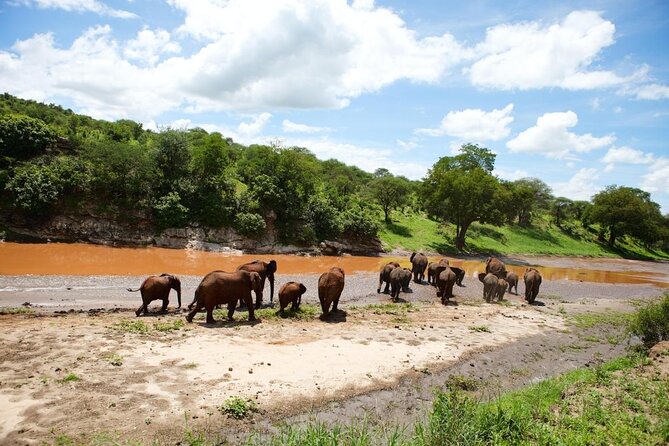
Tarangire is famous for elephants, including herds of up to 300 animals. During dry periods, wildlife gathers around shrinking lagoons and digs in dry riverbeds for underground water. That concentration can draw wildebeest, zebra, buffalo, impala, gazelles, hartebeest, and eland, along with predators.
The park is also singled out for dry-country species such as fringe-eared oryx and the long-necked gerenuk. These animals give Tarangire a clear identity of its own rather than making it feel like a spare afternoon after the Serengeti.
The limitation is timing. You have one afternoon drive, so the park receives less attention than the Mara or Serengeti. Still, it makes a good final wildlife stop because elephants and water-dependent animals can create memorable sightings.
Day 13: Finishing in Arusha
The last morning is relaxed, with breakfast at leisure and a drive to Arusha, planned to arrive around noon. The tour ends there, not back in Nairobi.
That final point affects your flights. If you need to return to Nairobi, you will have to arrange the next part of your journey separately. The tour’s stated end at midday gives you a useful handoff point, but do not book a tight same-day connection without confirming road conditions and the actual arrival plan.
Guides, private vehicles, and the pace of the road
The private format is a major advantage for couples, families, and small groups with shared interests. You are not adjusting every stop to a large mixed party. You can ask to spend longer with a herd, choose a picnic day in the Mara, or discuss the balance between birding and big mammals.
Asili Adventure Safaris has been associated with guides including Martin on the Kenya side and Hashim Mkya in Tanzania. Monica has handled trip planning for some longer custom journeys. Ask who will guide your specific departure, since the provided program does not guarantee one named guide.
The phrase unlimited game drives sounds appealing, but it does not erase the realities of distance, park hours, weather, and border procedures. You still need stamina for bumpy roads and long days in a vehicle. Pack lightly, keep water close, and expect the schedule to change when wildlife presents a good opportunity.
Is $8,086 per person good value?
The price is high, but the route is ambitious. You receive 13 days across two countries, a private group arrangement, multiple national parks, lodge and tented-camp accommodation, game drives, the Lake Victoria boat ride, the Olduvai Gorge stop, and the crater descent.
The value is strongest if you want variety and do not want to organize separate Kenya and Tanzania operators. The route removes much of the work of linking parks, accommodation, border crossing, and guides.
It is less compelling if you prefer a slower trip with several nights in each camp, or if your main goal is one specific event such as the Mara crossing. You should also ask for a written list of what the price covers, since the supplied details do not spell out every included cost.
The company’s broader trip planning has included Kenya, Tanzania, Rwanda, Zanzibar, and custom extensions. That suggests flexibility, but you should treat every extension or change as a new agreement and confirm the revised price.
Who should book this 13-day safari?
I would recommend it to you if you want the classic East African route in one substantial trip, value a private vehicle, and are happy to trade some comfort and free time for repeated wildlife drives.
It suits first-time safari visitors who want the Mara, Serengeti, Ngorongoro, and Tarangire in one sweep. It also suits returning safari fans who want Samburu’s northern species and a different route into Tanzania.
I would hesitate if you dislike long road transfers, need guaranteed accommodation at one exact property, or want a relaxed holiday with only occasional drives. The itinerary is packed, and its best moments depend on time, patience, and luck in the parks.
The cancellation terms are simple: cancel at least 24 hours before the local start time for a full refund. Later cancellations and changes are not accepted, and a minimum group requirement applies.
Should you book it?
Book this safari if your priority is range: northern Kenya, the Mara, Lake Victoria, the Serengeti, Olduvai Gorge, Ngorongoro Crater, and Tarangire all appear in one private journey. The three Mara days, two Serengeti days, and full crater day give the wildlife portion real substance.
Before committing, get the final camp names, the exact inclusions, your guide’s name, border details, and the expected vehicle arrangement in writing. If those points are clear and you can handle the long drives, this is a powerful introduction to Kenya and Tanzania’s great parks.
FAQ
Where does the safari start?
The tour starts at 7:00 a.m. from Standard Street in Nairobi, Kenya. Pickup is offered.
Where does the safari end?
The tour ends in Arusha, Tanzania, with arrival planned around noon on Day 13.
Is this a private tour?
Yes. Only your group participates in the activity.
How long is the safari?
The safari lasts approximately 13 days.
Which national parks are included?
The route includes Samburu National Reserve, Lake Nakuru National Park, Maasai Mara National Reserve, Serengeti National Park, Ngorongoro Crater, and Tarangire National Park.
Does the tour include a Lake Victoria boat ride?
Yes. Day 7 includes a boat ride at Speke Bay Lodge on Lake Victoria.
Does the route cross an international border?
Yes. The tour leaves Kenya for Tanzania through the Isebania border.
Which guides may lead the safari?
Guides associated with Asili safari trips include Martin in Kenya and Hashim Mkya in Tanzania. The specific guide for this departure should be confirmed before booking.
Can I cancel for a full refund?
Yes, if you cancel at least 24 hours before the experience’s local start time. Cancellations made later are not refunded.
Just added around Nairobi
- Visit kibera Slum the chocolate city★ 4.8 · 3 reviews
- Day Tour to Nairobi national park, Elephants, and Giraffe Center★ 3.5 · 8 reviews
- Explore local Market matatu ride & Make Kenyan Cuisines with a home cook★ 5.0 · 8 reviews
- Kibera Slum Tour with a Local★ 5.0 · 15 reviews
- Urban Forest Tour in Nairobi★ 5.0 · 7 reviews
- Vegans special safari★ 4.5 · 4 reviews
- Private Mini Safari Tour in Nairobi★ 5.0 · 6 reviews
- Private Kenyan Cooking Class in Nairobi with a Local★ 5.0 · 3 reviews
Kenya & Tanzania Safaris, compared.
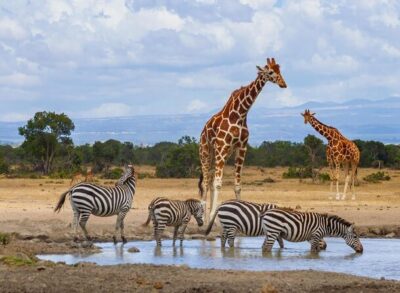
Ultimate 12 Days Private Safari Tour in Kenya and Tanzania
Read our review →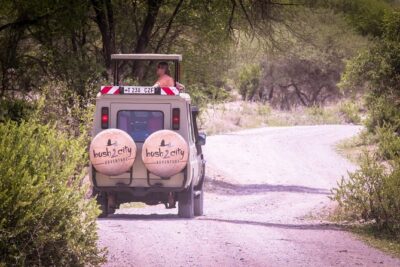
12 Days Best Of Kenya and Tanzania Safari – Luxury
Read our review →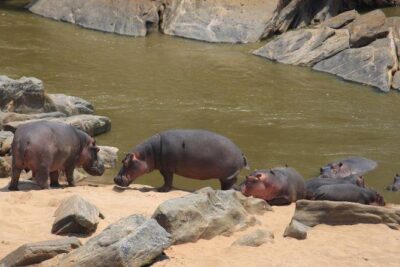
12 Days Kenya and Tanzania Budget Private Safari from Nairobi
Read our review →
Shuttle Bus from Wilson and Jomo Kenyatta Airport Nairobi to Arusha and Moshi
Read our review →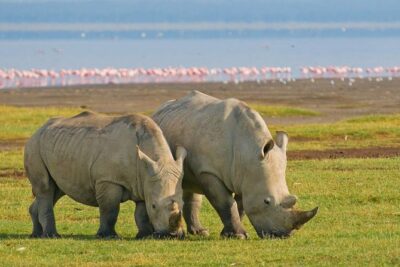
12 days Kenya and Tanzania safari private lodge from Nairobi
Read our review →
15 Days Classic Kenya & Tanzania + Zanzibar Beach Holiday
Read our review →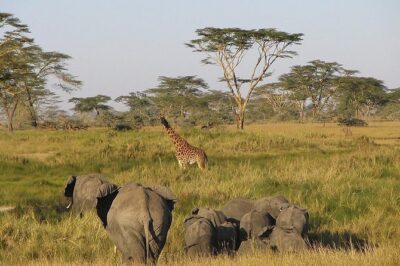
8 Days Best of Kenya and Tanzania Safari from Nairobi
Read our review →
14-Day Serengeti Maasai Mara Amboseli Tarangire Zanzibar
Read our review →Browse the lists this tour appears in