
Reviewed · DHOW & SUNSET CRUISES
Sunset Canoe Tour on a River within the Mangroves
The best part of this Diani outing is its quiet, human-powered way of seeing the coast. You travel by wooden canoe through mangrove creeks where the river meets the sea, with local guide Omari pointing out birds, baobab trees, village life, and the role these wetlands play. The sunset is the finale, not the whole show.
I like the small group size, capped at eight, and the fact that the canoe and captain are hired locally. I also like the clean, simple setup: no engine noise, no fumes, and no rush. You may even row for a while if you wish.
The main consideration is the weather. This is an open canoe on exposed water, and rain can arrive during the two-hour trip. The tour requires good weather, so keep your plans flexible and bring protection for a sudden shower.
Key Points to Know Before You Go
- Meet at Kongo Mosque at 4:45 pm: The trip starts and ends at the same Diani Beach meeting point.
- A quiet, engine-free outing: The captain rows the wooden canoe, and you can help if you want.
- Omari leads the way: He explains birds, mangrove and baobab trees, local culture, and the area’s past.
- The group is limited to eight people: That makes it easier to hear the guide and enjoy the peaceful setting.
- Sunset comes after the wildlife and village scenery: Expect a gradual two-hour trip rather than a quick photo stop.
- The price is $28 per person: That is good value if you want a local, low-impact experience rather than a motorboat ride.
Starting at Kongo Mosque at 4:45 pm
You meet your guide at Kongo Mosque, near Diani Beach, at 4:45 pm. This is not a hotel pickup, so you need to arrange your own way to the meeting point. The activity finishes there as well, which keeps the plan simple once the canoe ride is over.
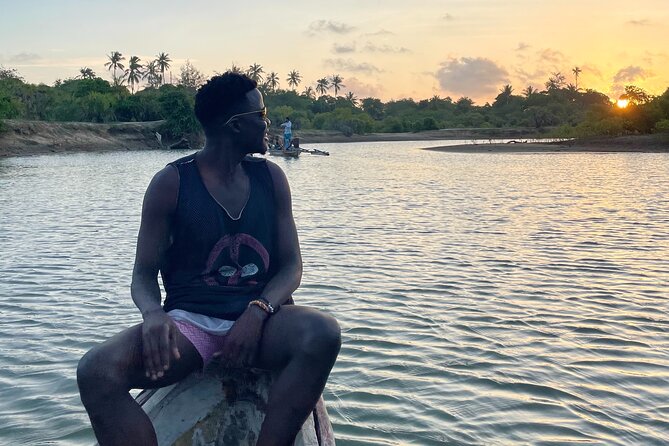
The late-afternoon start is well chosen. You avoid the strongest midday heat, and the light grows softer as the canoe moves along the river. It also gives the trip a natural rhythm: begin with clear views of the banks, watch the colors change, then settle into the stillness of sunset.
The exact pace will depend on the water, weather, and the guide’s stops for birds or explanations. You should not expect a tightly timed sightseeing program. This is a slow outing, and that is part of its appeal.
The canoe holds a maximum of eight people. That number matters on a narrow waterway. A large group could make the ride noisy and cramped, while a small one lets you hear Omari and look around without constant movement around you.
More dhow and sunset cruises on the coast:
- Dhow Adventure to Wasini Island & Kisite Marine Park
★ 4.6 · 337 reviews - PILLI PIPA DHOW, the genuine product, snorkeling tour to Kisite Marine Park
★ 4.5 · 217 reviews - Diani: Sunset Canoe Tour along the River with Mangroves
★ 4.8 · 65 reviews
Wooden Canoes and a Quiet River
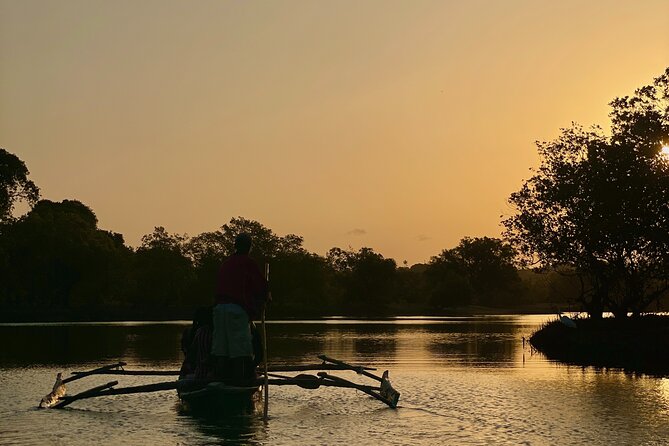
The canoe is powered by people rather than an engine. The captain rows, and you can take a turn if you wish. That gives the outing a close-to-the-water feel that a motorized trip cannot match.
Without an engine, the river remains quiet. You hear the paddle, the movement of water, and the sounds from the banks. The lack of fuel fumes is also a practical environmental benefit in a fragile wetland.
Do not mistake the simple boat for a luxury cruise. Seating and comfort are likely to be basic, and the canoe is exposed to the elements. The supplied information does not specify cushions, covers, or onboard facilities, so you should prepare for a straightforward outdoor ride rather than a polished boat excursion.
That simplicity is also what makes the experience feel tied to the place. The canoe is locally hired, as is the captain. Your money supports people who live near the river, instead of sending the whole experience through a distant operator.
If you are comfortable with a little participation, rowing can make the trip more memorable. If you would rather sit back, the captain handles the boat while you watch the banks and listen to Omari.
Mangroves, Baobabs, and Birdlife
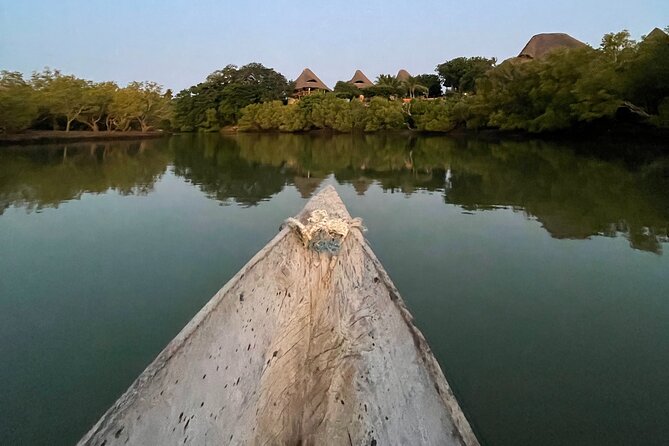
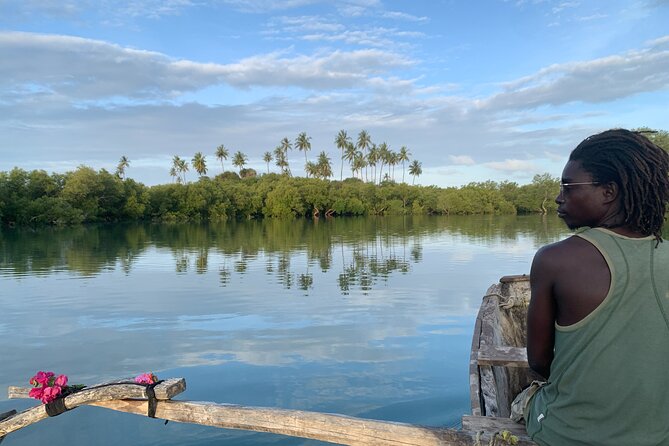
The natural setting is the main reason to choose this trip. Mangrove roots line parts of the water, while palm trees, baobabs, and other vegetation frame the route. The river offers a different view of Diani than the beach does. Here, the focus shifts from sand and swimming to wetlands, village life, and small signs of wildlife.
Omari is especially interested in birds. He has a strong grasp of the species around the river and can help you notice activity along the banks. Bring your patience. Bird spotting from a moving canoe is not the same as visiting a formal wildlife park, and sightings are never guaranteed.
The value is in learning how to look. A guide can point toward a bird you might otherwise miss, explain the trees beside the bank, and connect the river to the surrounding villages. Even if you are not a serious bird watcher, these details give the ride more shape.
One particularly useful detail from the experience is the attention to both mangrove and baobab trees. They offer very different forms and functions, and hearing about them in the setting where they grow is more useful than reading a general description in a hotel brochure.
The scenery changes with the light. Early in the ride, you can take in the shape of the river and the vegetation. Later, the low sun colors the water and trees. The sunset is likely to be strongest when the sky is clear, but the ride still has value if clouds soften the view.
Learning Why the Mangroves Matter
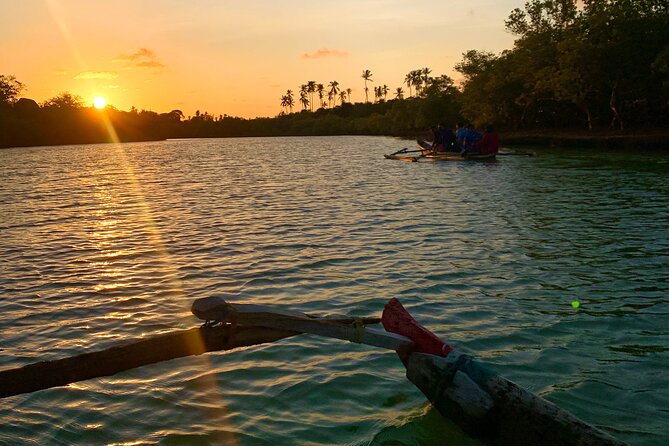
This is not only a scenic canoe trip. Omari explains the mangrove ecosystem, local history, and culture, along with the importance of protecting the river.
Mangroves are easy to treat as background scenery. A good guide helps you understand that they are part of a living system and a useful resource for nearby communities. The trip supports a place where several villages rely on the area for income, and the funds can help local employment, health care, and education.
That community connection gives the $28 price more weight. You are paying for a two-hour excursion, but you are also helping keep local work within the area. The captain earns from the boat, the guide earns from his knowledge, and the wider community can benefit from tourism that does not depend on engines or large groups.
The impact claim should still be viewed realistically. One short canoe trip will not solve every local problem. But this is a direct and understandable model: local people provide the boat and guiding, and the activity encourages visitors to value the wetland rather than treat it as empty space.
I like that the environmental message is built into the outing instead of added as a slogan. The canoe itself produces no engine fumes, and the pace gives you time to see why the place deserves care.
More canoe and kayak trips near Diani Beach:
- Diani Beach: Kongo River Sunset Experience in a canoe
★ 4.4 · 31 reviews - Diani: Sunset Cruise along Kongo River on Wooden Canoe boat
★ 4.6 · 20 reviews - Kongo River Sunset Experience in Canoe
★ 4.0 · 6 reviews - Watamu Marine Park & Sudi Island Mangrove Forest Canoe Ride.With sea food lunch
★ 4.5 · 31 reviews
Villages Along the Water
The route passes through an area surrounded by villages. That makes the trip feel more connected to daily life than a ride limited to a protected viewing zone.
You may see signs of the communities that depend on the river and mangroves. The supplied details do not promise specific village visits, performances, or scheduled conversations, so you should not book this expecting a formal cultural show. The cultural element comes through the guide’s explanations and the setting itself.
That distinction is important. This is a respectful way to gain context, not a staged village attraction. You are moving through a lived-in area while learning how the river fits into local history and work.
For many visitors, this will be the most meaningful part of the trip. The sunset photographs are easy to remember, but understanding who uses the waterways and why mangroves matter gives the scenery a longer life in your memory.
Sunset on the Kongo River
As the afternoon fades, the canoe becomes a natural place to slow down. The water, palms, mangroves, and sky take on softer colors, and the engine-free ride keeps the mood calm.
The sunset is likely to be the most romantic moment for couples, but the format also suits families and friends who want something outdoors without a demanding physical challenge. Solo visitors can enjoy the quiet and let Omari provide the conversation and interpretation.
The experience received a 4.7 rating from 12 reviews, with 92 percent recommending it. The strongest praise centers on three things: the beautiful setting, Omari’s friendly manner and explanations, and the sense of safety during the ride. One account also describes Omari taking photographs, though you should not assume that a dedicated photography service is included.
Rain is the main wild card. One canoe ride began raining about halfway through, which shows why you should carry a light waterproof layer or protect your phone and camera. The weather can also affect the sunset itself. A cloudy evening may produce less dramatic colors, but it can still make for a peaceful ride.
Since poor weather can lead to a new date or a full refund, you are not simply left with a bad-weather outing. Still, keep the evening open and avoid scheduling an important dinner immediately after the stated end time.
Is $28 a Fair Price?
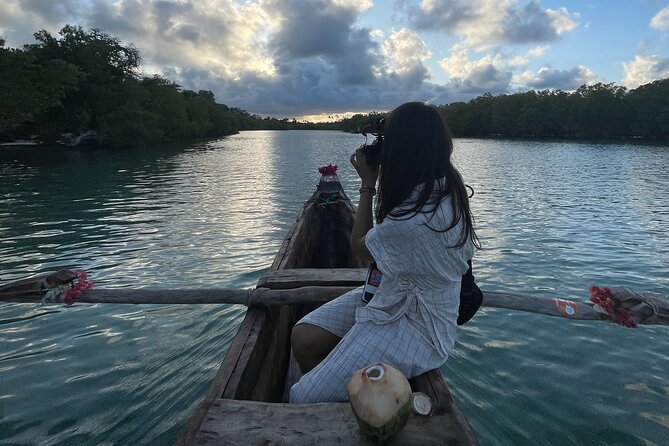
At $28 per person, this is a reasonable price for a two-hour guided activity in Diani, especially if you value local employment and a small group. You receive a canoe ride, a captain, a guide, nature interpretation, and a sunset setting without the fuel costs and noise of a motorboat.
The value is strongest for people who want context. If you only want a quick sunset photograph, you may find the ride longer than necessary. If you enjoy hearing about trees, birds, communities, and conservation, the price feels more justified.
The small maximum group of eight is another plus. You are not paying for a private boat, but you are also unlikely to be part of a large crowd. A smaller group gives Omari more opportunity to answer questions and helps preserve the quiet mood.
The experience is mobile-ticketed, which makes booking easy. Confirmation is provided at booking. Service animals are allowed, and the meeting point is near public transportation. Most people can participate, though anyone booking should remember that this is an open canoe activity and that all participants join at their own risk.
Who Will Enjoy This Canoe Trip?
I would choose this outing for:
- Couples who want a calm sunset activity away from the beach crowds.
- Families and friends who enjoy gentle outdoor experiences.
- Solo visitors who like nature, local stories, and a relaxed pace.
- Bird watchers who are happy to observe without guaranteed sightings.
- Visitors who want tourism income to reach local guides and boat crews.
- Anyone who prefers a quiet canoe to a noisy engine boat.
I would think twice if you want a highly structured tour with many scheduled stops, guaranteed wildlife, or comfortable covered seating. The information provided does not promise those things.
You also need to accept some weather exposure. Rain may arrive, and the river scenery depends on the day’s light. Bring protection for electronics and wear clothing suited to a simple outdoor boat trip.
Free cancellation is available up to 24 hours before the 4:45 pm start time. Inside that window, you do not receive a refund, and changes are not accepted. If the operator cancels because of poor weather, you are offered another date or a full refund.
Should You Book the Diani Sunset Canoe?
Book it if you want to see a quieter side of Diani and prefer a local canoe, a small group, and a guide who can explain what you are seeing. The best reasons are Omari’s bird and tree knowledge, the peaceful human-powered boat, and the chance to support people connected to the river.
Skip it if your priority is a guaranteed sunset, a polished boat, or a packed schedule of attractions. This is a slow, weather-dependent outing. For the right person, that is exactly the point.
FAQ
Where does the canoe tour start?
The tour starts at Kongo Mosque in Diani Beach, Kenya.
What time does the tour begin?
The start time is 4:45 pm.
How long does the experience last?
The canoe trip lasts approximately two hours.
Where does the tour finish?
The activity ends back at the Kongo Mosque meeting point.
How many people can join the tour?
The maximum group size is eight people.
Is the canoe powered by an engine?
No. The canoe is powered by human energy. The captain rows, and you can row too if you wish.
What happens if the weather is poor?
The experience requires good weather. If it is canceled because of poor weather, you can choose another date or receive a full refund.
Just added around Diani Beach
- 10-Days Kenya Wildlife Private Safari and Mombasa Diani Beach Holidays★ 5.0 · 5 reviews
- 2 Days Private Safari in Tsavo from Diani Beach with Pick Up★ 4.5 · 4 reviews
- From Mombasa Airport: Diani transfer in a minivan (5 pax)★ 4.5 · 13 reviews
- Wasini Dolphin Snorkeling★ 3.5 · 8 reviews
- Dolphin Watch & Snorkeling at Kisite Marine Park & Wasini Island★ 3.5 · 11 reviews
- Day Tour to Tsavo East National Park from Mombasa or Diani★ 5.0 · 5 reviews
- Overnight Safari to Tsavo East National Park from Mombasa/Diani★ 5.0 · 4 reviews
- 3 day Diani Beach To Tsavo East & West★ 5.0 · 5 reviews
Dhow & Sunset Cruises, compared.
Dhow Adventure to Wasini Island & Kisite Marine Park
Read our review →
PILLI PIPA DHOW, the genuine product, snorkeling tour to Kisite Marine Park
Read our review →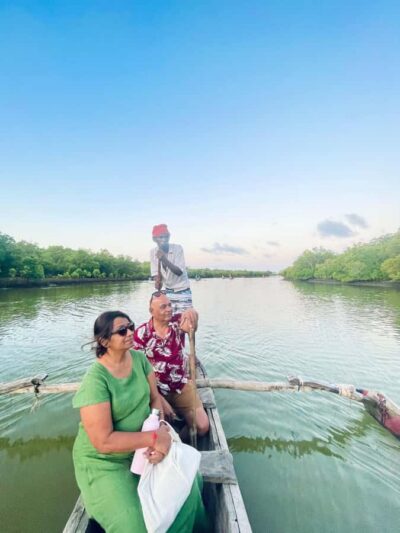
Sunset Canoe Tour along the River with Mangroves
Read our review →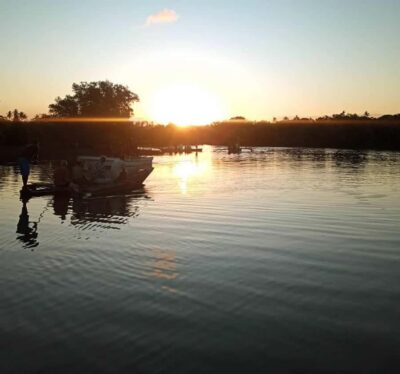
Watamu Marine Park & Sudi Island Mangrove Forest Canoe Ride.With sea food lunch
Read our review →
Sunset Cruise along Kongo River on Wooden Canoe boat
Read our review →
Kisite Marine Park Dhow & Snorkeling with Lunch
Read our review →
Browse the lists this tour appears in