
Reviewed · WALKING TOURS
Karura Forest: Walking tour with Nature and Waterfalls.
Karura Forest gives Nairobi a welcome dose of quiet, with woodland paths, caves, waterfalls, and monkey territory all packed into a three-hour walk. Allan guides you through the forest, explains animal behavior and Kenyan history, and adds a few Swahili words along the way.
I like the mix of nature and local context. The caves give the walk a human story, while Lily Lake and the waterfalls provide good photo stops. I also like that the route includes time at The River Café, a sensible place to pause before walking on.
The main consideration is the distance. You may cover roughly 6 or 7 kilometers, with some up-and-down walking, so this is not a gentle stroll from one viewpoint to the next. Good shoes and a refillable water bottle are essential, and pregnant women should not book this activity.
Key points to know before you go
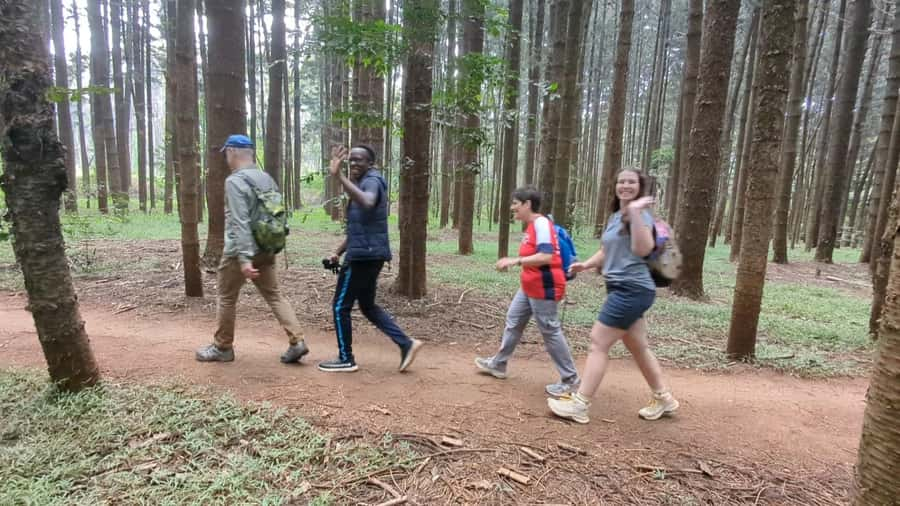
- Allan leads the walk in English or Swahili, with explanations of forest life, Kenyan history, culture, and monkey behavior.
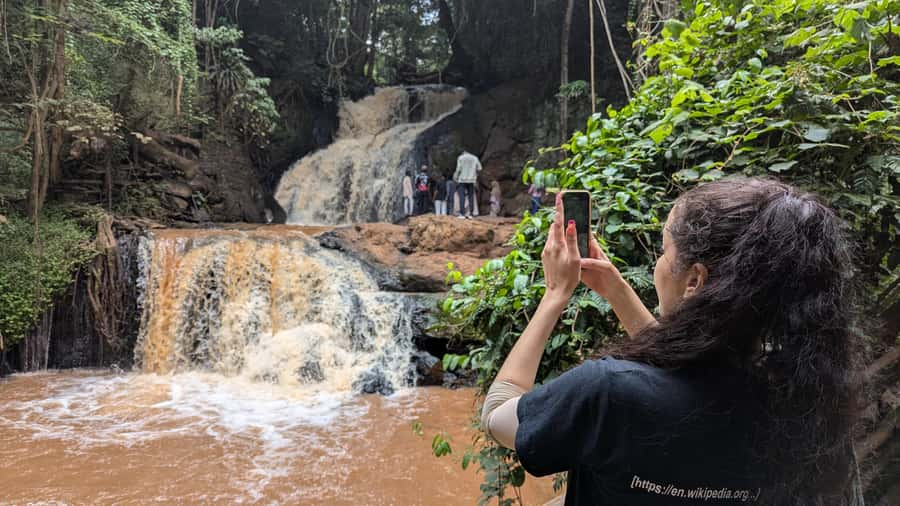
- The three-hour route includes two waterfalls, historic caves, Lily Lake, bird areas, waterways, and woodland trails.
- The $40 price covers the local guide only. You must also pay the $4 forest entrance fee by card or M-PESA.
- Expect a proper walk of about 6 or 7 kilometers, not a short sightseeing loop.
- The River Café provides a 20-minute break, with food and a pleasant setting inside the forest.
- Plastic bottles, smoking, alcohol, drugs, and drones are not allowed. Bring your own reusable bottle instead.
Why Karura Forest works well for a Nairobi day
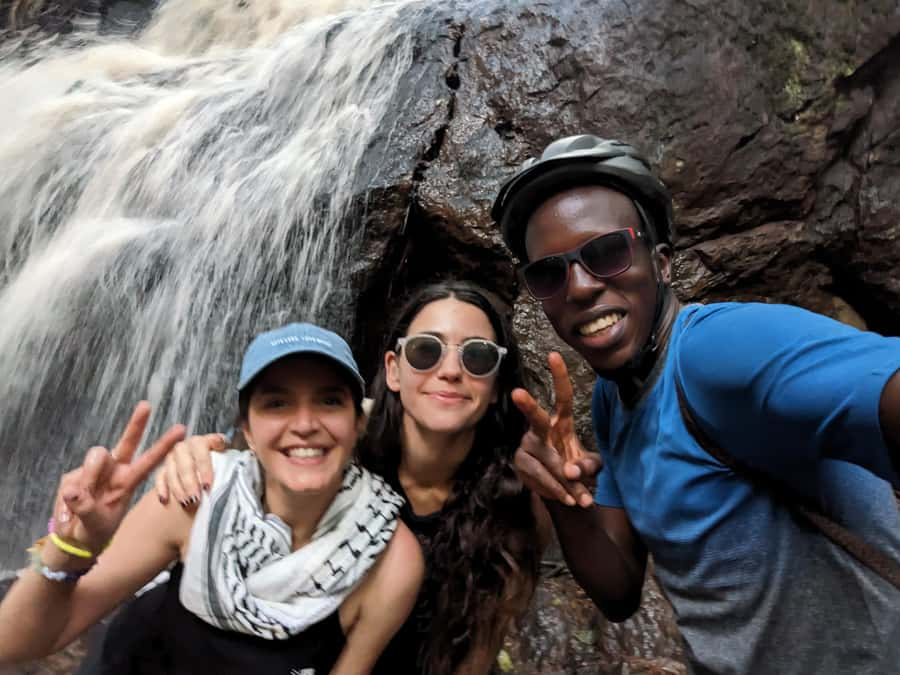
Karura Forest is a useful change of pace from Nairobi’s roads and buildings. Once you are among the trees, the city feels less intrusive. You hear birds, see changing plant life, and follow trails through woodland rather than spending another half-day inside a museum or vehicle.
This tour is not only about walking. Allan uses the forest to explain monkey behavior, local history, culture, and some Swahili vocabulary. That makes the outing more useful than a simple nature stroll. You get a better sense of how people and wildlife share this part of Nairobi.
The forest also gives you several kinds of scenery in a short time. There are trees and open woodland, narrow trails, waterways, caves, waterfalls, and a lake. The variety keeps the walk moving. You are rarely looking at the same sort of view for long.
The activity has a five-star rating from 12 verified bookings, and the strongest pattern is clear: Allan is valued for his storytelling, calm manner, safety awareness, and ability to explain the forest. One solo visitor also found him helpful beyond the planned walk, with extra stops in Nairobi. That is not part of the advertised route, so treat it as a possible personal arrangement rather than a promise.
More Walking Tours in Nairobi
- Nairobi: Historic and Modern Highlights Walking Tour
★ 4.8 · 703 reviews - Nairobi Historical Walking City Tour
★ 5.0 · 258 reviews - Nairobi Walking tour:Explore History Culture and Traditions
★ 4.8 · 222 reviews
Meeting Allan at Gate C on Kiambu Road
You meet at Karura Forest Gate C, on Kiambu Road opposite Sharks Palace. This specific gate matters, since Karura has more than one access point. Confirm the meeting details with Allan before you set out, especially if you are arriving by taxi or Uber.
The forest is easy to reach by Uber, according to one booking account, but you should still allow time to find Gate C and get settled. The contact number provided for help is +254 723 477 823, and WhatsApp is the best way to reach Allan if you need directions or have a last-minute question.
The tour begins with a five-minute safety briefing. This is brief, but it is useful. You will learn the basic expectations for walking in the forest, staying with the guide, and treating animals properly. Do not feed the monkeys. They are part of the forest, not a petting attraction.
The $40 cost is for the guide. Add the separate $4 forest entrance fee, payable by card or M-PESA. Cash is not accepted for entry. That combined price is reasonable if you want interpretation, route planning, and a local guide rather than simply entering the forest on your own. If you are only looking for exercise, the extra guide fee may feel less necessary. If you want context and a better chance of seeing the main points in three hours, it offers better value.
The first 90 minutes: woodland trails, monkeys, and caves
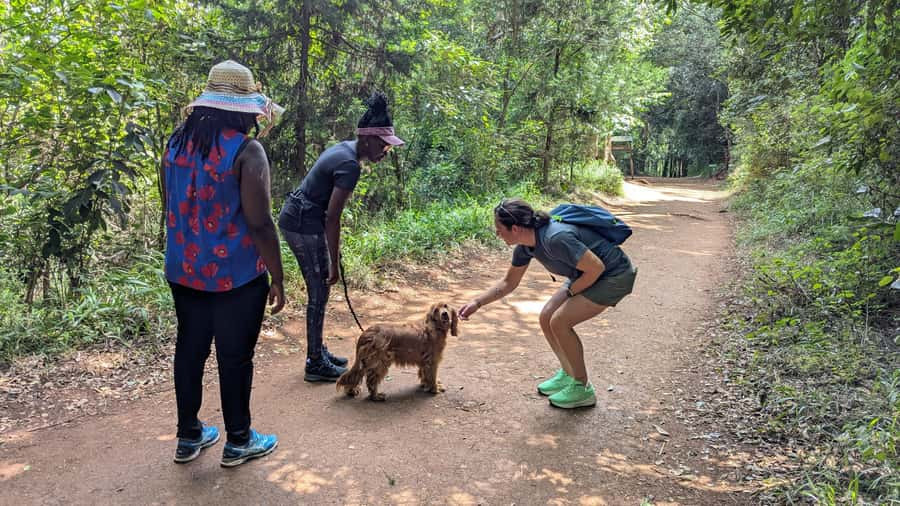
After the safety briefing, the main walking section begins. The first substantial part lasts about an hour and a half and includes photo stops, scenic views, woodland trails, and guided explanations.
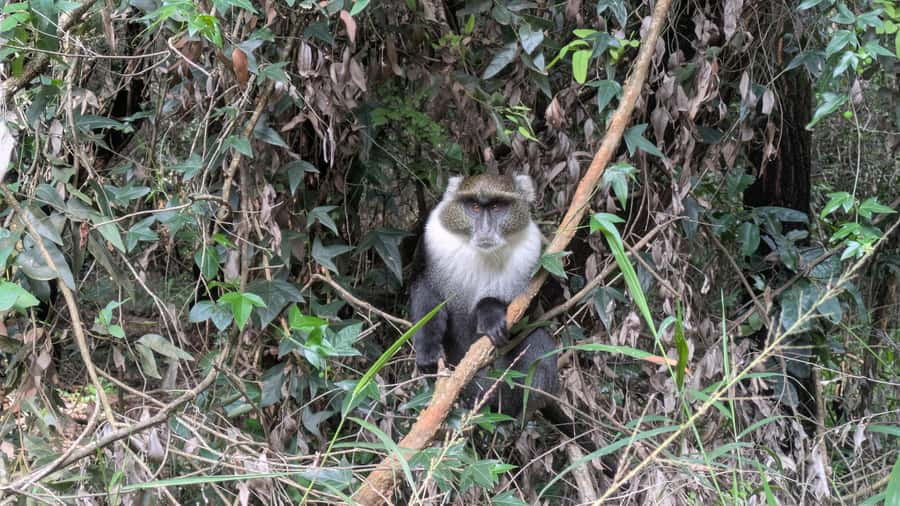
The pace should suit you if you can walk steadily for several hours. This is not presented as a wildlife safari, so animal sightings are not guaranteed. Still, monkey territory is part of the route, and Allan explains characteristics and behavior when the opportunity comes. The useful part is learning how to watch without disturbing the animals.
You should keep your food packed away and avoid reaching toward monkeys. Feeding wildlife is forbidden. That rule protects both the animals and you. A monkey that learns to expect food can become a nuisance, and close interaction is not the point of this forest walk.
The historic caves add a different layer to the experience. They are not simply another photo stop. Allan explains their connection to Kenyan people and the history associated with the site. This helps turn the forest from a pleasant green space into a place with human stories attached to it.
The caves may be one of the most meaningful parts of the route for you if you enjoy history in small, tangible settings. You are not sitting through a long lecture. Instead, the forest, rock, and trail provide the setting for a short explanation of the past.
Wear shoes with a firm sole. The route can include uneven ground, and the full walk may reach roughly 6 or 7 kilometers. The hills are not described as severe, but there is some up-and-down walking. Comfortable clothing will also help, especially if you are walking during a warm part of the day.
Waterfalls and forest photo stops
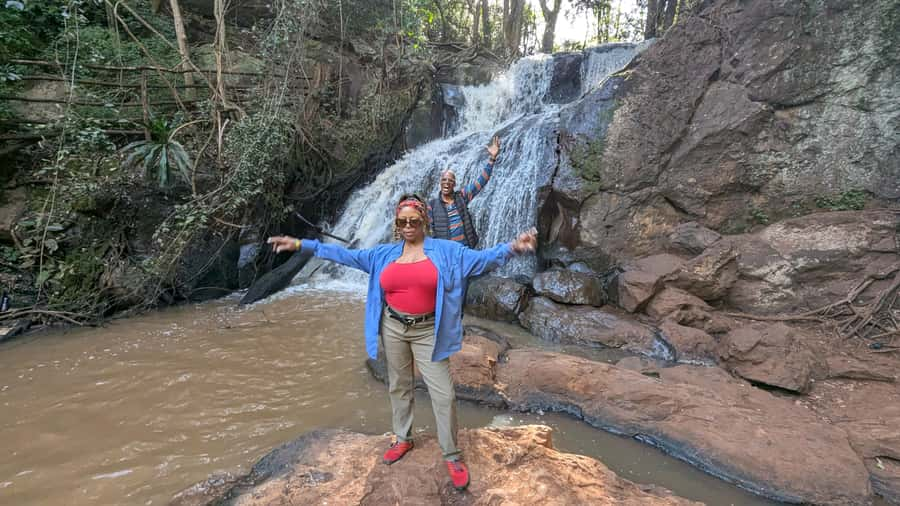
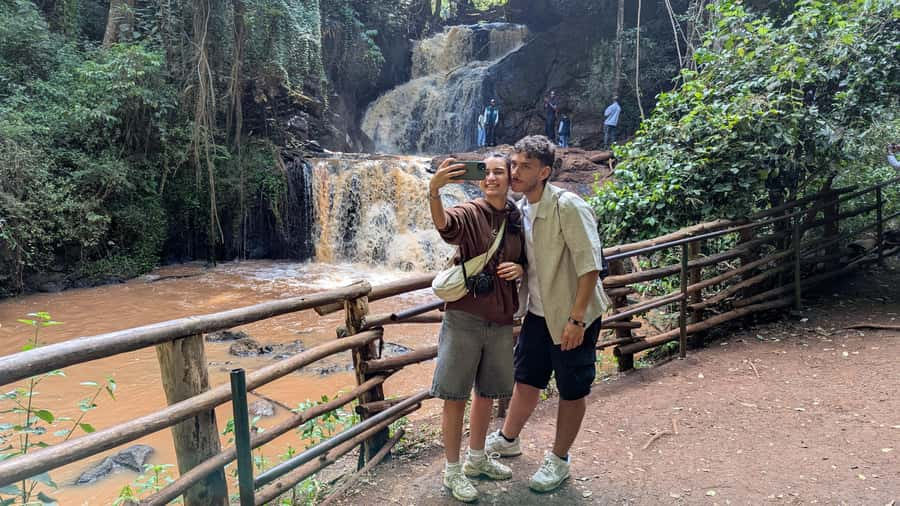
The two waterfalls give the walk a clear visual reward. Water flow can vary, and the forest is likely to feel different after rain, when waterways and rapids become more noticeable. The route also includes scenic views along the way, so you do not need to wait for the waterfalls to take photographs.
Take time to look beyond the main drop of water. The value of these stops is the contrast between moving water, trees, and the quieter trail. Allan can also help you understand where you are and what you are seeing rather than leaving you to guess.
You should bring your phone or camera, but do not let photographs turn the outing into a race. Three hours sounds generous until you include the safety talk, walking time, stops, and the café break. If you stop constantly, you may need to keep the pace brisk later.
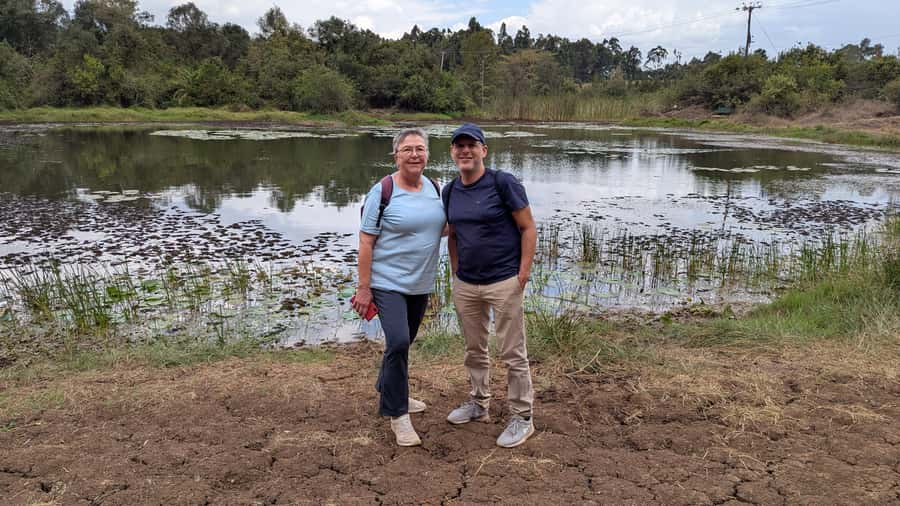
The forest is also home to bird territories. Lily Lake is a particularly useful stop for anyone who enjoys birdwatching or simply wants a slower moment beside water. Different bird species may be present, but the activity does not promise a fixed list or guaranteed sightings. Bring patience, not expectations.
Lily Lake also provides a change from the moving water at the waterfalls. The falls give you sound and motion. The lake gives you a calmer view and a chance to watch the surroundings. These different stops are one reason the route feels varied rather than repetitive.
More forest and nature walks around Nairobi:
- Nairobi: From Nairobi-Karura Forest Guided Walking Tour
★ 5.0 · 21 reviews - Nairobi: Karura Forest Horseback Riding Tour
★ 4.8 · 11 reviews - Karura Forest Nature Trail
★ 4.5 · 10 reviews - Hike in The Karura Forest
★ 4.3 · 10 reviews
The 20-minute pause at The River Café
About halfway through the outing, you stop at The River Café for roughly 20 minutes. The restaurant is inside the forest and is described as having good food and a pleasant atmosphere.
This break matters more than it may seem. A 6 or 7 kilometer walk is easier when you have a planned pause, especially if you are visiting Nairobi after a long flight or fitting the tour between other activities. It also gives you a chance to buy food if needed, though the supplied information does not say whether a meal is included. Plan to pay separately for anything you order.
Do not treat the café stop as the end of the activity. You still have about 70 minutes of guided walking afterward. Use the break to rest your feet, refill your energy, and check that your phone has enough battery for more photos.
The café also gives the tour a more relaxed rhythm. Instead of three hours of continuous walking, you get a proper pause between the two main trail sections. That is helpful for most reasonably active visitors, though it does not remove the need for comfortable shoes.
The final 70 minutes: lake, waterways, and wildlife
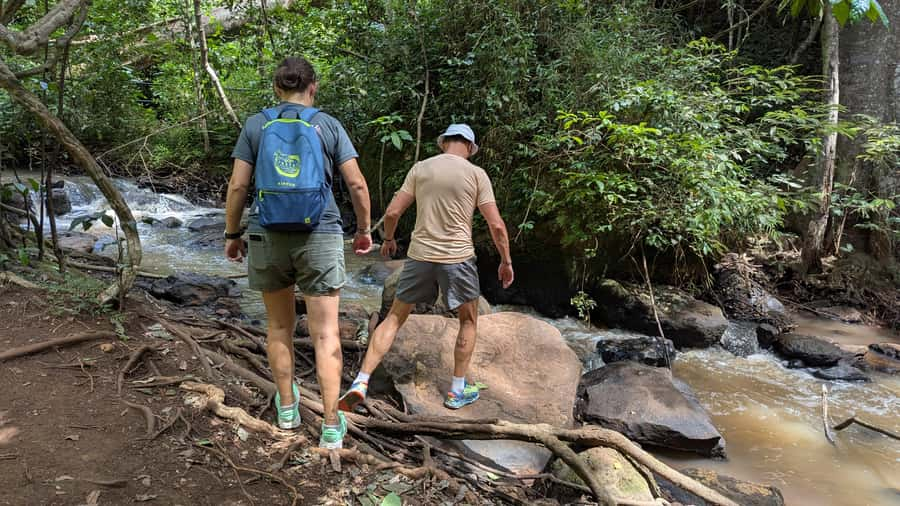
After the café, Allan leads you back onto the forest trails for another guided section of about 70 minutes. You continue with photo stops, scenic views, and explanations of the area.
This part may include more woodland, bird territories, waterways, rapids during rainy periods, picnic zones, and monkey areas. The exact conditions can change with the season, particularly around water. After rain, you may see stronger flow in streams and rapids, but you should also expect wetter or muddier ground.
This is where a guide adds practical value. Karura has many paths and points of interest. Allan knows the route and can keep the walk focused on the caves, waterfalls, lake, wildlife areas, and other notable spots within the time available. Several visitors specifically valued his calm, safe approach and his ability to explain the forest without rushing.
The tour ends back at Karura Forest. Since the meeting and return point are both at the forest, you do not need to arrange a separate transfer between stops. You can leave from there or make your own onward plans in Nairobi.
If you are interested in cycling, bicycle rentals are available at the gate for Ksh 500. That is an alternative to consider, but this particular experience is built around walking. Ask Allan in advance if you want to discuss combining cycling with the guided visit. Do not assume a bicycle is included in the $40 fee.
What Allan adds to the experience
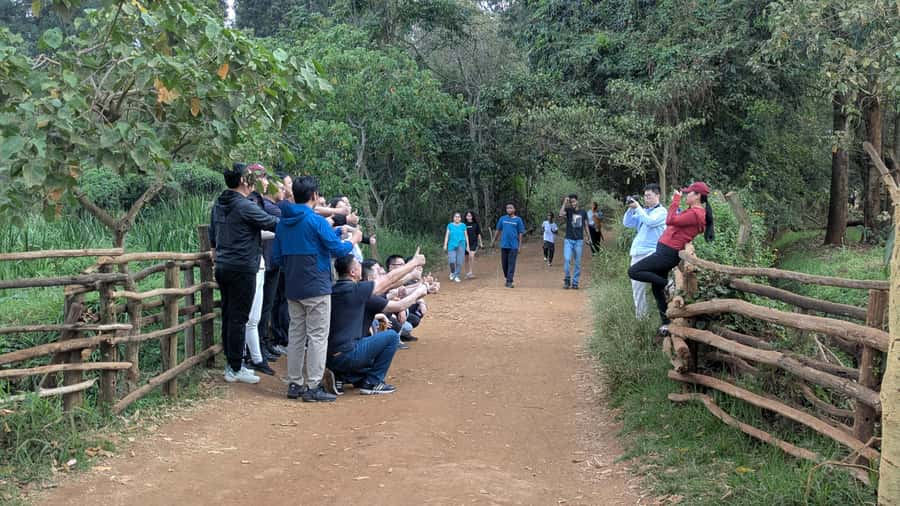
A forest can be enjoyable without a guide, but it can also become a sequence of trees and paths with little meaning attached. Allan’s role is to explain what you are seeing and connect it to Kenya.
His strengths, based on the information provided, include storytelling, knowledge of forest routes, attention to safety, and a friendly conversational style. He speaks English and Swahili. You can expect explanations about monkey characteristics, Kenyan history and culture, the caves, and useful Swahili words.
That mix suits you if you like asking questions. It also works well for solo visitors who want company without booking a large group excursion. The activity details do not specify group size, so contact Allan if the size of your party matters.
One visitor found Allan helpful and open, while another described him as calm and polite. Those qualities are useful in a forest setting. You want a guide who notices the pace of the group, keeps the route clear, and explains wildlife without encouraging close contact or feeding.
What to bring and what to leave behind
Keep your packing simple:
- Comfortable walking shoes with good grip
- Comfortable clothes suited to a three-hour walk
- A reusable personal water bottle
- A phone or camera
- A card or M-PESA for the $4 entrance payment
- Extra money if you want food or drinks at The River Café
Plastic bottles are not allowed in the forest. Use a refillable bottle instead. Smoking, drones, alcohol, and drugs are also prohibited.
Do not bring food to feed the monkeys. Do not plan to fly a drone for aerial pictures. These rules are straightforward, but following them helps protect the forest and keeps the experience focused on watching wildlife rather than handling it.
The tour is not suitable for pregnant women. The walking distance and uneven sections are the reason to take this restriction seriously. If you have another mobility concern, the available details do not provide a specific accessibility assessment, so ask Allan before booking.
Is the $40 guide fee good value?
At $40 per person, plus the $4 entrance fee, this is not the cheapest way to enter Karura Forest. You are paying for a three-hour guided route rather than admission alone.
I think the price makes sense if you want the caves, waterfalls, Lily Lake, bird areas, and monkey territories covered in one outing. It is also useful if you want explanations of Kenyan history, culture, wildlife, and language. A self-guided walk may cost less, but you would need to plan your own route and would miss Allan’s interpretation.
The value is weaker if you only want a short walk among trees or prefer complete independence. You should also remember that the café, bicycle rental, transport to the gate, and any food are separate costs.
The reserve-now, pay-later option and free cancellation up to 24 hours before the activity make planning easier. Check the available starting times before booking, since the experience lasts three hours and you may have other Nairobi plans.
Who should book this Karura Forest walk?
This tour suits you if you want a small-scale nature experience close to Nairobi, enjoy walking, and prefer a guide who talks about more than scenery. It is a good fit for solo visitors, couples, and anyone interested in combining wildlife, local culture, and light exercise.
It also works well for a final day in Nairobi. You can spend three hours in the forest without committing to a full-day excursion, then return to the city for other plans. The tour does not require a long transfer once you reach Gate C.
You should think twice if you dislike walking, want guaranteed animal sightings, or need a fully accessible route. This is not a drive-through wildlife experience. You will be on foot for much of the time, and the route may cover several kilometers.
Should you book it?
Book this walk if you want Karura Forest explained rather than simply visited. The best reasons are the range of stops, Allan’s storytelling and safety-minded approach, and the chance to connect waterfalls, caves, monkeys, birds, and Kenyan culture in one outing.
Skip it if you are looking for a short, effortless photo stop or a purely independent visit. For an active three hours with a local guide, two waterfalls, Lily Lake, historic caves, and a café break, the $40 guide fee is fair. Bring proper shoes, leave the plastic bottle and drone at home, and budget the extra $4 for forest entry.
FAQ
How long does the Karura Forest walking tour last?
The tour lasts three hours, including the safety briefing, guided walking sections, photo stops, and the break at The River Café.
How much does the tour cost?
The guide fee is $40 per person. The forest entrance fee is separate and costs $4.
Is the forest entrance fee included?
No. You pay the $4 entrance fee separately at the forest gate.
How can I pay the forest entrance fee?
The entrance fee can be paid by card or M-PESA. Cash is not accepted.
Where is the meeting point?
Meet Allan at Karura Forest Gate C on Kiambu Road, opposite Sharks Palace.
What languages does the guide speak?
The tour is available in English and Swahili.
How far will I walk?
The available information indicates that you may walk roughly 6 or 7 kilometers. The route includes some up-and-down sections.
Is The River Café included in the tour?
The tour includes a break and sightseeing time at The River Café, but food and drinks are not stated as included.
Can I rent a bicycle at Karura Forest?
Yes. Rental bicycles are available at the gate for Ksh 500. The advertised activity itself is a walking tour.
What items are not allowed in the forest?
Smoking, drones, alcohol, drugs, and plastic bottles are not allowed. You may bring your own personal reusable water bottle.
Just added around Nairobi
- Visit kibera Slum the chocolate city★ 4.8 · 3 reviews
- Day Tour to Nairobi national park, Elephants, and Giraffe Center★ 3.5 · 8 reviews
- Explore local Market matatu ride & Make Kenyan Cuisines with a home cook★ 5.0 · 8 reviews
- Kibera Slum Tour with a Local★ 5.0 · 15 reviews
- Urban Forest Tour in Nairobi★ 5.0 · 7 reviews
- Vegans special safari★ 4.5 · 4 reviews
- Private Mini Safari Tour in Nairobi★ 5.0 · 6 reviews
- Private Kenyan Cooking Class in Nairobi with a Local★ 5.0 · 3 reviews
Walking Tours, compared.

Nairobi: Historic and Modern Highlights Walking Tour
Read our review →
Walking Tour Through Old Town Mombasa and Fort Jesus
Read our review →
Nairobi Walking tour:Explore History Culture and Traditions
Read our review →

Nairobi City Walking Tour with Traditional Kenyan Lunch
Read our review →

Browse the lists this tour appears in