
Reviewed · HISTORICAL TOURS
Go Granny Go – An Amazing Cultural Tour in Kenya
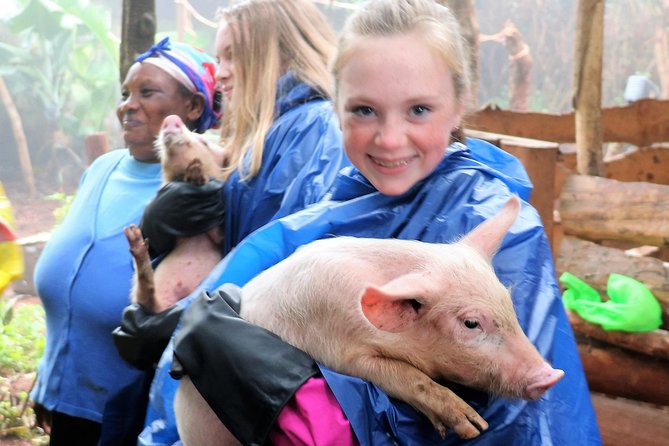
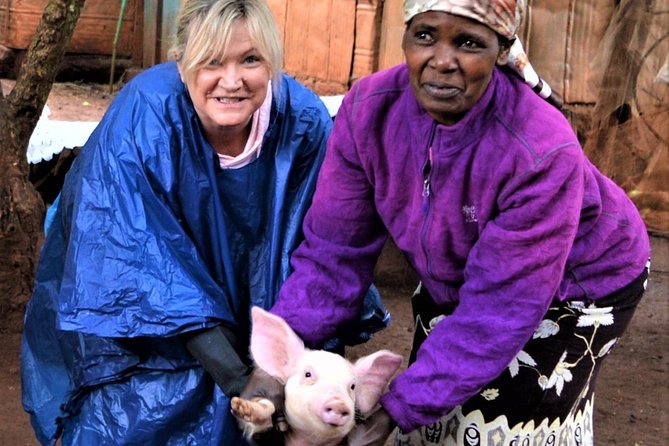
The heart of Go Granny Go is a direct meeting with Kikuyu grandmothers who help raise children, lead their communities, and run small pig farms. This is not a quick photo stop. You sit with the women, hear about family life, share lunch and tea, and may lend a hand with simple farm chores.
I like the small group of up to nine people, which gives the visit a personal feel. I also like the practical focus on pig farming, since it shows how a modest business can help grandmothers feed large households. The main consideration is that the visit deals openly with poverty and family hardship, so you should come ready to listen respectfully rather than treat it as light entertainment.
Key points to know before you book
- Meet Kikuyu grandmothers in their own community, not in a staged cultural center.
- See a pig-farming program in action, with the option to help with chores.
- Share lunch and tea while learning about family life, history, and culture.
- Travel in a group capped at nine, a useful size for conversation.
- Hotel pickup and drop-off are included, making the half-day easier to manage in Nairobi.
- Plan on roughly six and a half hours, with the village visit lasting about four hours.
Why this Nairobi cultural tour feels different
Many Nairobi excursions focus on wildlife, city landmarks, or large cultural shows. This experience takes a quieter route. You spend time with women who are community leaders, family carers, and working farmers. The result is less about watching a performance and more about hearing how daily life works inside one Kikuyu community.
The women you meet may be responsible for raising grandchildren when parents can no longer care for them. Some households include as many as 20 family members living in a single-room corrugated iron home. That detail gives the pig-farming program real weight. This is not simply a demonstration of rural work. It is tied to food, school costs, and the basic needs of extended families.
I appreciate that the visit presents the grandmothers as active people with skills and responsibilities, not only as recipients of help. They lead, care for relatives, work with livestock, and take part in a program designed to create a sustainable income. You get a clearer picture of both the pressure they face and the effort they make to improve their situation.
The experience is also personal in scale. With no more than nine participants, you have a better chance to ask questions and talk across the table. A larger group could easily turn the women into a distant audience attraction. Here, the small size helps keep the meeting focused on conversation.
More history walks around Nairobi:
- Nairobi: Historic and Modern Highlights Walking Tour
★ 4.8 · 703 reviews - Nairobi Historical Walking City Tour
★ 5.0 · 258 reviews - Nairobi Walking tour:Explore History Culture and Traditions
★ 4.8 · 222 reviews
Starting near Nairobi at 9:30 in the morning
The experience begins at 9:30 am, with pickup offered from your hotel. Round-trip transport takes away one of the common headaches of a Nairobi outing: figuring out how to reach a village outside the city and how to get back after a full morning and afternoon.
The exact pickup time and route can depend on your hotel and local traffic, so leave room in your morning schedule. The total experience lasts about six hours and 30 minutes. The village portion is listed at about four hours, with the rest of the time used for transportation and the planned meal and tea.
That length feels sensible for this kind of visit. You have enough time to get beyond introductions, but the day does not become an exhausting full-day excursion. If you are fitting this around a safari departure, airport transfer, or other Nairobi plans, check your timing carefully. A 9:30 start and a six-and-a-half-hour duration take up most of the day.
The tour is mobile-ticketed, and confirmation is provided when you book. Service animals are allowed, and most people can take part. Since the experience deals with a working farm and a community visit, contact the provider if you have a specific mobility or participation concern that is not answered by the general information.
Arriving in the Kikuyu village near Ngong Hills
The itinerary identifies Ngong Hills as the first stop, but the main activity takes place in a Kikuyu village near Nairobi. The setting matters. You are not simply hearing about Kikuyu culture from a guide in the city. You are meeting community members in the place where family care, farming, and local leadership happen.
Kikuyu culture is presented through personal stories and daily work. The focus is not a long lecture packed with dates. Instead, you learn how grandmothers help hold families together and how their responsibilities can stretch across several generations.
I find this approach useful because culture is easier to understand when connected to ordinary choices. Who cares for children? How does a family earn money? What happens when parents cannot provide care? How can a small farm support a household? These questions give the visit a human scale.
You should also expect the conversation to be serious at times. The financial strain described here is severe, and the grandmothers may discuss difficult family circumstances. That can be moving, but it also calls for good manners. Listen first, ask questions with care, and remember that the women are sharing parts of their lives, not putting on a spectacle.
Meeting the grandmothers and their families
The central encounter is with the grandmothers themselves. They are described as warm and welcoming, but the strongest part of the visit is not simply their friendliness. It is the chance to understand the many jobs they carry at once.
A grandmother may be raising grandchildren, caring for other relatives, managing a household, and working to bring in income. In some cases, as many as 20 family members share a one-room corrugated iron home. That fact helps explain why a reliable small business can make such a difference.
The tour also gives you time to meet family members. The conversation can move beyond a formal introduction and toward the wider household. You get a look at how care and responsibility are shared within an extended family, while learning about the pressures that shape those arrangements.
One useful feature is the presence of the organization’s manager and an assistant. Their role is to help the visit run smoothly and provide context around the program. The available information does not provide their names, but their involvement gives the meeting structure without making it feel like a standard lecture.
This is a good fit for you if you enjoy asking questions and listening to personal accounts. It is less suitable if you want a fast sequence of sights with little discussion. The value comes from time spent with people, so patience matters.
A few more Nairobi trips worth comparing
- Nairobi National Park Half-Day Tour; Free Wi-Fi connection
★ 5.0 · 878 reviews - Nairobi: National Park & Optional Elephants & Giraffe Center
★ 4.8 · 874 reviews - NAI NAMI: Nairobi Storytelling Tour with Street Children
★ 5.0 · 792 reviews - Nairobi National Park Half-Day Game Drive
★ 4.5 · 738 reviews
Seeing the pig-farming program in practical terms
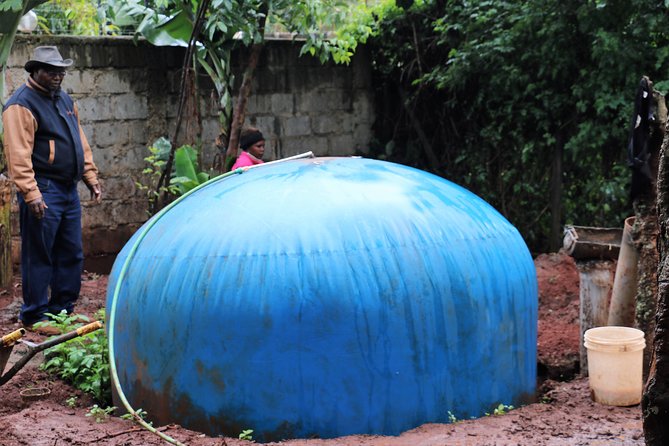
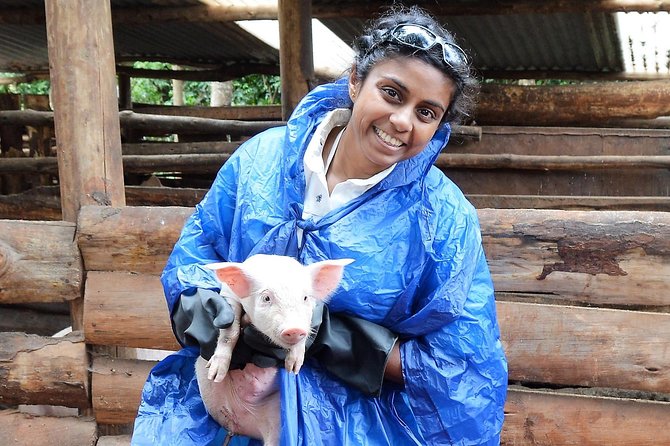
The pig farm is the most concrete part of the program. You are shown how the grandmothers use pig husbandry as a source of income, and you may pitch in with chores if you choose.
That optional hands-on element is useful because it connects the conversation to real work. You are not just told that the program creates income. You see the farm and get a sense of the daily effort involved. The activity is simple, but it gives you a better understanding of how small-scale farming supports a household.
The program is supported by One Horizon and is intended to provide a sustainable source of income. That word matters. The goal is not only a one-time handout. Pig farming can give the grandmothers an ongoing way to help pay for food and family needs.
Still, you should keep your expectations grounded. This is not a farm tour with a long list of animals or a polished agricultural exhibit. The pig-farming stop is one part of a wider community visit. The main value comes from understanding why this work matters to the women and their families.
You can participate in chores if you like, but you are not required to do so. That choice is helpful for people who want a more active visit and for those who prefer to observe. Wear clothing and shoes that you do not mind using around a working farm, although the supplied information does not specify a dress code.
Singing, lunch, and tea with the community
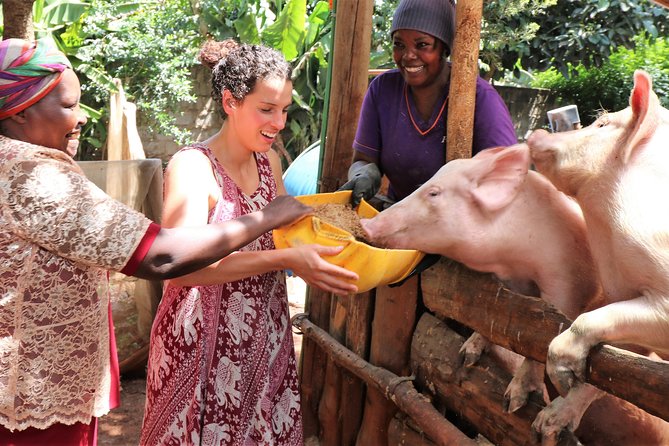
The visit includes joyful singing, lunch, and tea. These details keep the experience from becoming a grim account of hardship. You learn about difficult conditions, but you also share ordinary hospitality and a moment of celebration.
Lunch is especially important because it creates unhurried time for conversation. You are not rushing from one explanation to the next. Sitting together gives you space to ask about the family, the village, and the work that supports the households.
Tea adds another relaxed pause. In many cultural visits, food can feel like an afterthought. Here, it is part of the meeting itself. Eating together helps shift the relationship from audience and presenter toward host and visitor, although you should still remain aware that the women are sharing their community with you.
The singing offers a different way into the culture. You may join in, listen, or simply enjoy the moment. It gives the visit warmth and energy after the more serious discussion of family responsibilities and poverty.
I would not book this experience expecting a formal dance show or a staged cultural performance. The information points to joyful singing as part of the welcome and time together. That is a more modest promise, but also a more personal one.
What the $265 price includes in practical value
At $265 per person, this is not a low-cost Nairobi outing. You are paying more than you would for a simple city transfer or a basic group activity. The price needs to be judged by what the day includes: round-trip hotel transport, a small group, community access, a farm visit, lunch, tea, and several hours with the grandmothers.
The group limit of nine is a major part of the value. A small group gives you a better chance to speak directly with the women and makes the visit less crowded. It also helps the meal and farm visit feel manageable.
The transport has value as well. Nairobi traffic and unfamiliar roads can turn a simple trip into a tiring project. Pickup and drop-off let you focus on the experience rather than arranging the journey yourself.
Most important, the fee supports a program connected to income generation for the grandmothers. You should not assume every dollar goes directly to the women, since the supplied information does not provide a financial breakdown. But the stated purpose of the pig-farming program is clear: help the women earn income to feed their families.
For you, the price makes the most sense if you want a thoughtful cultural visit and prefer a small group to a large tour. If your budget is tight or your main goal is to see as many Nairobi sights as possible, this may feel expensive. If you value direct community contact and time for conversation, the cost is easier to justify.
Who will get the most from Go Granny Go
This tour suits you if you want to understand Kenya through personal stories and local work. It is a strong choice for visitors who have already planned wildlife activities and want a different side of the country.
It can also work well for families and mature visitors because most people can participate and the pace centers on conversation, lunch, tea, and a short farm activity. The information does not give an exact age range, so families should consider how their children respond to serious topics about poverty and family care.
You will likely appreciate it if you enjoy:
- Small-group experiences rather than large coach tours
- Meeting local people in their own community
- Learning through food, conversation, and daily work
- Supporting programs that aim to create ongoing income
- A structured outing with hotel transport included
You may want a different activity if you prefer grand monuments, wildlife, shopping, or a tightly scheduled sightseeing route. This is a people-focused visit, and its rewards come from attention and conversation.
Booking advice and final verdict
I would book Go Granny Go if you want a meaningful half-day outside Nairobi and understand that the experience may be emotionally serious as well as welcoming. The strongest features are the small group, the time with the grandmothers, and the clear link between the pig farm and family income.
Before booking, make sure the 9:30 am start and roughly six-and-a-half-hour duration fit your schedule. The tour offers free cancellation up to 24 hours before the start time. Cancellations or changes made less than 24 hours ahead are not accepted for a refund.
The $265 price is high for a half-day, but it includes transport, food, a small group, and direct time with community leaders. I would choose it for the quality of contact, not for the number of sights checked off a list.
FAQ
Where does the Go Granny Go tour take place?
The experience begins with pickup in Nairobi and continues to a Kikuyu village near Nairobi, with the itinerary identifying Ngong Hills as the first stop.
What time does the tour start?
The stated start time is 9:30 am.
How long does the experience last?
The full experience lasts approximately six hours and 30 minutes. The village visit itself is listed at about four hours.
How many people can join the tour?
The maximum group size is nine travelers.
Is lunch included?
Yes. Lunch and tea are included as part of the community visit.
Will I visit a pig farm?
Yes. You are shown a pig farm connected to the community income program, and you may help with chores if you wish.
Is hotel pickup available?
Yes. Pickup and drop-off from your hotel are offered.
Can I cancel for a full refund?
Yes, if you cancel at least 24 hours before the experience begins. Cancellations made less than 24 hours before the start time are not refunded.
Just added around Nairobi
- Visit kibera Slum the chocolate city★ 4.8 · 3 reviews
- Day Tour to Nairobi national park, Elephants, and Giraffe Center★ 3.5 · 8 reviews
- Explore local Market matatu ride & Make Kenyan Cuisines with a home cook★ 5.0 · 8 reviews
- Kibera Slum Tour with a Local★ 5.0 · 15 reviews
- Urban Forest Tour in Nairobi★ 5.0 · 7 reviews
- Vegans special safari★ 4.5 · 4 reviews
- Private Mini Safari Tour in Nairobi★ 5.0 · 6 reviews
- Private Kenyan Cooking Class in Nairobi with a Local★ 5.0 · 3 reviews
Historical Tours, compared.
Nairobi: Historic and Modern Highlights Walking Tour
Read our review →
Nairobi Walking tour:Explore History Culture and Traditions
Read our review →

Nairobi Cultural and Historical City Tour with a Local
Read our review →
Nairobi souvenir Shopping and Historical Half day Tour
Read our review →

Half-Day Cultural Tour to Bomas of Kenya in Nairobi
Read our review →Browse the lists this tour appears in