

Reviewed · HISTORICAL TOURS
Historical City Walk Tour in Nairobi
Nairobi’s story comes into focus on foot, where a public garden, a 1930 market, a mosque, a former government office, and a landmark tower sit within the city center. This private two-hour walk gives you a compact introduction without burying you in a large group.
I like the guide-led history, especially the links between Nairobi’s Asian, African, Muslim, colonial, and independent-era stories. I also like the chance to see Nairobi from KICC’s rooftop tower, though you should confirm the tower admission cost and opening arrangements before you go.
The main drawback is the brisk schedule. With only about 20 to 40 minutes at each major stop, you get an overview rather than a slow museum visit or a long market wander. Good walking shoes and sensible planning will help.
Key points to know before you book

- A private guide keeps the walk personal: Your group participates on its own, with guides such as Alex and Michael available for the experience.
- Jeevanjee Gardens has an unusual ownership story: The park was donated for the people of Nairobi and is held in trust for public use.
- City Market mixes history with shopping: You can look for cultural souvenirs, clothing, fruit, vegetables, and fresh food inside a building dating from 1930.
- Nairobi Gallery marks Kenya’s point zero: The former civil service building recorded births, marriages, and deaths and now operates as a museum and national monument.
- KICC supplies the big visual payoff: Its tower offers a 360-degree view of Nairobi, but admission is not included.
- The $29 price covers the guide and water: You should budget separately for entrance fees and any purchases.
Why this short Nairobi walk works

I see this tour as a city orientation with real historical texture, not as a full museum day. In two hours, you move through places that explain how Nairobi grew, who shaped it, and how the modern capital presents itself.
The private format matters. A guide can adjust the pace for your group, explain a confusing detail, and connect one stop to the next. Alex and Michael are the named guides associated with the experience, and the strongest praise centers on their friendly manner and command of Nairobi and Kenyan history.
That kind of help is useful at the start of a stay. Nairobi can feel like a collection of separate districts until someone explains the city center’s landmarks and their links. You get a quick framework here, then you can decide where to return on your own.
The walk is also a good fit if you have only a short window in Nairobi. The tour lasts about two hours, and it is near public transportation. Most people can participate, according to the supplied details, but remember that the route is on foot and includes several stops in the central business district.
More City Tours in Nairobi
- Nairobi Historical Walking City Tour
★ 5.0 · 258 reviews - Nairobi Cultural and Historical City Tour with a Local
★ 5.0 · 67 reviews - Nairobi Walking Tour: Downtown & City Tour
★ 4.8 · 32 reviews
Jeevanjee Gardens and the idea of a public park
The walk begins at Jeevanjee Gardens, with about 35 minutes allocated here. The park is tied to A.M. Jeevanjee, an Asian-born entrepreneur in Kenya, and to a distinctive act of public giving.
The property was donated for the people of Nairobi and is held in trust for them. That makes the garden more than a patch of greenery in the city. It gives your guide a way to explain the role of private wealth, public space, and community ownership in Nairobi’s past.
I like this opening because it is not the usual grand monument. You start with a place connected to everyday city life and public use. The story also broadens your view of Kenya’s past beyond a simple colonial or post-independence timeline.
You will have free admission, and the stop lasts longer than several of the later visits. Use that time to listen closely and get your bearings. The exact feel of the garden can depend on the day, but you should expect an urban park visit rather than a formal museum presentation.
One practical point: a park stop does not provide the same shelter or structure as an indoor attraction. The experience requires good weather, and poor weather can lead to a different date or a full refund. Bring water, although one bottle is supplied.
City Market, built beside Nairobi’s old railway line

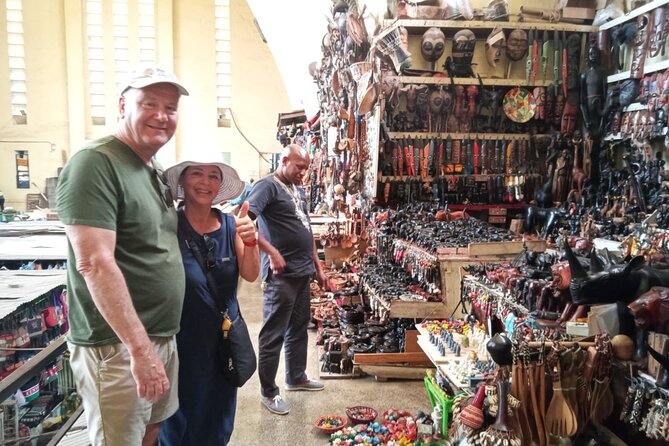
The next stop is City Market, with roughly 25 minutes set aside. The building dates to 1930 and once served as a main retail outlet for Nairobi’s cultural goods, fruits, and vegetables.
Its location makes the story especially useful. The market was built close to the railway line that ran along what is now Loita Street. That railway was later relocated in the 1940s, but the market remains a clue to how transport helped shape the capital’s commercial center.
This is where the walk becomes more sensory and practical. You can look at clothing and cultural souvenirs, and you may see fresh food being sold. If you want to purchase something, the market offers a chance to shop during the tour rather than spending your whole day in a dedicated souvenir store.
Twenty-five minutes is enough for an introduction, but not enough for a leisurely browse of every stall. I would treat the visit as a first look. If you find a particular item or section interesting, note it and return later, since the private guide can explain the setting but cannot turn a short city walk into an extended shopping trip.
You should also keep your purchases in proportion to the schedule. The tour continues on foot, so small, manageable items make more sense than anything awkward to carry. The tour price does not include souvenirs.
Jamia Mosque and Nairobi’s Muslim heritage
Jamia Mosque adds a religious and regional dimension to the route. It was founded by Syed Maulana Abdullah Shah in 1902 and became an important center of Islamic practice in East and Central Africa.
The mosque was constructed between 1925 and 1933. Its role continued through the years before Kenyan independence and into the independent nation, when it served as a center for Muslim religious organization.
This stop is important because it keeps the tour from presenting Nairobi as only a government and business capital. You see how faith communities helped shape the city and how Nairobi’s story reaches beyond one ethnic or cultural group.
The supplied timing does not give a separate duration or admission detail for Jamia Mosque. Because of that, you should think of it as a stop or exterior visit within the walking route unless your guide explains otherwise. The data also does not specify entry rules, so you should follow the guide’s directions about where to stand and how to behave near the mosque.
I value this sort of stop most when I am given enough context to understand what I am seeing. A building can be attractive, but its institutional role is what makes it worth including. Ask your guide to explain the mosque’s place in Nairobi’s Muslim life if that subject interests you.
More Walking Tours in Nairobi
- Nairobi: Historic and Modern Highlights Walking Tour
★ 4.8 · 703 reviews - Nairobi Walking tour:Explore History Culture and Traditions
★ 4.8 · 222 reviews - Nairobi Downtown Walking Tour
★ 4.7 · 208 reviews - Nairobi City Walking Tour with Traditional Kenyan Lunch
★ 5.0 · 106 reviews
Nairobi Gallery and Kenya’s point zero

Nairobi Gallery occupies a building completed in 1913. It was once a civil service office known for recording births, marriages, and deaths. Today it functions as a museum and national monument.
That old nickname, based on its paperwork role, gives the building an unusually human connection to government. Instead of viewing a grand hall only as architecture, you can picture it as a place where major personal events were entered into official records.
The building is also described as Kenya’s point zero, the place from which distances were calculated. That detail adds geographic importance to the stop. It gives you a physical reference for understanding how the country’s roads and measurements were organized.
The visit is allotted about 20 minutes. Admission is not included, so you should ask about the current entry fee before committing to a longer interior visit. With such a short slot, the stop may work best as a focused look at the building and its significance rather than a complete museum visit.
The route also passes the resting place of Mzee Jomo Kenyatta, Kenya’s first president. That connection leads naturally toward the next major landmark, the Kenyatta International Conference Centre. It also reminds you that central Nairobi contains both administrative history and national memory within a small area.
KICC tower views and Kenya after independence
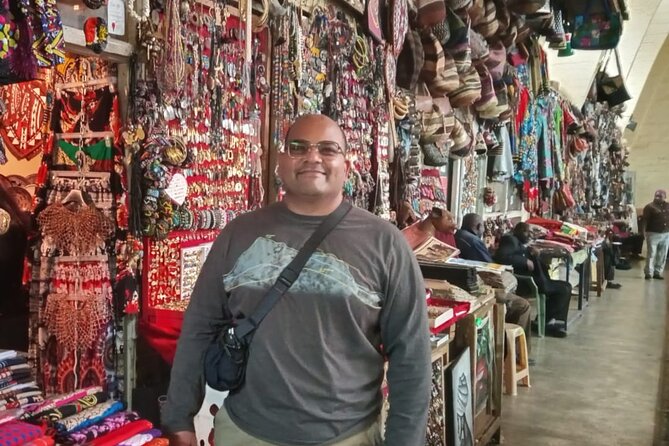
The Kenyatta International Conference Centre receives about 40 minutes, the longest scheduled stop. Commissioned by Mzee Jomo Kenyatta in 1967, it was among the first major buildings constructed after independence.
The building was created to bring the international community to Nairobi for the display of products and services. Its purpose reflects a young nation presenting itself to the world, while its name connects the building directly to Kenya’s first president.
The main attraction for most people is the tower. From the rooftop, you can get a 360-degree view across Nairobi. This is the moment when the city’s shape becomes easier to understand: streets, office blocks, public spaces, and the wider urban area come together from above.
The experience does not include admission to the tower, so allow extra money for that charge. Since the tour’s value depends partly on this viewpoint, I would confirm that the tower is open and ask the guide about the current entrance cost. The supplied information does not state the fee.
Forty minutes gives you enough time for the building and the view without turning the stop into a full architectural study. If you are taking photographs, the tower is likely to be the most useful place on the route. Souvenir photos are available to purchase separately, but you can also use your own camera if you prefer.
What the $29 price really covers

At $29 per person, the experience offers reasonable value if you want a private introduction to Nairobi rather than a long list of paid attractions. The price includes a professional guide and a bottle of water. It does not include Nairobi Gallery admission, KICC tower admission, souvenir photos, or anything you buy at City Market.
The private format is the important part of the value calculation. A lower-priced group walk may cover similar ground, but you would not have the same control over questions and pace. Here, you are paying for interpretation and organization as much as for entry to places.
The price makes less sense if you want long visits inside museums or extended shopping time. In that case, you would need a separate plan and more time. It makes more sense if you have a first day in Nairobi, a short stop in the city, or a desire to understand the center before exploring independently.
The tour is booked an average of 29 days ahead, so I would not leave it until the last minute if your schedule is fixed. Confirmation is received at booking, and free cancellation is available up to 24 hours before the start time. Within 24 hours, you do not receive a refund, and changes are not accepted.
Who will get the most from this walk

I would choose this experience if you want:
- A short introduction to central Nairobi
- A private guide rather than a large group
- Historical context tied to actual city buildings
- A mix of public space, market life, religion, government, and national symbolism
- A high viewpoint over Nairobi
- A tour that works near public transportation
It suits first-time visitors especially well because the route creates a basic mental map. It also suits anyone who enjoys asking questions, since a private guide can respond to your particular interests.
I would be more cautious if you need a fully indoor activity, have little tolerance for walking, or want to spend an hour or more in one museum. The route is compact but busy in content. You should also remember that weather can affect the booking.
The 4.8 rating from 19 reviews and 95 percent recommendation figure point to a consistently well-received experience, though the sample is still small. The strongest praise focuses on the guides’ historical explanations, kindness, and ability to give a clear overview of Nairobi in a short time. Alex and Michael receive specific positive attention, so you may wish to request one of them if the provider allows guide requests.
Final call: book it for orientation, not a full-day tour
I would book the Historical City Walk Tour in Nairobi if I wanted a private, efficient introduction to the capital and planned to explore more afterward. Jeevanjee Gardens and City Market give the walk everyday character, Jamia Mosque adds an important religious thread, Nairobi Gallery supplies civic history, and KICC offers the broad city view.
I would not book it expecting a slow museum day, extensive market shopping, or all entrance fees to be covered. The best approach is to see this as a two-hour foundation. At $29, with a private guide and water included, it is a sensible choice for learning how Nairobi’s center fits together before you go farther afield.
FAQ
How long does the Historical City Walk Tour in Nairobi last?
The tour lasts approximately two hours.
How much does the tour cost?
The price is $29 per person.
Is the tour private?
Yes. It is a private activity, and only your group participates.
Which places are included on the walk?
The route includes Jeevanjee Gardens, City Market, Jamia Mosque, Nairobi Gallery, and the Kenyatta International Conference Centre.
Is admission included at Nairobi Gallery and KICC?
No. Admission to Nairobi Gallery and the Kenyatta International Conference Centre is not included.
Is food or a souvenir included?
No. A bottle of water and a professional guide are included. Souvenirs, souvenir photos, and purchases at City Market cost extra.
Can I cancel the tour for a full refund?
Yes, if you cancel at least 24 hours before the experience start time. Cancellations within 24 hours are not refunded.
What happens if bad weather cancels the tour?
If poor weather causes cancellation, you will be offered a different date or a full refund.
More History Walks in Nairobi
- Full Day Nairobi Cultural and Historical Tour
★ 5.0 · 153 reviews - Nairobi souvenir Shopping and Historical Half day Tour
★ 5.0 · 61 reviews - Nairobi History and Modern Culture 3 Hours Tour
★ 4.5 · 31 reviews - Half-Day Cultural Tour to Bomas of Kenya in Nairobi
★ 4.5 · 23 reviews
Just added around Nairobi
- Visit kibera Slum the chocolate city★ 4.8 · 3 reviews
- Day Tour to Nairobi national park, Elephants, and Giraffe Center★ 3.5 · 8 reviews
- Explore local Market matatu ride & Make Kenyan Cuisines with a home cook★ 5.0 · 8 reviews
- Kibera Slum Tour with a Local★ 5.0 · 15 reviews
- Urban Forest Tour in Nairobi★ 5.0 · 7 reviews
- Vegans special safari★ 4.5 · 4 reviews
- Private Mini Safari Tour in Nairobi★ 5.0 · 6 reviews
- Private Kenyan Cooking Class in Nairobi with a Local★ 5.0 · 3 reviews
Historical Tours, compared.

Nairobi: Historic and Modern Highlights Walking Tour
Read our review →

Nairobi Walking tour:Explore History Culture and Traditions
Read our review →

Nairobi Cultural and Historical City Tour with a Local
Read our review →
Nairobi souvenir Shopping and Historical Half day Tour
Read our review →

Half-Day Cultural Tour to Bomas of Kenya in Nairobi
Read our review →Browse the lists this tour appears in