
Reviewed · FORT JESUS & OLD TOWN TOURS
Mombasa Old Town Walking Tour
Mombasa Old Town is best understood on foot, one narrow lane at a time. This four-hour walk takes you from the famous Mombasa Tusks through old streets, market stalls, the Old Port, and the Fish Market, with guide Raphael explaining what you’re seeing along the way.
I like the early 8am start, which helps you get moving before the coastal heat builds. I also like the practical route: it gives you a broad look at Mombasa in one morning, and the $30 price includes a live English-speaking guide plus one liter of water.
The main caution is the walking itself. Narrow lanes, market crowds, warm weather, and several hours on your feet may be tiring, and the information says the tour is not suitable for people with mobility impairments or hearing impairments.
Key points to know before you book
- Start at Mombasa Tusks: Meet Raphael at Pembe Za Ndovu, the city’s instantly recognizable elephant-tusk monument.
- A full four-hour Old Town route: The walk covers Government Square, the Old Port, Fish Market, Spice Market, and Mombasa Market.
- Raphael leads in English: He provides historical and cultural context rather than simply pointing out buildings.
- Good value at $30: The price includes the guided walk and one liter of drinking water, but not Fort Jesus, lunch, or market purchases.
- Come ready for heat and walking: Lightweight clothes, comfortable shoes, sun protection, and water are important.
- Flexible booking terms: You can cancel up to 24 hours before the tour for a full refund and reserve now without paying today.
Starting beneath the Mombasa Tusks at 8am
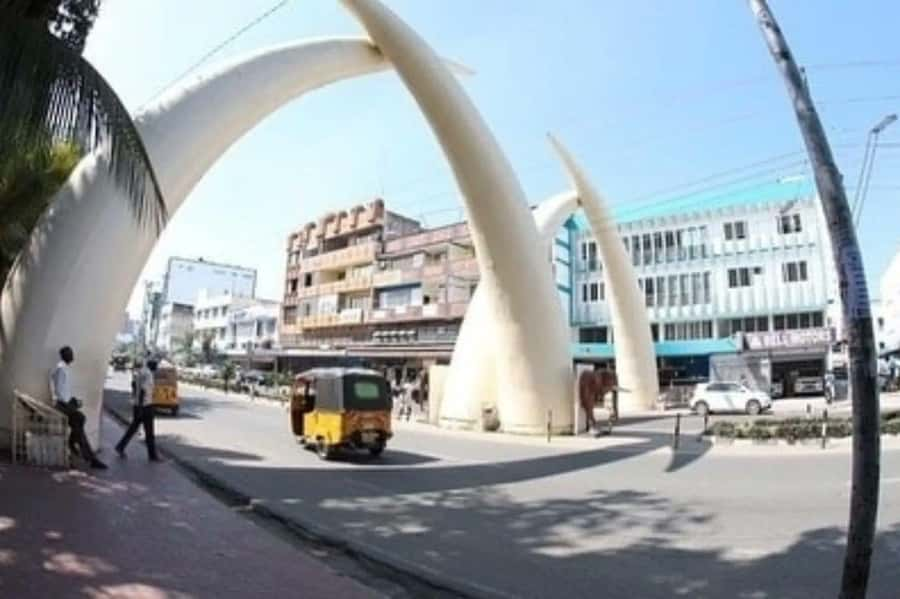
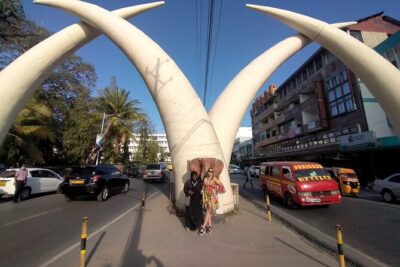
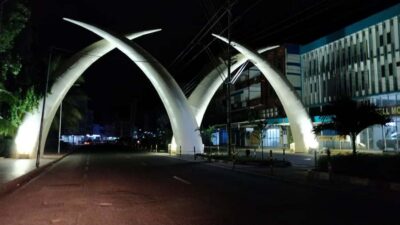
The tour begins at Pembe Za Ndovu, known in English as the Mombasa Tusks. These large white arches form one of the city’s most recognizable landmarks and make a useful meeting point in central Mombasa.
You meet Raphael here at 8am. That early start is more than a scheduling detail. Mombasa can be hot, and beginning in the morning gives you a better chance of enjoying the walk before the sun becomes the main thing you notice.
From the Tusks, you move toward Old Town on foot. This is a good way to begin because the city changes gradually. You leave the broad landmark behind and enter streets where the interest comes from doors, walls, shopfronts, passing sounds, and the shape of the lanes themselves.
The route is not designed as a quick list of photo stops. Raphael explains the places as you go, adding context about Mombasa and Kenya. One useful detail from the tour is that the conversation can extend beyond the city itself, giving you a wider sense of the country rather than a narrow account of monuments.
More Fort Jesus and Old Town walks in Mombasa:
- Walking Tour Through Old Town Mombasa and Fort Jesus
★ 5.0 · 393 reviews - Mombasa: Tusks, Fort Jesus, Old Town, Beach and City Tour
★ 4.7 · 137 reviews - Visit to Fort Jesus and the Old Town of Mombasa
★ 5.0 · 47 reviews
Old Town is the real heart of the walk
Mombasa Old Town rewards patience. Its streets are narrow and sometimes maze-like, so having a guide helps you get more from the area than you would by simply following a map.
The architecture is one of the main reasons to take this tour. You can expect to look closely at older buildings and the way the streets fit together, while Raphael explains the background behind the area. The appeal is not one single grand sight. It is the steady accumulation of details as you walk.
I like this kind of route because it leaves room for ordinary city life. Markets, working streets, and local movement are part of the experience. You are not sealed inside a sightseeing vehicle or limited to a polished display. You are walking through the place as it functions now.
That also means the walk may feel less tidy than a museum visit. Streets can be busy, surfaces can vary, and the route involves moderate physical activity. Wear shoes that you can trust for several hours, rather than treating this as a short stroll between attractions.
Government Square adds the civic story
Government Square is one of the named stops on the route. Here, the focus shifts from small lanes and market activity to the public and administrative side of Mombasa.
A guide is especially useful at a stop like this. Buildings and open spaces do not always explain themselves, and Raphael’s commentary gives the setting a place in Mombasa’s story. You can ask questions as you go, which is often more useful than reading a brief plaque and moving on.
The tour description promises historical and cultural information throughout, not just at the major landmarks. That matters because Mombasa is easier to understand when its streets, trade, public buildings, and coastal culture are connected.
Do not expect a long formal lecture at every stop. The format is a walking tour, so the information comes in pieces as the route develops. If you enjoy asking questions, this is the point to speak up and make the experience more personal.
The Old Port connects Mombasa to the sea
The Old Port brings the city’s coastal setting into sharper focus. Mombasa’s story is closely tied to movement by sea, and a port stop helps explain why this city became such an important place for trade and cultural exchange.
The value here is partly visual, but it is also about connection. The port is not an isolated attraction. It helps link the old streets to the wider Indian Ocean world and gives more meaning to the markets and goods you see later in the morning.
Because the tour is on foot, you experience the change from street to waterfront at a human pace. That is slower than a drive, but it lets you notice how the city opens and closes around you.
The route can take about three to four hours depending on group size and pace. The published duration is four hours, so keep the rest of your morning reasonably open. The walk has enough stops that rushing away early would undercut much of its value.
More Walking Tours in Mombasa:
- Mombasa: Guided Nature Walk Amongst Giraffes
★ 4.8 · 48 reviews - Mombasa walking tour
★ 4.9 · 28 reviews - Fort Jesus Museum Walking Tour in Mombasa
★ 5.0 · 25 reviews - Nature Walk with Giraffes in Mombasa
★ 5.0 · 18 reviews
Fish Market brings the city’s working side into view
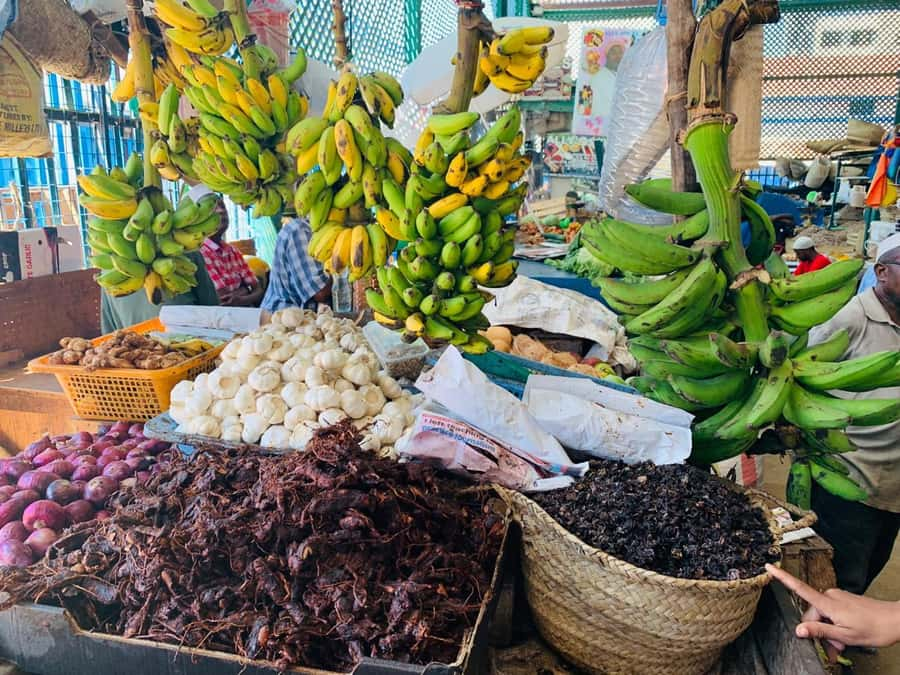
The Fish Market is one of the more direct stops on the route. This is not a quiet heritage site arranged for visitors. It is a market, and the sights and smells are part of the point.
A stop here gives you a more grounded view of Mombasa. You are not only looking at old architecture. You are seeing how food, trade, and daily business fit into the city’s life.
Markets can be lively and crowded, so keep your belongings secure and stay aware of where the group is going. The tour’s narrow lanes and active trading areas are a strength if you want a real sense of place, but they may be less comfortable if you prefer calm, controlled sightseeing.
You should also approach photography with care. The tour encourages you to bring a camera or smartphone, but a respectful attitude toward local people, customs, and landmarks is part of the preparation. Ask before photographing people if you are unsure.
The Spice Market is full of color and choice
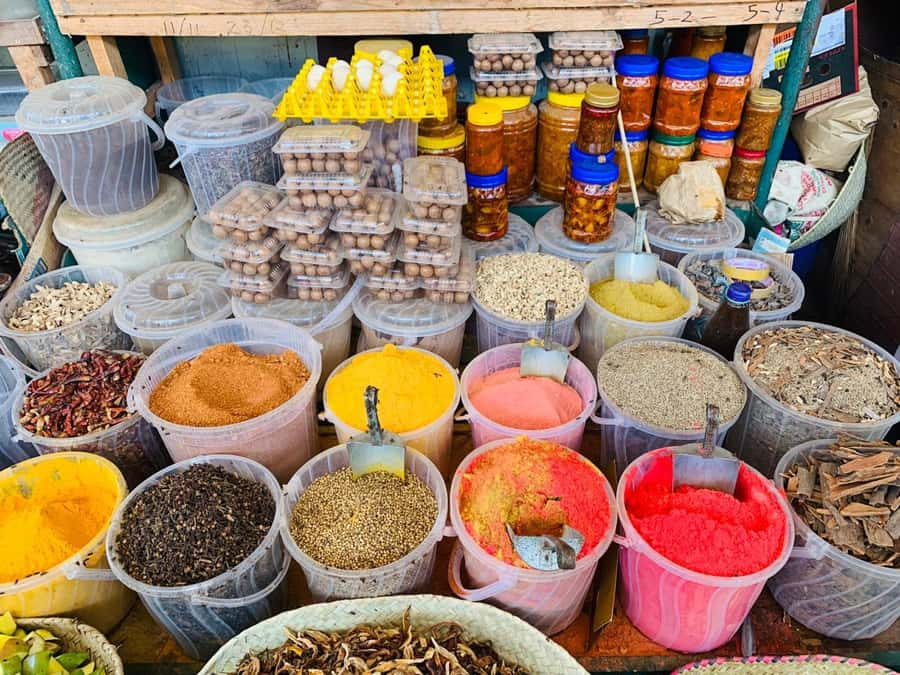
The Spice Market is another central stop, and it gives the walk a strong sensory finish. You can expect fragrant aromas, colorful displays, and opportunities to look at the ingredients associated with Mombasa’s trade and food culture.
This is where bringing some Kenyan shillings becomes useful. Spices are not included in the tour price, so any purchase is your own expense. You do not need to buy anything to enjoy the stop, but cash gives you the option to take something home.
The market is also a good place to slow down and look carefully. Ask Raphael about what you see, especially if you are curious about how products are used or traded. The tour is conducted in English, so basic English is needed to follow the commentary and ask questions.
Market visits are not always predictable. The exact pace may depend on the group and how much time people spend looking or shopping. That flexibility is useful, but it means the tour may not feel tightly timed.
Finishing at Mombasa Market
The walk finishes at Mombasa Market. Ending there makes sense because the route gradually moves from monuments and civic spaces into the everyday commercial life of the city.
You finish with a practical sense of Mombasa rather than only a collection of landmark photographs. By this point, you will have seen the Tusks, Government Square, the Old Port, the Fish Market, and the Spice Market, while also walking through the lanes that connect them.
The finish point may be useful if you want to continue exploring independently, though no onward plans are included in the tour details. Lunch is also not included, so plan to arrange your own meal after the walk.
One liter of drinking water is included, which is helpful in the coastal heat. I would still carry extra water if you know you drink often, since the tour lasts several hours and the preparation notes specifically stress hydration.
What $30 really gets you
At $30 per person, this tour offers solid value if you want a guided introduction to Old Town rather than a simple transfer between sights.
Your fee covers a four-hour guided route, Raphael’s live English commentary, the main listed landmarks, historical and cultural explanation, and one liter of water. That is a useful package for a first morning in Mombasa.
The price does not cover Fort Jesus entry, spices, lunch, or other optional spending. Fort Jesus is mentioned as an excluded entry fee, so confirm the day’s plan if seeing the fort is important to you. Do not assume admission is part of this walking tour.
The strongest value comes from the guide. Old Town’s streets can be confusing, and the tour gives you someone who can explain what you are seeing while keeping the route moving. If you already know Mombasa well or prefer to wander without a guide, the price may feel less worthwhile.
For a first visit, I think the cost is reasonable. You get orientation, context, and access to several parts of the city in one morning without paying for a full-day outing.
The practical side: heat, clothing, and access
Wear lightweight clothing and comfortable walking shoes. This is not a vehicle-based sightseeing trip, and the route includes narrow streets, markets, and several hours of walking.
Bring sunscreen, a hat, and sunglasses. Mombasa’s warmth can make a moderate walk feel harder than expected, particularly if you are not used to the climate.
The published information calls the tour wheelchair accessible, but it also says it is not suitable for people with mobility impairments. Those details do not sit comfortably together, so you should contact the provider before booking if you use a wheelchair or have difficulty walking. The narrow Old Town lanes and moderate activity may affect how practical the route is.
The tour is also listed as unsuitable for people with hearing impairments. Since the experience depends on live spoken commentary, this is an important limitation rather than a minor detail.
Children under five are not considered suitable for the tour. Older children may still need to manage the heat, market activity, and walking time, so consider your family’s pace before booking.
The group size is not specified. That means the pace may vary, as the tour information notes. A smaller group could make questions easier, while a larger group might take longer to move through narrow streets.
What the guide adds to the morning
Raphael is the named guide for this experience, and the strongest praise focuses on his work. He is described as professional, fun, and able to explain not only Mombasa but places across Kenya.
That combination matters. A city walk can become dull when a guide only recites dates, but it can also become unfocused when the stories have no structure. The best use of Raphael’s role is to ask questions as you move between sites and let the route connect the city’s history, trade, architecture, and daily life.
The available feedback gives Raphael especially high marks, with three separate five-star accounts and an overall rating of 4.8 from four reviews. One person specifically appreciated that the tour fit well into a morning and included the ferry crossing when traveling from a hotel in Diani. That detail is useful if you are staying south of Mombasa and planning your transport around the tour.
Allow extra time for getting to the starting point if you are coming from outside the city. The tour itself begins at Mombasa Tusks, and the supplied details do not include hotel pickup.
Who should book this walk
I would recommend this tour to a first-time visitor who wants a clear introduction to Mombasa in half a day. It suits you if you like walking, markets, old buildings, local trade, and guide-led storytelling.
It is also a good fit if you are staying in Diani or elsewhere on the coast and want a focused city morning. The route gives you several major stops without committing you to a full day.
You should think twice if you dislike heat, crowds, market smells, or uneven walking conditions. It is also a poor choice for anyone who cannot comfortably walk for a few hours, anyone under five, and anyone who needs tour information delivered in a language other than English.
Bring an open mind. Old Town is not presented as a silent museum. It is a working part of Mombasa, and that mix of heritage and daily activity is the main reason to take the walk.
Should you book the Mombasa Old Town Walking Tour?
Book it if you want an affordable, well-organized introduction to the city with a guide who can explain more than the obvious sights. The route is sensible, the early start helps with the heat, and Raphael’s strong feedback gives the tour added confidence.
Skip it if you want Fort Jesus admission, lunch, private transport, or a short and effortless sightseeing trip. Those are not included, and the walk requires real stamina.
For most able walkers visiting Mombasa for the first time, $30 is a fair price for four hours of landmarks, markets, port views, and local context. Pack light, wear good shoes, carry Kenyan shillings, and leave room in your morning for the city to set its own pace.
FAQ
Where does the Mombasa Old Town Walking Tour start?
The tour starts at Pembe Za Ndovu, also called the Mombasa Tusks.
What time does the tour begin?
The stated start time is 8am.
How long does the walking tour last?
The tour lasts approximately four hours, though the timing may vary with group size and walking pace.
Which places are included?
The route includes Mombasa Tusks, Government Square, the Old Port, the Fish Market, the Spice Market, Old Town streets, and Mombasa Market at the finish.
Is Fort Jesus admission included?
No. Fort Jesus entry fees are not included.
Is lunch included?
No. Lunch is not included in the tour price.
What language is the tour conducted in?
The tour is conducted in English and includes a live English-speaking guide.
Is drinking water provided?
Yes. One liter of drinking water is included. You should still bring a bottle if you expect to need more during the walk.
Just added around Mombasa
- 7-Day Private Tour in Kenya National Parks From Nairobi / Mombasa★ 5.0 · 3 reviews
- Fort Jesus Sound and Light show Mombasa★ 4.0 · 17 reviews
- 4 Days Mount Kenya Trekking★ 5.0 · 6 reviews
- Shore Excursion: Full-Day Mombasa City Tour★ 4.5 · 11 reviews
- Swahili Street Food Tour★ 5.0 · 7 reviews
- Private Transfer from Mombasa★ 5.0 · 6 reviews
- Half day city tour of mombasa★ 5.0 · 13 reviews
- PRIVATE: MOMBASA FULL DAY TOUR and EXCURSUION★ 4.5 · 3 reviews
Fort Jesus & Old Town Tours, compared.
Walking Tour Through Old Town Mombasa and Fort Jesus
Read our review →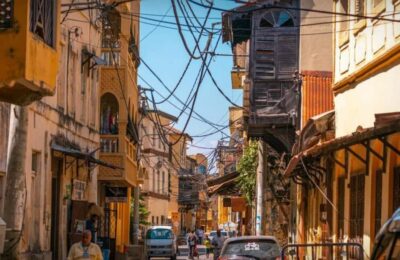
Mombasa: Tusks, Fort Jesus, Old Town, Beach and City Tour
Read our review →
Mombasa: Private City Tour with Fort Jesus & Haller Park
Read our review →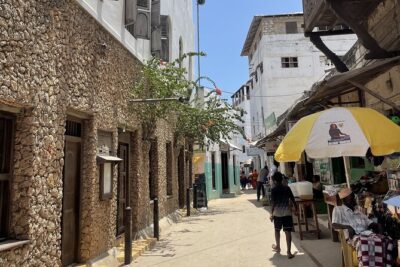
Mombasa Half-Day City Tour with Fort Jesus and Haller Park
Read our review →
Browse the lists this tour appears in