
Reviewed · HISTORICAL TOURS
Nairobi Walking tour:Explore History Culture and Traditions
Nairobi reveals itself best at street level, where colonial buildings, government offices, markets, mosques, churches, parks, and modern towers sit close together. This three-hour walk begins at the Carrefour entrance beside the Supreme Court and gives you a useful first look at the city center without asking you to find every stop on your own.
I like the local storytelling, especially with guides such as Edwin, John, Sam, and Pierre, who explain more than dates and building names. I also like the coffee break and flexible pace. You can ask about politics, food, sports, culture, or daily life, and the walk can include time to rest in Uhuru Park.
The main consideration is the amount of walking in central Nairobi. The route packs in many stops, and afternoon sun or changing weather can make it feel longer than three hours. The KICC helipad view is also an extra cost, and coffee is optional.
Key points at a glance

- Start beside the Supreme Court: Meet at the Carrefour entrance, with pickup available from listed hotels and other locations within 10 kilometers of Nairobi Municipality.
- A city walk with real context: Learn about Kenyan culture, politics, architecture, history, and everyday life rather than simply photographing buildings.
- Coffee with a local pause: Stop at a café for Kenya coffee, with the drink paid separately if you choose to have one.
- Uhuru Park breaks up the pavement: Sit on the grass, enjoy the greenery, and get a welcome rest from the sun.
- A useful mix of landmarks: The route includes Jamia Mosque, City Market, the Holy Family Basilica, KICC, the Railway Museum, and the Bomb Blast Memorial Park.
- Good value at $22: The fee covers a guide, several entry fees, and pickup to the starting point, while meals, personal purchases, and the KICC helipad fee cost extra.
Starting beside the Supreme Court
The tour opens at the Carrefour entrance next to Nairobi’s Supreme Court building. If you stay at one of the listed hotels, apartments, hostels, or airport properties, pickup is included to the starting point. Pickup is also available from other locations within 10 kilometers of Nairobi Municipality if you send the address through WhatsApp.
This beginning makes sense. You start in the middle of Nairobi’s civic district, where courts, ministries, religious buildings, shops, and public spaces all sit within walking distance. Before moving off, the guide gives a safety briefing. That matters here because the city center is active, and a guide helps you focus on the surroundings instead of directions and phone maps.
The walk is not a museum tour with long indoor visits at every stop. It is a moving lesson in how Nairobi works. You will shift between formal public buildings, market streets, gardens, places of worship, and open parkland. That variety is one of the strongest reasons to book it early in your stay.
More Walking Tours in Nairobi
- Nairobi: Historic and Modern Highlights Walking Tour
★ 4.8 · 703 reviews - Nairobi Historical Walking City Tour
★ 5.0 · 258 reviews - Nairobi Downtown Walking Tour
★ 4.7 · 208 reviews
Monuments, the monastery, and Nairobi’s civic story
The first section brings in the city’s public memory through war monuments and a monastery stop. These places give the guide a chance to explain Kenya’s past and the people and events honored in the capital.
The exact appeal here is less about spending a long time at one attraction and more about seeing how Nairobi presents its national story. A good guide can connect the monuments to independence, public service, religion, and the changing role of the city. Edwin is especially well regarded for turning historical points into stories rather than reciting a list of facts.
You should ask questions as you go. The guides have been praised for discussing not only history but also politics, geography, sports, food, and ordinary life. That makes this a better choice for someone who wants to understand the city, not simply collect photographs.
Jamia Mosque and the changing city center

Jamia Mosque is one of the most notable stops on the route. You visit the mosque as part of a wider look at Nairobi’s religious and cultural life. The building provides a useful contrast with the government offices and commercial streets nearby.
Dress and behavior should be respectful at any place of worship. The supplied details do not set out a separate dress code or visiting schedule, so access may depend on the conditions that day. Treat the stop as a guided exterior and cultural visit unless your guide confirms that you can enter farther.
This is also a good place to notice how close different traditions are within central Nairobi. The walk does not present Kenya as one single culture. Instead, it shows a city shaped by several communities, faiths, languages, and habits. That is where the tour’s title, focused on culture and adaptation, becomes useful rather than decorative.
City Market, Jevanjee Garden, and a coffee pause
City Market brings a more practical side of Nairobi into view. You can pass through the market area, browse, and get a sense of how central commerce operates. The included plan also takes you through Jevanjee Garden, a public green space that changes the mood after the market streets.
The market is a possible place to buy souvenirs, but personal purchases are not included. John has been praised for helping with souvenir shopping and bargaining, so ask for help if you want to buy something and are unsure about a fair price. Keep your spending separate from the $22 tour fee.
The café stop is simple but well timed. You can take a washroom break, sit down briefly, and try Kenyan coffee if you wish. Coffee is optional and not included, so you can order or skip it. I like this small pause because it gives the walk a human rhythm. Three hours of city walking is much easier when you have a chance to sit, drink water, and talk.
More history walks around Kenya:
- Full Day Nairobi Cultural and Historical Tour
★ 5.0 · 153 reviews - Nairobi Cultural and Historical City Tour with a Local
★ 5.0 · 67 reviews - Nairobi souvenir Shopping and Historical Half day Tour
★ 5.0 · 61 reviews - Nairobi History and Modern Culture 3 Hours Tour
★ 4.5 · 31 reviews
University of Nairobi and the Norfolk Hotel

The route continues toward the University of Nairobi, with a glimpse of the Norfolk Hotel. These stops help show another side of the capital: education, established institutions, grand hotels, and the older center of town.
The university stop is mainly a walk-through or outside view rather than a long campus tour. Its value comes from the guide’s explanation of Nairobi as a place where public institutions and modern urban life developed together. The Norfolk Hotel adds another architectural and historical reference point.
You will get more from this part if you ask the guide to explain what has changed in Nairobi and what has remained. Several guides, including Edwin and Pierre, are praised for answering questions and adapting the conversation to individual interests. That makes the experience feel less scripted.
Uhuru Park gives your feet a break
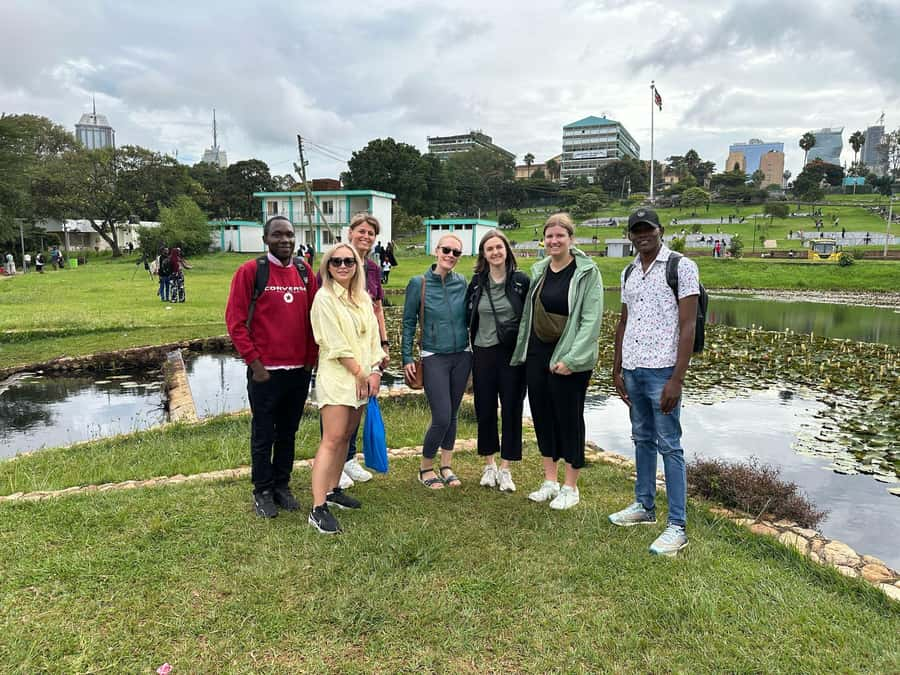
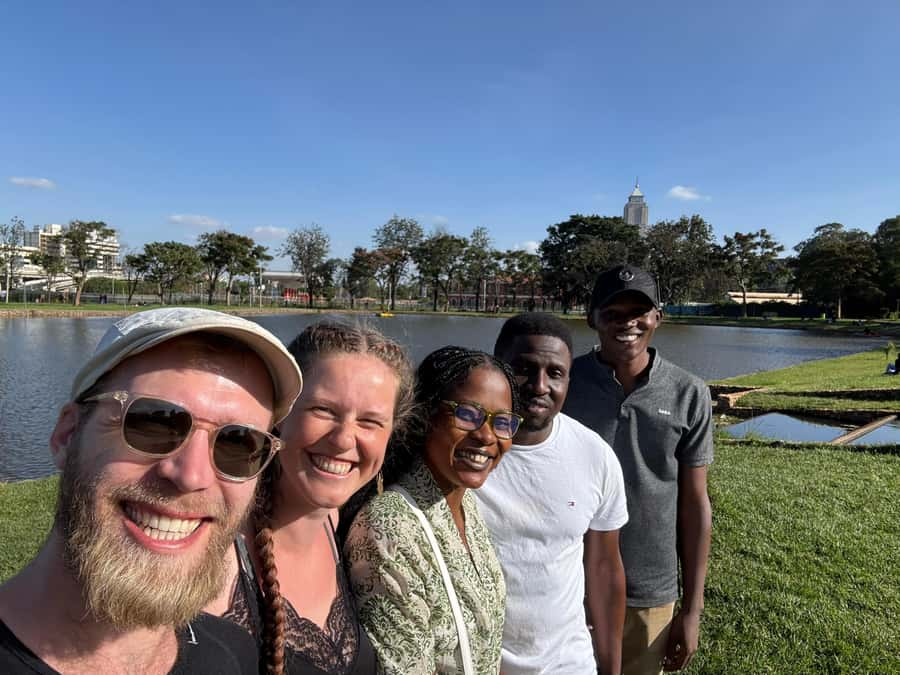
Uhuru Park is one of the best pauses on the route. The park offers open greenery in the middle of the city, and you may have time to sit on the grass and talk with the guide. It is described as one of the most attractive parks in Nairobi, and its position makes the contrast with the surrounding streets especially clear.
Do not treat this as a rushed photo stop. The park is where you can slow down, drink water, and let the guide explain Nairobi from a broader point of view. The listed entrance fee is included, and the stop can be adjusted to the group’s pace.
The practical catch is weather. Bring a hat, sunscreen, and water, and prepare for changing conditions. The tour is wheelchair accessible, but the experience still involves moving between several city locations, so anyone needing a slower pace should tell the guide at the start.
Holy Family Basilica and Kenya’s public face
The Cathedral Basilica of the Holy Family adds an important religious and architectural stop near the civic core. The visit helps balance the earlier mosque stop and gives you another way to understand the city’s faith communities.
From here, the route reaches government buildings and the Kenya International Convention Centre, usually called KICC. KICC is one of the major visual markers of Nairobi, and the stop includes photographs, a visit, and views over the city.
The helipad is the attraction for wide panoramic views, but its fee is not included. Ask your guide about the current arrangement before counting on going up. You can still appreciate KICC and the surrounding government district without paying for the helipad.
This part of the walk is particularly useful for first-time visitors. It puts several major buildings in relation to one another, so you leave with a better mental map of central Nairobi. That can make later independent exploring easier.
The Railway Museum and Bomb Blast Memorial Park

The Kenya Railway Museum provides a final look at the forces that helped shape Nairobi. The itinerary lists it as a visit or pass-by, so the amount of time inside may vary. It is a worthwhile addition because the railway is central to the city’s development and its connection to the wider country.
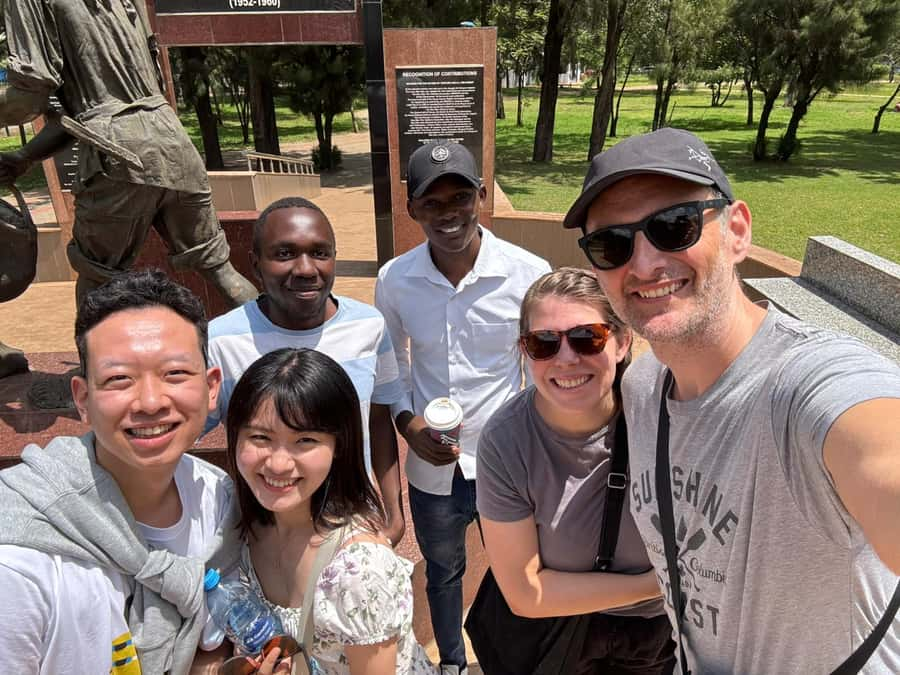
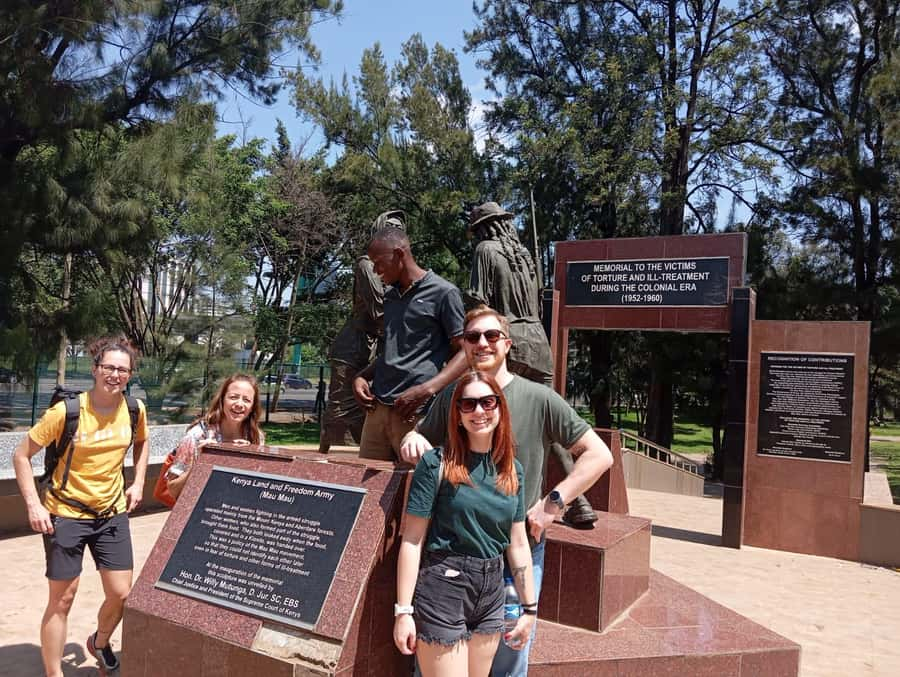
The last stop, Bomb Blast Memorial Park, changes the tone. This is a place for quiet respect, not casual sightseeing. A guide can provide context, but you should expect a reflective visit rather than an entertainment stop.
Together, the museum and memorial keep the tour from being only about attractive buildings and city views. You see how transport, public life, faith, and painful events all form part of Nairobi’s story. That balance is one reason the route feels more substantial than a quick downtown orientation.
What the guide adds to the experience
The guide is the key variable. Edwin receives repeated praise for his humor, local insight, patience, and storytelling. John is noted for explaining the main sights and helping with market purchases. Sam, also called Kayler, is described as funny, kind, and easy to listen to. Pierre offers French fluency and can also teach some Swahili.
The tour is offered in English, Spanish, and French. One Spanish-speaking guide was praised for speaking the language at a very high level, while Pierre is a strong option for French speakers. Confirm your preferred language when booking.
Guides also appear willing to adjust the pace. Some walks finish a little over two hours when the group is small or the evening timing limits access to certain places. Other outings run close to four hours when there is time for extra discussion and a relaxed park stop. The advertised duration is three hours, but allow some flexibility.
The strongest part of the guiding style is the conversation. You can ask about Kenyan politics, local customs, food, sports, architecture, and daily routines. That makes the walk useful even if a building is closed or a stop becomes a pass-by.
How the $22 price works
At $22 per person, this is strong value if you want a guided introduction to central Nairobi. The price includes the guide, pickup to the starting point, entry to the McMilan Memorial Library, and entry to Uhuru Park. It also covers the listed visits and the time spent walking between them.
You still need money for coffee, meals, drinks, souvenirs, and personal expenses. The KICC helipad fee is separate. Those extras are easy to manage, but you should know that the headline price does not cover every possible activity.
I would compare this cost with the time and uncertainty of arranging the same route alone. You could walk between many of these places yourself, but you would miss the connecting stories and spend time working out directions and access. The guide also adds a measure of comfort in a busy downtown setting.
Who should book this walk?
I would choose it for a first afternoon or morning in Nairobi, especially if you want to understand the center before visiting other parts of Kenya. It suits solo visitors, couples, families, and anyone arriving with a short city stay.
It is also a good fit if you prefer conversation to a formal lecture. The guides adjust questions and pace, and the route mixes landmarks with ordinary city scenes. People interested in architecture, Kenyan culture, politics, religion, and urban life will get the most from it.
You may want another kind of outing if you dislike walking, want a long visit inside each museum, or prefer a tightly timed schedule. The route covers a lot, and some stops may be brief or viewed from outside. Sun, traffic, weather, and opening conditions can affect the exact flow.
Wear comfortable shoes and bring water, a hat, and sunscreen. Photography is allowed, but always be respectful at religious sites and the memorial park.
Should you book the Nairobi walking tour?
Book it if you want a practical, good-value introduction to Nairobi with a guide who can explain the city in plain terms. The mix of Jamia Mosque, City Market, Uhuru Park, KICC, the Railway Museum, and the Bomb Blast Memorial Park gives you more than a standard monument circuit.
The best reason to go is the human element. Edwin, John, Sam, Pierre, and the other guides bring local stories, humor, language skills, and flexibility to a route that could otherwise feel like a list of buildings. At $22, with pickup and several fees included, it is an easy choice for most first-time visitors.
Skip it only if you need minimal walking or a fully private, tightly scheduled sightseeing plan. For everyone else, this is a sensible way to get your bearings, ask honest questions, and see central Nairobi with context.
FAQ
Where does the Nairobi walking tour start?
The walking tour starts at the Carrefour entrance beside the Supreme Court building in central Nairobi.
Is hotel pickup included?
Yes. Pickup is included from the listed hotels and other locations within 10 kilometers of Nairobi Municipality. If your accommodation is not listed, you can send the location through WhatsApp.
How long does the tour last?
The advertised duration is three hours. The exact length can vary, with some tours lasting a little over two hours and others running longer when the pace is relaxed or extra time is available.
What languages are available?
The tour is offered in English, Spanish, and French.
Is the tour wheelchair accessible?
Yes, the activity is listed as wheelchair accessible.
Is coffee included in the price?
No. Coffee is optional and paid separately. The café stop also provides time for a washroom break.
Is the KICC helipad fee included?
No. The KICC helipad fee is not included in the tour price.
What should I bring?
Wear comfortable walking shoes and bring water, a hat, and sunscreen. You should also prepare for changing weather. Photography is allowed.
More Walking Tours in Kenya
- Walking Tour Through Old Town Mombasa and Fort Jesus
★ 5.0 · 393 reviews - Nairobi City Walking Tour with Traditional Kenyan Lunch
★ 5.0 · 106 reviews - Mombasa: Guided Nature Walk Amongst Giraffes
★ 4.8 · 48 reviews - Nairobi Walking Tour: Downtown & City Tour
★ 4.8 · 32 reviews
Just added around Kenya
- WATAMU: MALINDI: SARDEGNA ISLAND & MALINDI MARINE PARK★ 4.5 · 9 reviews
- Watamu: Sunset Mangrove Canoe Tour with Coconut Drink★ 3.6 · 8 reviews
- Watamu: Learn Kenyan Cusine with Jonathan★ 4.1 · 8 reviews
- Visit kibera Slum the chocolate city★ 4.8 · 3 reviews
- Tsavo East National Park: 2-Day Tour from Mombasa★ 3.9 · 5 reviews
- Lake Nakuru Day Trip Safari – & Optional Lake Naivasha Boat★ 5.0 · 5 reviews
- Lake Nakuru NP Half-Day Safari★ 4.0 · 4 reviews
- Tsavo East and Tsavo West Sanctuary Safari★ 5.0 · 3 reviews
Historical Tours, compared.

Nairobi: Historic and Modern Highlights Walking Tour
Read our review →

Nairobi Cultural and Historical City Tour with a Local
Read our review →
Nairobi souvenir Shopping and Historical Half day Tour
Read our review →

Half-Day Cultural Tour to Bomas of Kenya in Nairobi
Read our review →
Browse the lists this tour appears in