

Reviewed · KIBERA SLUM TOURS
Private Tour in Kibera the Largest Slum
Kibera is not presented here as a poverty photo stop. The focus is on daily life, community, and resilience, with time inside a real home, at a school, in a small workshop, and among local residents. Guide Rally grew up in Kibera, became a teacher, and helps run Agape Hope for Kibera, giving the tour a clear local connection.
I like two things right away: the private format at only $15 per person, and the range of encounters packed into four hours. You may ride public transport, meet a football team, see bones turned into ornaments, and join traditional dancing rather than simply looking down an alley from a vehicle.
The main consideration is that this is a serious, close-up visit to a crowded settlement, not a polished sightseeing attraction. You need to be comfortable entering a household, visiting a school for orphans, and taking part respectfully. The tour also requires good weather, and coffee or tea is not included.
Key points to know before entering Kibera
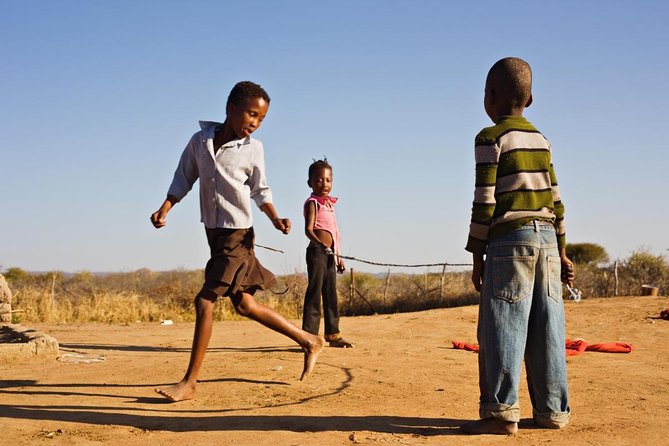
- Rally brings a personal connection: He grew up in Kibera, became a teacher, and helps support a school for children facing challenges.
- The tour goes beyond a roadside view: You visit a homestead, school, workshop, market, railway area, and community spaces.
- Traditional dance is part of the visit: Students perform, and you may take part rather than only watch.
- Local transport is included in the experience: A matatu ride shows how people move through Nairobi’s community life.
- The $15 price offers strong value: Bottled water and admission are included, while coffee and tea cost extra if available.
- You get a private tour: Only your own group participates, with a flexible pickup point arranged between both parties.
Why this Kibera tour feels different
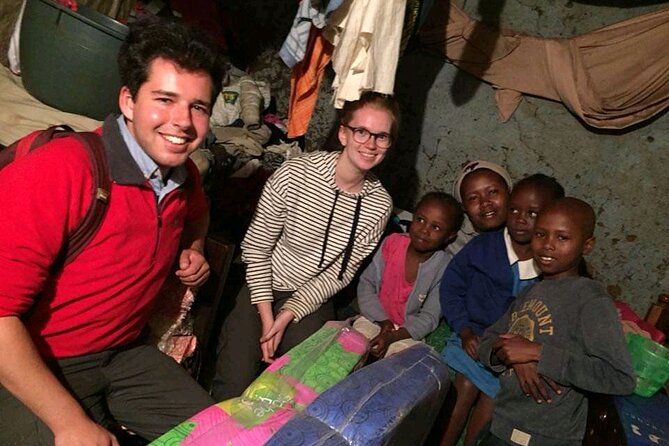
Many city tours keep you safely outside a poorer district, offering a quick view and a few facts. This experience takes you further into Kibera, with visits to homes, schools, workshops, and public spaces. That makes the tour more personal, but it also asks more of you as a guest.
I like the stated aim: the visit is meant to show how people build lives and support one another, not to turn hardship into entertainment. The connection with Agape Hope for Kibera gives that idea a practical purpose. You are not only hearing about children and community support from a distance. You are visiting a school linked to the work.
Rally is an important part of the experience. His background, from growing up in the settlement to becoming a teacher, gives him a personal view of the place. He is also described as helping run a school for children with challenges. If you want a guide who can explain Kibera through lived experience, this is a strong reason to choose this particular tour.
Still, good intentions do not erase the need for care. You will see real homes and meet people who live with fewer resources than you may have. Ask before taking photographs, listen when someone is speaking, and avoid treating daily life as a backdrop. A little courtesy matters here.
More Private Safaris in Nairobi
- Ultimate 12 Days Private Safari Tour in Kenya and Tanzania
★ 5.0 · 60 reviews - Nairobi: National Park Private Tour in 4X4 Jeep
★ 4.9 · 56 reviews - 12 Days Kenya and Tanzania Budget Private Safari from Nairobi
★ 5.0 · 28 reviews
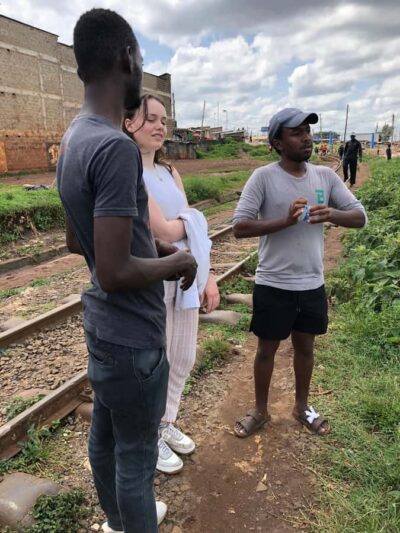
Starting at the old railway near Olympic Primary School
The meeting point is Olympic Primary School in Nairobi. The tour begins near the old railway, identified as the railway brought by the British in 1805. This gives you an early sense of how long transport routes and outside rule have shaped the area.
The railway stop is not presented as a formal museum visit. Think of it as a piece of local context at the start of a walking experience. You will be moving through lived-in surroundings, so the interest comes from seeing how an old transport route sits beside present-day community life.
Pickup is offered, and the point is flexible for both parties. You should confirm the exact arrangement before setting out, rather than simply assuming that a hotel pickup is automatic. The listed meeting point is Olympic Primary School, while the tour ends at Toi Main Market.
The tour runs for about four hours. That is enough time for several stops, but not so much that the day becomes exhausting. Wear practical shoes and expect a hands-on visit rather than a sit-down lecture.
Inside a Kibera homestead
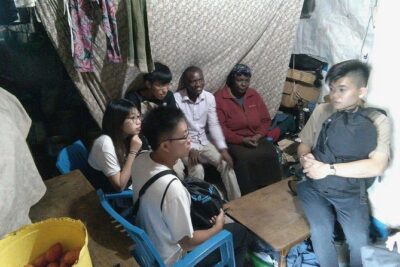
One of the most revealing parts is the visit to a local homestead. You can interact with residents in their house and learn about the materials used there. This is a very different experience from looking at the settlement from a main road.
A home visit can help you understand how people organize everyday life in limited space. The value is in the conversation and the chance to see ordinary surroundings, not in searching for a dramatic story. You should follow the guide’s lead and the household’s wishes.
This is also the point where the tour may feel most personal. If you prefer attractions with clear boundaries and no contact with residents, you may find this uncomfortable. If you want to understand how people adapt homes and routines to their circumstances, it is likely to be one of the most useful stops.
The tour’s language about showing the real slum should not mean that every home or resident represents all of Kibera. Keep that distinction in mind. You are seeing selected places through a local guide, not receiving a complete picture of every household.
Seeing bones turned into useful ornaments

The bone-recycling stop is one of the tour’s most unusual details. You can see how bones are recycled into ornaments, creating both products and employment.
This small workshop visit adds an economic angle to the tour. Instead of only discussing hardship, it shows people finding ways to make income from available materials and practical skills. The work also gives you a better sense of local enterprise, which can get lost when tours focus only on housing conditions.
The stop may appeal to you if you like seeing how objects are made. It also provides a chance to buy or simply examine locally produced items, although the information supplied does not promise that purchases are part of the tour. Do not assume that every workshop visit is a shopping stop.
More guided Kibera walks:
- Nairobi: Explore Kibera Slum with Local Guides
★ 4.9 · 365 reviews - Kevins Kibera Slum Tours
★ 5.0 · 213 reviews - Nairobi: Kibera Slum storytelling tour with a Local
★ 5.0 · 185 reviews - Kibera Slum Tour with Lucas
★ 5.0 · 119 reviews
Meeting children at a school for orphans

The school visit is tied to the tour’s support for Agape Hope for Kibera. You can meet children at school, including orphans, and see a setting connected to local education and community work.
This is potentially the most meaningful part of the tour, but it requires the most sensitivity. Children should not be treated as curiosities or photo subjects. Follow the school’s rules, ask before taking pictures, and let the guide explain what is appropriate.
The school also gives context to Rally’s work as a teacher. His path from growing up in Kibera to helping with education makes the stop more than a quick look at a classroom. You can connect the visit to the broader question of how local schools give children support and opportunity.
The description does not specify donations, classroom activities, or a formal school program beyond the visit. You should not arrive expecting to teach, hand out gifts, or run an activity. The purpose is to see and understand, unless the guide tells you otherwise.
Football, matatus, and everyday movement
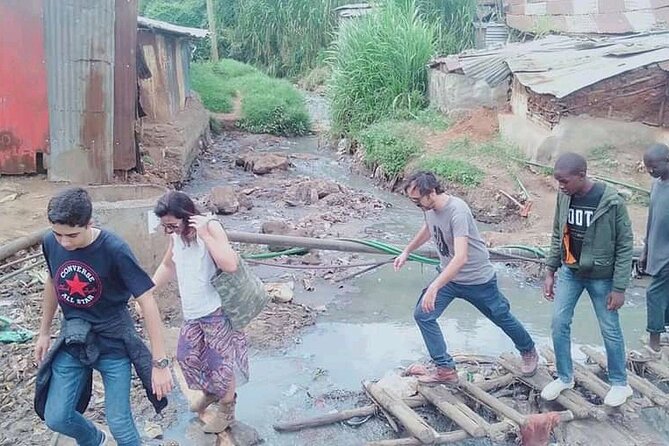
The itinerary includes a chance to play football with a local team. That is a welcome change of pace after the more serious school and housing visits. Football offers a simple way to connect, though you should treat it as an invitation to participate, not an obligation.
You will also use a matatu, the local form of shared transport. This is a useful detail because it puts you into an everyday system rather than keeping you within a private tour vehicle. The ride is part of the experience, not just a way to save time.
The transport element may be especially interesting if you want to see how people move around Nairobi. At the same time, public transportation can feel less controlled than a private car. Stay with your guide and keep your belongings secure, using sensible city habits without assuming the worst.
The tour is private, so your group can usually set a more natural pace than a large bus group. That matters at a football field, inside a home, or while speaking with local residents. It also means the quality of your experience may depend heavily on how well your group engages with the guide.
Traditional dance with a school connection

Traditional dancing provides the tour’s edutainment element. Students perform, and you may be invited to join. This gives the visit a lively finish and lets you take part in a cultural activity rather than only observe.
I would approach this with the same care as the school visit. Join if invited and willing, but do not force participation or expect a staged show on demand. The point is shared enjoyment and cultural exchange, not a performance created solely for tourists.
This stop also helps balance the difficult subjects raised earlier. Kibera is shown as a place where children learn, communities cooperate, people create products, and residents enjoy music and movement. That does not hide poverty. It prevents poverty from becoming the only story.
Ending at Toi Main Market
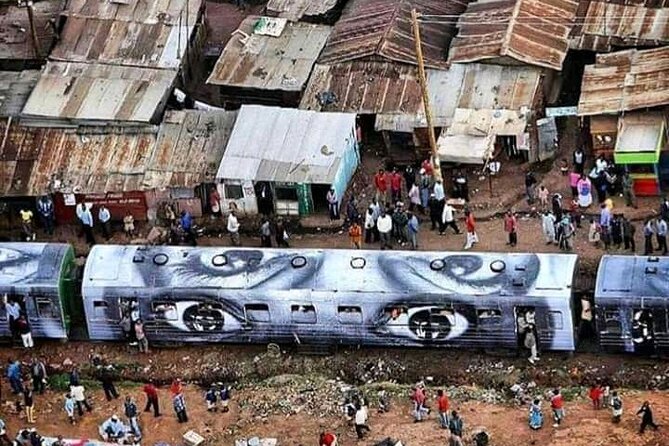
The experience ends at Toi Main Market. A market is a practical closing point because you can see goods being sold within the community and continue exploring on your own if you have time.
The market stop also helps connect the tour to ordinary commerce. You are no longer only looking at housing or community projects. You can see the buying and selling that helps keep a neighborhood functioning.
The listed hours are Monday through Sunday, 7:00 AM to 8:00 PM, for the stated operating period. Your four-hour tour will not cover the entire market, so think of this as an introduction rather than a full shopping visit.
Because the tour ends there, plan your next move before you arrive. The supplied details do not promise transport back to your hotel. You should also remember that coffee and tea are not included. Bottled water is provided, which is helpful in Nairobi’s heat, but bring any other refreshments you need.
What $15 really gets you
At $15 per person, this is an unusually low-cost private experience. The price includes about four hours, admission, bottled water, the local guide, and a series of visits that would be difficult to arrange on your own.
The value is strongest if you want contact with local life and a guide who can provide personal context. You are not paying for luxury transport, a formal museum, or a polished show. You are paying for access, explanation, and a structured way to meet people and see places respectfully.
A low price can raise questions, so keep your expectations clear. This is described as the cheapest slum tour, but low cost does not mean you should expect every extra to be included. Coffee and tea are excluded, and the information does not list meals, hotel transfers, or return transport.
The tour has a five-star rating from 54 reviews and is recommended by 100 percent of its published participants. The strongest praise centers on Rally’s guidance, the small private format, the sense of safety, and the behind-the-scenes access to a home, school, market, and souvenir workshop. Those are the parts I would value most when comparing this with a larger group tour.
Who should book this experience
I would recommend it to you if you want a direct, human view of Nairobi and are willing to listen more than photograph. It suits adults, families with children from age five, and small groups that prefer a private format.
It is also a good fit if you care about community education. The link with Agape Hope for Kibera and Rally’s work as a teacher gives the school visit a clear purpose.
You may want to skip it if you prefer a relaxed sightseeing day with predictable facilities. The tour includes close contact with homes, children, public transport, and community spaces. That can be rewarding, but it is not a light entertainment stop.
The experience requires good weather. If weather cancels the tour, you are offered a different date or a full refund. For other cancellations, you receive a full refund if you cancel at least 24 hours before the start time. Less than 24 hours means no refund, and late changes are not accepted.
Should you book the Kibera tour?
Book it if you want a small, personal, low-cost experience led by someone with local roots. Rally’s background, the private format, the school connection, the bone-recycling workshop, and the chance to ride a matatu make this more varied than a simple walk through Kibera.
Go with respect and realistic expectations. You will see hardship, but the tour aims to show work, education, creativity, friendship, and hope alongside it. At $15, the value is excellent for a visitor who wants to meet people and understand more of Nairobi’s community life, not simply collect a dramatic photo.
FAQ
How long is the Kibera tour?
The tour lasts about four hours.
How much does the tour cost?
The price is $15 per person.
Is this a private tour?
Yes. Only your own group participates.
Where does the tour start?
It starts at Olympic Primary School in Nairobi, Kenya.
Where does the tour end?
It ends at Toi Main Market in Nairobi.
Is pickup available?
Yes, pickup is offered, and the pickup point is flexible for both parties.
What is included in the price?
Bottled water and the admission ticket are included.
Are coffee and tea included?
No. Coffee and tea are not included.
What age can children be to join?
Children can participate from age five.
What happens if the weather is poor?
The experience requires good weather. If it is canceled because of poor weather, you are offered another date or a full refund.
Just added around Nairobi
- Visit kibera Slum the chocolate city★ 4.8 · 3 reviews
- Day Tour to Nairobi national park, Elephants, and Giraffe Center★ 3.5 · 8 reviews
- Explore local Market matatu ride & Make Kenyan Cuisines with a home cook★ 5.0 · 8 reviews
- Kibera Slum Tour with a Local★ 5.0 · 15 reviews
- Urban Forest Tour in Nairobi★ 5.0 · 7 reviews
- Vegans special safari★ 4.5 · 4 reviews
- Private Mini Safari Tour in Nairobi★ 5.0 · 6 reviews
- Private Kenyan Cooking Class in Nairobi with a Local★ 5.0 · 3 reviews
Kibera Slum Tours, compared.



Nairobi: Kibera Slum Tour with Local Social Entrepreneurs
Read our review →

Memorable Daily KIBERA Slums/Toi Market Tour with Locals (2 hours)
Read our review →Browse the lists this tour appears in