

Reviewed · KIBERA SLUM TOURS
Nairobi: Kibera Slum Tour with Local Social Entrepreneurs
Kibera is not a sightseeing backdrop. It is home to more than 300,000 people, and this tour lets you meet residents, enter a local home, visit a school, and see small businesses at work. Luke, who grew up in Kibera, guides you through the area with personal knowledge and strong local connections.
I like two things right away: 30% of the tour revenue supports a children’s home and school, and the route gives you more than a walk through poor housing. You visit Toi Market, an art center, a recycling workshop, and a family home. The main consideration is that visits involving children and private households require humility, restraint, and respect. This is not a casual photo stop.
Key points to know before you book

- A local guide leads the way: Luke and other guides grew up in Kibera and can explain daily life from personal experience.
- Seven useful stops: The route includes Toi Market, a children’s home, Uweza Art Gallery, a viewpoint, a local house, Fairview Academy, and Victorious Bone Craft.
- A direct community benefit: Thirty percent of the tour revenue supports a children’s home and a local school.
- Three hours on foot: The experience covers busy streets, market paths, homes, community projects, and an elevated view.
- Good for curious, respectful visitors: You will hear about water, electricity, waste, housing, health, education, and unemployment.
- $40 buys more than a guided walk: The fee includes your guide, bottled water, all listed visits, and support for local social projects.
Why this Kibera tour feels different from a quick look
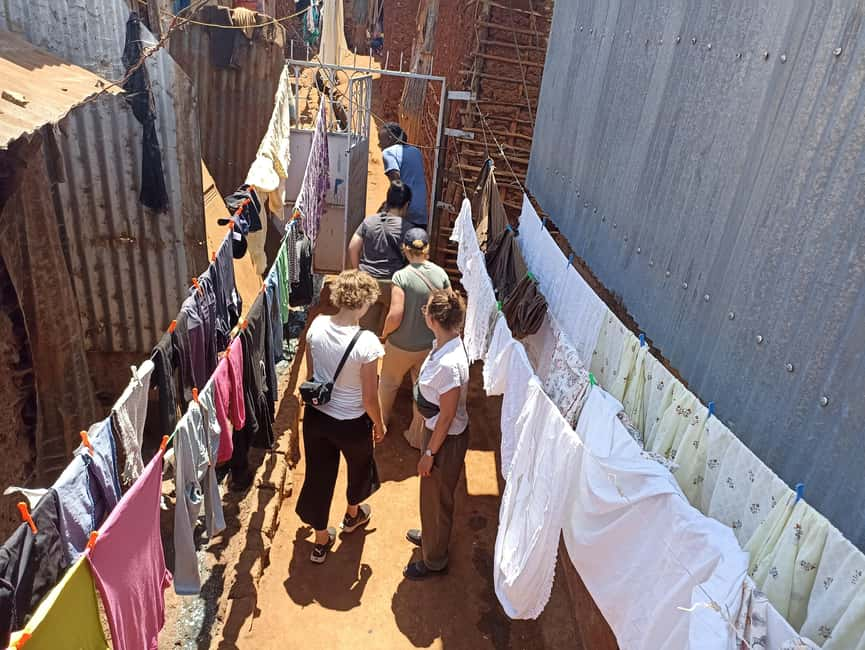
Kibera lies roughly 7 kilometers from Nairobi’s city center and covers about 3 square kilometers. It is often reduced to a single word, slum, but that label tells you very little about how people actually live there.
This tour gives you a fuller picture. You see difficult conditions, but you also see shops, schools, artists, parents, craftspeople, and neighbors working out practical solutions. The point is not to pretend hardship is absent. It is to show that Kibera is a community, not an abstract problem.
Luke is the name most closely linked with this experience. He was born and raised in Kibera, holds a degree, and works as a social entrepreneur. Other guides named in the tour experiences include Clement, Samuel, Victor, and Robert. Your guide may vary, but the important feature is local knowledge and personal connection.
I would choose this tour if you want context and conversation rather than a quick drive past Kibera. The guides explain the area in English or Swahili, answer questions, and can introduce you to people they know. Several visitors were also welcomed into a guide’s family home, though you should treat that as a personal courtesy rather than a guaranteed part of every visit.
More guided Kibera walks:
- Nairobi: Explore Kibera Slum with Local Guides
★ 4.9 · 365 reviews - Kevins Kibera Slum Tours
★ 5.0 · 213 reviews - Nairobi: Kibera Slum storytelling tour with a Local
★ 5.0 · 185 reviews
Meeting at Greenhouse Mall and entering Toi Market
The tour begins at the entrance of Greenhouse Mall, off Ngong Road near Adams Arcade. You are asked to contact your guide on WhatsApp and meet near the security checkpoint after entering the mall.
This is a useful meeting point because you can get settled before walking into Kibera. You might also buy a snack or water, although bottled water is included in the tour. The route then moves toward Toi Market, described as Nairobi’s second-largest open-air market.
Toi Market is a practical introduction to the local economy. Second-hand clothes arrive from Europe, the United Kingdom, the United States, China, and elsewhere, then find buyers among people living in Kibera and nearby neighborhoods. You see how imported goods are sorted, displayed, and sold in a market that serves local needs.
Keep your attention on the people and trade rather than treating the market like a colorful stage. It can be crowded, and you will be walking through working streets rather than a purpose-built attraction. Your guide helps explain what you are seeing and how the market fits into daily life.
Meeting children and learning how support works

A visit to a local children’s home is one of the most serious parts of the experience. The home provides food, shelter, and education for vulnerable children, including orphans and children rescued from the streets.
The children’s home is sometimes associated with caregivers such as Mama Paschalia or Mimi, and one account describes a home supporting about 18 orphans. Details can change, but the basic purpose is clear: this is a working community project, not an entertainment stop.
I appreciate that the tour sends part of its revenue to a children’s home and school. You can also bring useful items if you want, though the tour information does not require this. Some visitors brought food or stationery, but do not assume that gifts are expected.
The best approach is to listen, follow your guide’s instructions, and avoid turning children into subjects for casual photography. A visit can be meaningful without demanding attention from the children. You are there to understand the work being done and to support it through the tour fee, not to collect dramatic images.
Uweza Art Gallery and Kibera’s creative side
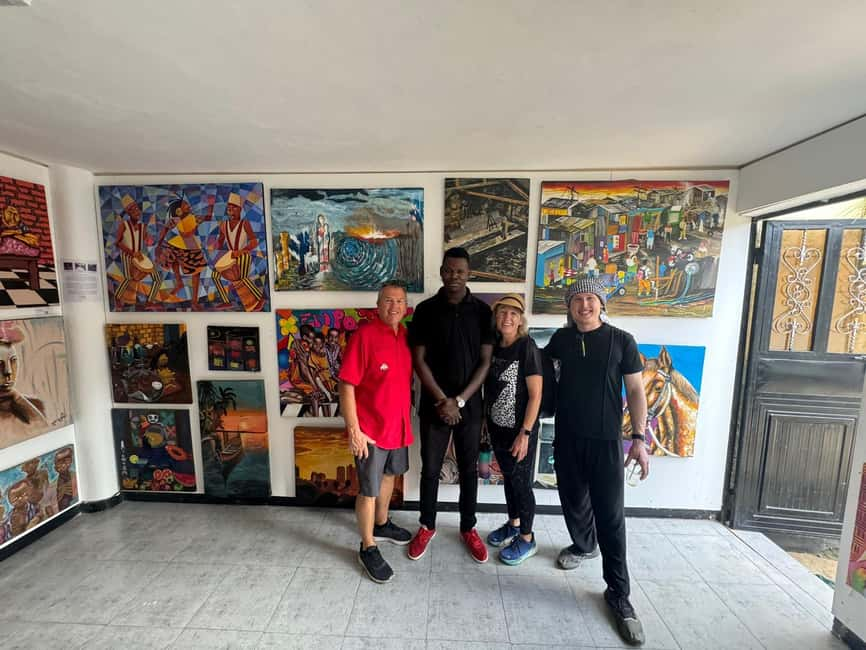
Uweza Art Gallery provides a welcome change of pace. The center gives children and local artists a place to develop and show their work.
The art is not just decoration. It offers a way for young people and artists to explore talent, earn attention for their work, and present their own view of Kibera. Your guide can explain the meaning behind selected pieces and describe how the art center supports local residents.
You may find work available for purchase, but buying products is not included in the $40 price. The same applies to items at other workshops. Bring some Kenyan cash if you want to support artists or craftspeople directly, but there should be no assumption that you must buy anything.
This stop is valuable because it pushes back against the narrow idea that Kibera is defined only by deprivation. Creativity and enterprise are part of the community too.
A few more Nairobi trips worth comparing
- Nairobi National Park Half-Day Tour; Free Wi-Fi connection
★ 5.0 · 878 reviews - Nairobi: National Park & Optional Elephants & Giraffe Center
★ 4.8 · 874 reviews - NAI NAMI: Nairobi Storytelling Tour with Street Children
★ 5.0 · 792 reviews - Nairobi National Park Half-Day Game Drive
★ 4.5 · 738 reviews
The Kibera viewpoint near the railway line
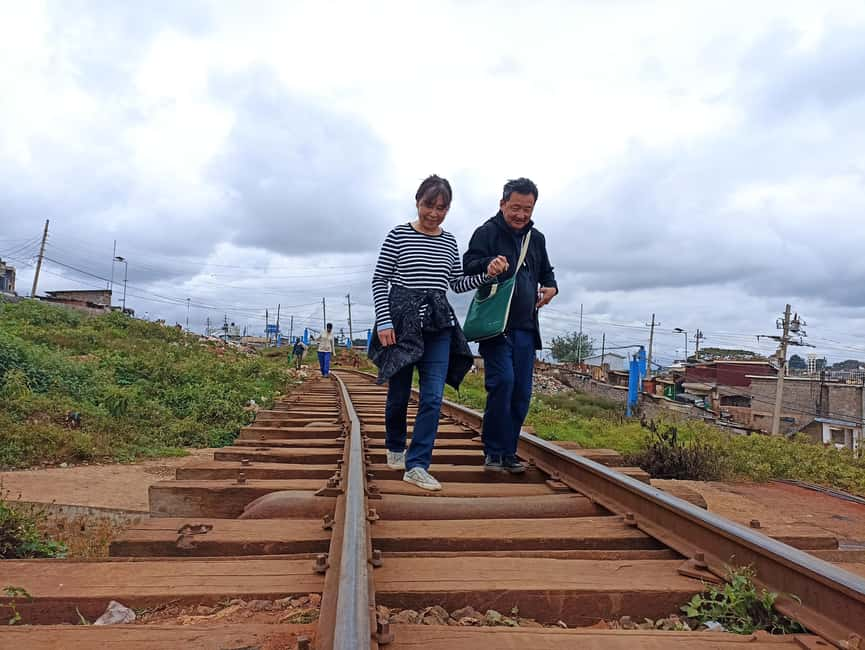
Near Kibera Town Centre, close to the old Kenya-Uganda Railway line, the tour pauses at an elevated viewpoint. From here you can look across part of the settlement and understand its scale more clearly.
An aerial view helps connect the stories from the walking route. After seeing one narrow street or one small home, you can look out across a much larger area and grasp how many people share limited space.
This is a short stop, but it may be one of the most useful for orientation. Your guide can point out sections of Kibera and explain how the area developed. The view is also a reminder to avoid simple judgments. A large settlement contains different homes, businesses, schools, and social projects, not one uniform experience.
Inside a 4-by-4-meter local home
The local house visit offers the most direct look at domestic space. The home is described as approximately 4 by 4 meters, and your guide explains how the room is arranged and used.
For many people, this is the moment when statistics become practical. You begin to think about storage, sleeping arrangements, cooking, family life, and privacy in a very small area. The guide can also introduce you to a local family and explain their way of life.
You should enter quietly and ask before taking photographs. A private home is not a museum, and the family is offering access to their living space. If you are uncomfortable with this part of the tour, you can discuss your concerns with the guide before arrival.
Several people especially valued meeting Luke’s parents at his family home. That personal connection helps explain why a local guide can offer a different experience from someone who simply memorized facts about Kibera.
Fairview Academy and the effort to keep children learning

At Fairview Academy, you see a local school operating with limited resources. The visit focuses on the determination of children and teachers to continue education despite difficult conditions.
The school stop gives useful context to the children’s home visit. One project provides care and shelter, while the school shows how education continues within the wider community. It also explains why the tour’s contribution of stationery and other school supplies matters.
Do not expect a formal school performance or a polished campus. The value is in seeing a functioning local institution and hearing about the barriers it faces. Your guide can discuss education alongside other challenges, including water, electricity, waste, health, and unemployment.
For parents, students, and anyone interested in development work, this may be one of the most instructive stops. It is also a good reminder that a school visit should be handled with care. Children are learning, not performing for tourists.
Victorious Bone Craft and practical recycling
Victorious Bone Craft shows how waste materials can become useful products. Artisans recycle cow bones, cow horn, used brass padlocks, and camel bone into ornaments and other crafts.
This workshop connects environmental concerns with employment. Materials that might otherwise contribute to pollution are turned into products, while the work creates income for local craftspeople.
You can see a side of Kibera that is easy to miss from the outside: people creating small enterprises with the resources available to them. The workshop is also one of the places where you may want to buy something, but purchases are extra and optional.
I like this stop because it is practical rather than symbolic. It shows a response to two local problems at once: waste and limited job opportunities. If you do buy an item, ask about the craft and the materials. That makes the purchase more meaningful than simply taking home a souvenir.
What the three-hour schedule is really like

The complete route is planned for a maximum of three hours. That is long enough to cover several stops but short enough to fit into a Nairobi sightseeing day.
You should expect substantial walking through uneven, active neighborhood streets. The experience is interactive, and the guide may pause often to explain a place or introduce you to someone. The schedule is described as flexible, so you can discuss timing and interests with your guide.
The route may not look exactly the same for every booking. Some people spent more time talking with children’s home staff, meeting a family, or playing football with children instead of visiting every planned stop in the same order. Ask your guide at the start what is possible that day.
The tour ends at Olympic Estate, where you can arrange an Uber or Bolt for your next destination. The meeting information also refers to the meeting point as the end location, so confirm the final drop-off plan with your guide before you begin. The tour does not include onward transport.
Safety, comfort, and respectful behavior
Safety is a major concern for anyone considering Kibera. The guides are local, know the streets, and have personal relationships in the area. The strongest practical advantage is that you are not trying to find your way through the neighborhood alone.
Many people felt comfortable with Luke and the other guides, including solo women and families with children. That does not mean you should ignore normal city precautions. Keep valuables secure, listen to your guide, and do not wander away from the group.
Wear comfortable shoes and clothing suitable for walking. The tour includes streets, market areas, homes, schools, and workshops, so modest dress and a low-key manner are sensible.
Most important, think about your behavior. Ask permission before photographing people or private spaces. Do not assume that every person wants to talk. The experience works best when you approach it as a conversation and learning opportunity, not as poverty theater.
Is $40 good value?
At $40 per person, the tour is reasonably priced for a private, locally led experience lasting up to three hours. The fee includes the guide, bottled water, Toi Market, the children’s home, a local house, Uweza Art Gallery, Victorious Bone Craft, Fairview Academy, and the viewpoint.
The strongest value comes from the access and interpretation. You are not simply walking through Kibera. You are meeting people connected to the guide, entering places that would be difficult to find alone, and learning how community projects operate.
The fact that 30% supports a children’s home and school adds a clear social purpose. Still, you should not assume that every dollar goes directly to aid. The stated contribution is 30%, and the rest covers the tour operation and guide’s work.
Products, donations, and transport after the tour cost extra. You can support the art center, craftspeople, or children’s programs further if you wish, but you are not required to spend more.
Who should book this experience?
I would recommend it to adults, older children, students, educators, and anyone who wants to understand Nairobi beyond its main sights. It suits people who enjoy asking questions and listening to personal stories.
It may be especially useful for students of development studies, social work, education, urban planning, or African history. The tour connects broad issues such as housing and employment with the daily decisions of families, teachers, artists, and small businesses.
Children under 7 are not considered suitable, and babies under 1 year are also excluded. People over 95 are not considered suitable either. If you are unsure about the walking or the emotional weight of the children’s home visit, discuss it with the guide before booking.
Should you book the Kibera tour?
Book it if you want a personal, locally guided introduction to Kibera and are prepared to approach homes, schools, and children’s projects with respect. The guide’s local roots, the range of stops, and the 30% community contribution make this more useful than a quick drive-by visit.
Skip it if you want a light sightseeing activity with little walking or no emotionally difficult subjects. Kibera is not presented as easy, and some stops may stay with you long after the tour ends.
For most curious visitors to Nairobi, I think the $40 is worthwhile. Choose a flexible mindset, confirm the meeting and end points, carry only what you need, and let the guide set the tone. You will leave with a more human understanding of the city and a clearer sense of both Kibera’s hardships and its resourcefulness.
FAQ
Where does the Kibera tour begin?
The tour begins at the entrance of Greenhouse Mall, off Ngong Road near Adams Arcade. You should contact the guide on WhatsApp after arriving.
How long does the tour last?
The tour is scheduled for a maximum of three hours.
What places are included?
The route includes Toi Market, a local children’s home, Uweza Art Gallery, a Kibera viewpoint, a local house, Fairview Academy, and Victorious Bone Craft recycling workshop.
Does the tour support local community projects?
Yes. Thirty percent of the tour revenue supports a children’s home and a local school, including stationery and other school items.
What languages are available?
The tour is available in English and Swahili.
Is transport included after the tour?
No. The tour ends at Olympic Estate, where you can arrange an Uber or Bolt for your next destination.
Who should not join this activity?
The experience is not suitable for children under 7, babies under 1 year, or people over 95 years.
Just added around Nairobi
- Visit kibera Slum the chocolate city★ 4.8 · 3 reviews
- Day Tour to Nairobi national park, Elephants, and Giraffe Center★ 3.5 · 8 reviews
- Explore local Market matatu ride & Make Kenyan Cuisines with a home cook★ 5.0 · 8 reviews
- Kibera Slum Tour with a Local★ 5.0 · 15 reviews
- Urban Forest Tour in Nairobi★ 5.0 · 7 reviews
- Vegans special safari★ 4.5 · 4 reviews
- Private Mini Safari Tour in Nairobi★ 5.0 · 6 reviews
- Private Kenyan Cooking Class in Nairobi with a Local★ 5.0 · 3 reviews
Kibera Slum Tours, compared.






Memorable Daily KIBERA Slums/Toi Market Tour with Locals (2 hours)
Read our review →Browse the lists this tour appears in