

Reviewed · KIBERA SLUM TOURS
See Kibera with a Non-Profit Leader
Kibera is not a sight you simply look at from a vehicle. This three-hour walking tour takes you through homes, shops, churches, schools, and community projects with guides who have close ties to the area. The result is a far more human picture of Nairobi’s largest informal settlement than you can get from a passing glance.
I like two things here. First, the guide’s local connection gives the visit real context, whether you walk with Brian, Benta, Vincent, or Padox. Second, your $30 fee supports the Seed Foundation and its school, so the outing has a practical purpose beyond sightseeing. The main drawback is simple: this is a long walk through a crowded, challenging setting, not a polished attraction, and the subject matter can be emotionally heavy.
Key points at a glance
- Local guides with personal ties: Brian, Benta, Vincent, and Padox have guided visitors through Kibera and shared their own connection to the community.
- The Seed School visit: Education is a major part of the experience, with a chance to see how the foundation supports children.
- A real neighborhood walk: Expect homes, businesses, churches, medical and education facilities, and social impact projects rather than staged displays.
- Pickup may be available: The experience offers pickup, and some bookings include a return ride to your accommodation.
- Small enough to feel personal: Groups can reach 20 people, though some outings have been private or accompanied by two guides.
- Plan for three hours on foot: Comfortable shoes, water, and a thoughtful attitude matter more here than a camera-ready outfit.
Seeing Kibera on foot with a local guide
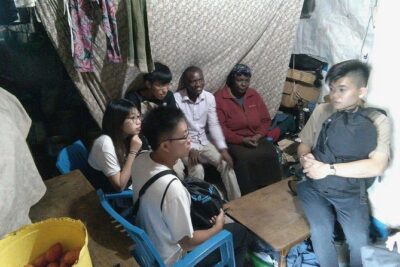
The tour begins with an introduction to Kibera and its place in Nairobi. You then walk through the community with a guide connected to local life, often from the Seed Foundation. That personal link matters. Kibera is easy to reduce to a few labels, but your guide can explain how people work, study, worship, raise children, and organize support within the neighborhood.
The walk covers everyday places rather than a short viewing point. You might pass small businesses, homes, churches, schools, and community services. The point is not to collect dramatic images. It is to listen, ask respectful questions, and understand how the area functions as a lived-in community.
The guides are a major strength. Brian is described as a teacher at the Seed School, while Padox has explained both his own story and why he started his foundation. Benta has led visitors through the neighborhood and to the primary school connected with her life. Names and guide assignments can change, but the local connection is central to the experience.
I like that the tour gives you room to ask about both present conditions and future plans. You learn about infrastructure work by local and government agencies, along with the projects already being run by community groups. That makes the visit more useful than a quick walk focused only on hardship.
More guided Kibera walks:
- Nairobi: Explore Kibera Slum with Local Guides
★ 4.9 · 365 reviews - Kevins Kibera Slum Tours
★ 5.0 · 213 reviews - Nairobi: Kibera Slum storytelling tour with a Local
★ 5.0 · 185 reviews
The Seed School and the purpose behind the visit

The Seed School is one of the most important stops. It gives you a chance to see the foundation’s work in a direct way, rather than simply hearing that your money supports a good cause. Education is presented as a source of hope for children in the community, and the school helps explain why the organization brings people here.
Some visits include a performance by teachers and students, with music and dancing. This is a memorable part of the experience, especially for families, but it should not be treated as a guaranteed show. The supplied details describe it as something arranged on some outings, not a fixed feature of every departure.
The school visit can also raise difficult questions. A visit involving children requires tact. Bring your attention and curiosity first, not an expectation that pupils should entertain you. If you want to offer practical help, ask the organization what is useful rather than handing out random items. One family brought notebooks and pens, while other visitors considered creative items such as accessories or music. The most sensible approach is to coordinate directly with Seed Foundation.
I find this stop valuable because it shifts the focus from poverty alone to local effort. You see a community working to give children more choices. That does not erase Kibera’s problems, but it gives a fuller picture of what is happening there.
Homes, shops, churches, and daily routines

The walk continues through the ordinary spaces of Kibera. You may see small shops, homes, churches, and work areas close together. The experience also addresses education, medical conditions, local business, and the practical challenges of daily life.
This section is where a good guide makes the difference. Without context, the narrow paths and modest buildings can be hard to interpret. Your guide can explain what you are seeing, how residents make a living, and how services reach the community. You are not just passing through a set of buildings. You are learning how a large neighborhood operates with limited resources.
A bone jewelry workshop is another possible stop. It offers a look at local craft and small-scale enterprise, and it may give you a chance to buy something directly connected to the community. Treat purchases as optional. The value of the visit does not depend on spending extra money.
The tour can also touch on medical services and infrastructure. Some details will depend on the guide and the day, so do not expect a fixed script with every stop timed to the minute. That flexibility can help the guide respond to your interests, but it also means the exact route may vary.
The personal stories make the facts clearer
Statistics alone do not explain Kibera well. Personal stories add the missing layer. A guide who grew up in the area, teaches at the school, or helped establish a foundation can explain how broad issues affect real families.
That first-hand element is why I would choose this outing over a distant overview. You can ask about school, work, health care, housing, and hopes for change in plain language. You also hear about the positive side of community life, including the warmth and energy that many visitors notice during the walk.
At the same time, keep your expectations grounded. This is not a scripted performance, and not every part of the visit will feel comfortable. Some scenes may be confronting. You may see poverty more directly than you have before, and you should avoid treating people’s homes or routines as scenery.
Ask before taking photographs. Even if photography is not specifically addressed in the booking details, basic courtesy is essential in a residential community. Put the camera away during personal conversations unless you have clear permission.
A few more Nairobi trips worth comparing
- Nairobi National Park Half-Day Tour; Free Wi-Fi connection
★ 5.0 · 878 reviews - Nairobi: National Park & Optional Elephants & Giraffe Center
★ 4.8 · 874 reviews - NAI NAMI: Nairobi Storytelling Tour with Street Children
★ 5.0 · 792 reviews - Nairobi National Park Half-Day Game Drive
★ 4.5 · 738 reviews
What three hours on foot really means
The advertised duration is about three to four hours, with the Kibera walk itself described as roughly three hours. This is enough time to cover several parts of the community without rushing, but it is also long enough to tire you out.
Wear comfortable walking shoes and clothing suited to Nairobi’s conditions. The tour is not a short roadside stop. You will be walking through an active neighborhood, and the route may include uneven or crowded sections. The information says most people can participate, but anyone with mobility concerns should ask the operator for current route details before booking.
Pickup is offered, and some bookings include collection from and return to a hotel or other accommodation. Public transportation is also nearby. Confirm the exact pickup arrangement when you book, since the available details do not promise a private vehicle for every booking.
The maximum group size is 20. That is not a tiny group, but it is still small enough for a guide to answer questions. Some experiences have had two guides with only two visitors, while others have included families or solo participants. The number of guides and the route can vary.
Is $30 a fair price?
At $30 per person, this is reasonably priced for a three-hour guided walk with possible pickup and a visit to a functioning community school. The strongest value is not the number of stops. It is the access to local explanation and the fact that the money supports Seed Foundation’s work.
You should not compare the price only with a standard city sightseeing walk. This experience includes an educational and social purpose. It also asks more of you emotionally and physically than a museum visit or vehicle tour.
The fee does not mean every dollar goes directly to a particular child or project, so you should keep your expectations realistic. Still, the connection to the Seed School gives the payment a clear local use. If supporting community education is part of your reason for booking, this is a better fit than a tour with no stated local project.
The tour is often booked about 19 days ahead. That timing suggests you should not leave it until the last morning of your Nairobi stay, especially if you want a certain date or pickup arrangement.
Safety, respect, and the ethics of a Kibera visit
Many people hesitate before booking a tour of an informal settlement. That hesitation is healthy. No community should be treated like a human zoo, and poverty should never be turned into a photo backdrop.
This experience works best when you approach it as a guided community visit. The local guides explain the setting, introduce the foundation’s work, and help you move through the area respectfully. Several accounts describe feeling safe during the walk, including solo visitors and families, but no city outing is risk-free. Follow the guide’s directions and stay with the group.
Avoid handing out sweets or money to children. Do not photograph residents without permission. Listen more than you speak, and remember that people in Kibera are not there to perform a hardship story for you.
The school and social projects help give the tour a constructive focus. You see challenges, but you also see people teaching, trading, worshipping, creating, and planning for better services. That balance is important. Kibera is not only poverty, and it is not a feel-good success story either.
Who will get the most from this tour?
I would recommend this experience to you if you want to understand Nairobi beyond the usual museums, restaurants, and safari connections. It suits solo visitors, couples, families with older children, and anyone interested in education, social work, urban development, or community-led change.
It is especially useful early in a Nairobi stay. The guide’s explanations may help you understand the city’s economic divisions and local efforts before you see more of Kenya. It can also be a strong final city activity if you want something more substantial than shopping or a standard sightseeing loop.
Families should decide in advance how their children will respond to difficult living conditions. The school visit and dancing may be engaging, but the walk can also prompt serious questions. That can be valuable, as long as adults frame the experience with respect.
I would skip it if you want a relaxed, highly polished attraction with predictable stops and little walking. I would also avoid booking if you are mainly seeking dramatic photographs. The tour’s value depends on listening and thinking, not collecting images.
Booking details worth knowing before you go
Confirmation is provided when you book, and the ticket is mobile, so you do not need to rely on a printed voucher. The activity is near public transportation, and pickup is offered.
The experience cannot be refunded or changed after booking. That makes it wise to confirm your date, party size, pickup location, and walking ability before paying. Since the route and guide pairing may vary, you can also ask what is planned for your specific departure.
The operator is Seed Foundation. The experience is non-refundable, and the maximum group size is 20. Most people can take part, but the walking format and community setting deserve more attention than a simple accessibility label suggests.
Should you book the Kibera walk?
Book it if you want a direct, locally guided look at Nairobi and are prepared to walk, listen, and meet the community with humility. The strongest reasons are the guides’ personal ties, the Seed School visit, and the clear connection between the ticket price and local education work.
Do not book it expecting a neat sightseeing product. The route may change, the subject matter can be hard, and some features, such as student performances, are not guaranteed. But if your goal is to understand more of Nairobi than you could from a tour bus window, this $30 outing offers a meaningful use of half a day.
FAQ
How long does the Kibera tour last?
The experience lasts about three to four hours, with the walking portion described as roughly three hours.
How much does the tour cost?
The listed price is $30 per person.
Where does the tour take place?
The tour takes place in Kibera, Nairobi, Kenya.
Who leads the tour?
The experience is led by a Seed Foundation guide or guides. Names connected with the tour include Brian, Benta, Vincent, and Padox.
Is pickup available?
Yes. Pickup is offered, and some bookings include pickup and return to your accommodation.
What will I see during the walk?
The route includes community projects and may pass homes, shops, churches, education facilities, medical services, and local businesses.
Does the tour visit a school?
Yes. The Seed School is part of the experience and shows the foundation’s work with children.
Can I use a mobile ticket?
Yes. A mobile ticket is offered, and confirmation is provided when you book.
How many people can join the tour?
The maximum group size is 20 people.
Can I cancel or change my booking?
No. The experience is non-refundable and cannot be changed after booking for any reason.
Just added around Nairobi
- Visit kibera Slum the chocolate city★ 4.8 · 3 reviews
- Day Tour to Nairobi national park, Elephants, and Giraffe Center★ 3.5 · 8 reviews
- Explore local Market matatu ride & Make Kenyan Cuisines with a home cook★ 5.0 · 8 reviews
- Kibera Slum Tour with a Local★ 5.0 · 15 reviews
- Urban Forest Tour in Nairobi★ 5.0 · 7 reviews
- Vegans special safari★ 4.5 · 4 reviews
- Private Mini Safari Tour in Nairobi★ 5.0 · 6 reviews
- Private Kenyan Cooking Class in Nairobi with a Local★ 5.0 · 3 reviews
Kibera Slum Tours, compared.



Nairobi: Kibera Slum Tour with Local Social Entrepreneurs
Read our review →


Memorable Daily KIBERA Slums/Toi Market Tour with Locals (2 hours)
Read our review →Browse the lists this tour appears in