

Reviewed · KIBERA SLUM TOURS
Ismael’s Kibera Slum Tour
Kibera is best understood with someone who knows its streets, homes, and people. On this private tour, Ismael, an accredited guide who was born and raised in the community, personally handles the pickup, guiding, and return to your Nairobi hotel.
I like the direct human contact here, especially the home visit and time with Ismael’s wife. I also like the practical look at work in Kibera, including jewelry made from domestic animal bones. The main consideration is that this is a serious, sometimes emotional outing, not a polished sightseeing show.
Key points to know before booking

- Ismael guides the tour himself, giving you a personal connection to Kibera and its daily life.
- A bone-art workshop shows how local craftspeople turn domestic animal bones into jewelry and useful items.
- Home visits offer a direct look at how people live inside the settlement.
- A children’s home and rescue center focuses on children affected by street life, orphanhood, and Kenya’s 2007 to 2008 post-election violence.
- Private hotel pickup and drop-off are included within Nairobi, with the tour lasting about three to four hours.
- The $65 price covers a personalized half-day experience for your own group, rather than a shared outing.
Why Ismael’s personal connection changes the visit
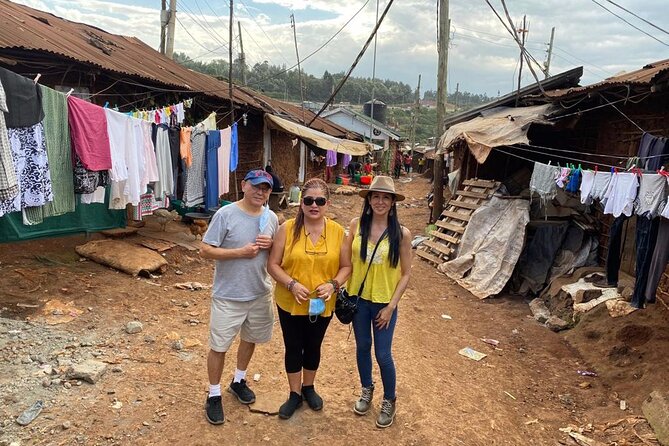
Kibera is not a monument with a neat entrance, a marked path, and a standard script. It is a living community where people work, raise families, trade, create, and solve daily problems with limited resources. That makes a local guide more than a convenience.
Ismael was born and raised in Kibera, and he owns the tour company. He also does the driving and guiding himself. You are not simply being taken to a viewpoint and given a few facts. You are meeting a person who can explain the place from his own experience.
That personal role is one of the strongest reasons to choose this tour. Ismael can give context to the homes, workshops, and community projects you see. He can also help you approach people with more care than you might manage alone.
The tour is private, so only your group participates. That matters in a setting where you may want to ask sensitive questions without holding up a larger party. It also gives Ismael room to adjust the pace and explain things that catch your attention.
I would approach the visit with respect and an open mind. Kibera is not a backdrop for dramatic photographs. It is home to a large community, and the people you meet are sharing parts of their work and lives with you.
More guided Kibera walks:
- Nairobi: Explore Kibera Slum with Local Guides
★ 4.9 · 365 reviews - Kevins Kibera Slum Tours
★ 5.0 · 213 reviews - Nairobi: Kibera Slum storytelling tour with a Local
★ 5.0 · 185 reviews
Starting with pickup in Nairobi
Hotel pickup and drop-off within Nairobi are offered at no extra charge. That makes the tour easy to fit into a city visit, especially if you are staying away from the main public transport routes or prefer not to arrange your own way to Kibera.
The meeting point is listed as Nairobi, Kenya, and the experience is near public transportation. The published operating hours cover Monday through Sunday, from midnight to midnight, but you should confirm the actual start time when booking. The tour itself takes about three to four hours.
Because Ismael personally handles the pickup, you get an early chance to ask questions before arriving. Use that time to explain your interests and any concerns. A private format is most useful when you communicate clearly about how much time you want to spend at each stop.
The tour is described as suitable for most participants. Still, this is a community walking experience rather than a conventional city attraction. Ask for any details you need about walking conditions before you go, since the supplied information does not describe the exact route or surfaces.
Seeing Kibera through a local guide

The most valuable part of this outing is the context. Kibera is often reduced to a few headlines about poverty, overcrowding, or hardship. Those facts matter, but they do not tell you how residents work, organize, create products, and support one another.
Ismael’s role helps put daily life first. He can explain the challenges faced by local families while also showing the resourcefulness of the people who live there. That balance is important. You should come away with a clearer picture of both difficulty and determination, not just a collection of grim images.
The private setup also keeps the visit more personal. You can ask about community life, family routines, social enterprises, and ongoing projects. You may also have more time to listen rather than move quickly from one photo stop to another.
A good rule is to let the guide set the tone around photography and conversation. Ask before taking pictures of people, homes, or children. The tour offers access to real places, but access does not remove the need for courtesy.
The African bone workshop and local crafts
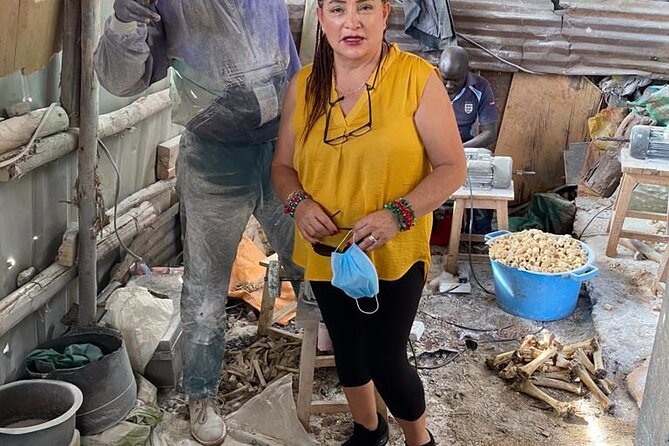
One of the most unusual stops is an African bone workshop. A group of Kibera residents uses bones from domestic animals to make items such as bottle openers, wristbands, finger rings, necklaces, wooden crafts, and brass crafts.
This stop gives the tour a practical focus. You see how materials that might otherwise be discarded can become saleable goods. It also shows the role of small-scale craft work in a community where people need flexible ways to earn money.
I like this part because it connects local creativity with business. You are not only hearing about hardship. You are seeing people make products, develop skills, and create value from materials at hand.
The workshop also gives you something concrete to remember. A conversation about informal work can feel abstract. Watching crafts being made makes the idea easier to understand.
If you want to support the makers, ask Ismael how purchases work and which items are made at the workshop. The supplied information does not state that buying crafts is required or included, so treat shopping as an optional part of the visit, not the purpose of the tour.
A few more Nairobi trips worth comparing
- Nairobi National Park Half-Day Tour; Free Wi-Fi connection
★ 5.0 · 878 reviews - Nairobi: National Park & Optional Elephants & Giraffe Center
★ 4.8 · 874 reviews - NAI NAMI: Nairobi Storytelling Tour with Street Children
★ 5.0 · 792 reviews - Nairobi National Park Half-Day Game Drive
★ 4.5 · 738 reviews
The home visit and a closer look at daily life
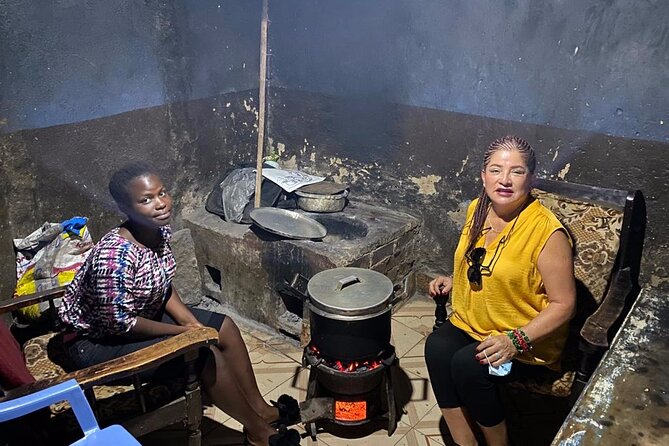
The home visit is likely to be the most personal section of the tour. You will see how a Kibera house looks in real life rather than viewing the settlement only from outside.
This is where the experience moves beyond general facts. A home can show you how families use limited space, how domestic life is arranged, and how community members make a place work for them. The tour description does not specify the exact home layout, so Ismael’s explanation will be important.
You may also spend time with Ismael’s wife in their home. That detail gives the visit a human center. It is one thing to hear a guide describe local life. It is another to sit with a family and hear directly about their experience.
This is also the point where you should be most careful with your behavior. Keep your questions polite, avoid treating the house as a display, and follow any instructions about photographs. If you prefer a more distant sightseeing style, this part may feel too intimate.
For me, that intimacy is the reason to book this tour instead of a quick drive past Kibera. You get a chance to understand the community through ordinary domestic life, not only through statistics or commentary.
The children’s home and rescue center

The tour also visits a children’s home and rescue center. It supports rescued street children and orphaned children, including those who lost parents during Kenya’s 2007 to 2008 post-election violence.
This stop adds important social context. Kenya’s post-election violence left families dealing with loss and displacement, and the effects did not end when the violence stopped. A rescue center gives you one way to understand the support systems that help vulnerable children.
The subject is serious. You should not expect a light or purely cheerful stop. The center may raise difficult questions about poverty, family separation, and the long-term effects of political violence.
Ask Ismael how the center operates and what kind of help is useful. The supplied details do not state that donations are included, required, or accepted through the tour, so do not assume that bringing money or supplies is part of the booking.
The best way to approach this visit is to listen. You are there to learn about the center and the children it serves, not to turn the children into a photo opportunity. This distinction matters on any community-based tour.
A brief look at other Nairobi sights

The itinerary also lists a stop in the Nairobi region, with mention of other attractions such as a Maasai cultural village, a market, national parks, and Mamba Village. This section is described as lasting about one hour, but the available details do not explain exactly which of these places you will visit during the Kibera tour.
I would clarify this before booking if you want those sights included. The core of Ismael’s tour is clearly the Kibera visit, not a full Nairobi highlights tour. You should not book it expecting a long safari, a museum program, or a complete city circuit.
The extra Nairobi reference may simply help you plan other activities with the same provider. Treat it as a possible add-on or planning note unless Ismael confirms the exact route and admission details.
That uncertainty is a small weakness in the description. The central Kibera program is specific, but the Nairobi portion is less clear. A quick message before payment can prevent mismatched expectations.
Is $65 a fair price?

At $65 per person, this is not the cheapest way to spend three hours in Nairobi. The value comes from the private format, personal guiding, and included hotel transportation rather than from a long list of paid attractions.
You are paying for Ismael’s time, local knowledge, driving, and access to several parts of community life. The visit includes the workshop, home visit, children’s center, and conversation about social enterprises and daily challenges. Admission is listed as free for the main stops.
For a solo visitor, $65 may feel like a substantial half-day cost. For a couple, family, or small private group, the price becomes easier to justify because you are not sharing the guide with strangers and can ask questions at your own pace.
The free pickup and drop-off also save you the trouble of arranging transport to an unfamiliar area. That is a practical benefit, not just a comfort feature.
I would consider this good value if your priority is direct community contact and local interpretation. It is weaker value if you want a broad list of Nairobi attractions, formal exhibits, or a conventional sightseeing route.
The tour is often booked well ahead, with an average booking lead time of about 54 days. That suggests you should reserve early if your Nairobi dates are fixed, especially because Ismael personally guides the outing and private capacity is limited by his schedule.
Who will appreciate this tour most?
This experience suits you if you want to understand Nairobi through people and community work. It is especially useful for first-time visitors who do not want to enter Kibera without local guidance.
You may also like it if you are interested in:
- Community-led projects and informal businesses
- Craft production and small-scale enterprise
- Social support for children
- The effects of Kenya’s 2007 to 2008 post-election violence
- Personal conversation with a local guide and family
- Private tours that can adapt to your group
Families should think carefully about the children’s home and the serious subjects discussed. The tour is not presented as a children’s entertainment activity, even though most participants can take part.
It may not suit you if you want a polished attraction, a fast photo stop, or a route focused only on Nairobi’s major sights. Kibera is a real residential community, and the visit requires patience and respect.
Practical details for a smoother visit
Wear practical clothing and shoes suitable for a community walking tour. The supplied information does not give exact walking distances or surface conditions, so ask Ismael what to expect when confirming your booking.
Keep the group small in spirit, even though the tour is private. Listen more than you speak, ask before taking photos, and allow time for conversations to develop. The experience gains value when you treat each stop as a meeting, not a checklist.
Build some flexibility into your day. The stated duration is approximately three to four hours, and personal conversations or home visits may not fit a rigid schedule. If you have an airport transfer or another timed activity, leave a generous gap.
Confirmation is provided at booking. Free cancellation is available up to 24 hours before the start time for a full refund. Changes or cancellations made less than 24 hours before the start time are not accepted for a refund, and poor weather can lead to a different date or a full refund.
Should you book Ismael’s Kibera Slum Tour?
Book this tour if you want a personal, grounded introduction to Kibera and are prepared to engage with difficult subjects. Ismael’s direct role, his connection to the community, and the home visit make this more meaningful than a quick ride past the settlement.
The strongest elements are the African bone workshop, time with Ismael’s family, and the chance to learn about children’s support services. The main drawbacks are the emotional weight of the subject and the unclear details about the separate Nairobi sights.
For the best fit, book it as a focused community visit, not as a complete Nairobi tour. Ask Ismael to confirm the exact pickup time, walking arrangements, and whether the Nairobi region stop is part of your planned route. If those details suit you, $65 is a reasonable price for a private half-day guided experience with transportation included.
FAQ
How long does Ismael’s Kibera Slum Tour last?
The tour lasts approximately three to four hours. The main Kibera portion is listed at about three hours, with an additional Nairobi region portion listed at about one hour.
Does the tour include hotel pickup and drop-off?
Yes. Free pickup and drop-off are offered within Nairobi.
Who guides the tour?
Ismael personally guides the tour. He is the owner of the company and was born and raised in Kibera.
Is this a private tour?
Yes. Only your group participates in the activity.
What can I see at the bone workshop?
You can see Kibera residents using bones from domestic animals to make items such as bottle openers, wristbands, finger rings, necklaces, wooden crafts, and brass crafts.
Does the tour include a home visit?
Yes. The itinerary includes home visits so you can see what Kibera houses look like in real life. You may also spend time with Ismael’s wife in his home.
Does the tour visit a children’s home?
Yes. The tour visits a children’s home and rescue center for rescued street children and orphaned children, including children affected by Kenya’s 2007 to 2008 post-election violence.
How much does the tour cost?
The listed price is $65 per person.
Can I cancel for a full refund?
Yes, if you cancel at least 24 hours before the experience start time. Cancellations made less than 24 hours before the start time are not refunded, and poor weather may lead to a different date or a full refund.
Just added around Nairobi
- Visit kibera Slum the chocolate city★ 4.8 · 3 reviews
- Day Tour to Nairobi national park, Elephants, and Giraffe Center★ 3.5 · 8 reviews
- Explore local Market matatu ride & Make Kenyan Cuisines with a home cook★ 5.0 · 8 reviews
- Kibera Slum Tour with a Local★ 5.0 · 15 reviews
- Vegans special safari★ 4.5 · 4 reviews
- Urban Forest Tour in Nairobi★ 5.0 · 7 reviews
- Private Mini Safari Tour in Nairobi★ 5.0 · 6 reviews
- Private Kenyan Cooking Class in Nairobi with a Local★ 5.0 · 3 reviews
Kibera Slum Tours, compared.



Nairobi: Kibera Slum Tour with Local Social Entrepreneurs
Read our review →


Memorable Daily KIBERA Slums/Toi Market Tour with Locals (2 hours)
Read our review →Browse the lists this tour appears in