

Reviewed · KIBERA SLUM TOURS
Nairobi: Explore Kibera Slum with Local Guides
Kibera is not a backdrop for sightseeing. It is a living Nairobi neighborhood, and this three-hour walk puts you in the care of people who know it from the inside. Guides such as Benta, Erick, Samuel, and Jack were born and raised in Kibera, so the stories come from daily life rather than a distant script.
I like two things right away: the home visit, which explains practical matters such as water, electricity, bathrooms, and room size, and the fact that booking income supports KCOOP Organization’s work in education, child hunger, sports, arts, and economic empowerment. The main consideration is that this can be emotionally difficult, and visitors must treat residents and children with care, especially around photography.
Key points to know before you go

- Local guides lead from personal experience: The guiding team lives in Kibera and explains the community in clear English.
- The home visit is the heart of the walk: You see how ordinary household systems work in a small residential space.
- Your $15 has a wider purpose: Proceeds help KCOOP Organization run community programs.
- The route includes local making and selling: See recycled and upcycled materials turned into jewelry and crafts.
- Bring practical gifts only if you wish: School supplies, hygiene items, snacks, clothes, and sports equipment are listed as optional contributions.
- Meet at a simple city location: The group gathers outside Java House at Prestige Plaza Shopping Mall on Ngong Road.
Why this Kibera walk feels different

Many city tours keep you on the polished side of Nairobi. This one takes you into Kibera, about 6.6 kilometers from the city center, with people who live there and understand its streets, families, work, and challenges.
That matters. You are not simply being shown difficult living conditions. You are given explanations about how households function, how residents make a living, and how local groups try to improve daily life. The result is still confronting, but it is less likely to reduce Kibera to a headline or a collection of shocking images.
The tour is run by KCOOP Organization, a community-based nonprofit founded and registered in 2022. Its programs cover education, combating child hunger, arts and sports, economic empowerment, and environmental conservation. The $15 fee is modest for three hours, and its value comes from both the guided access and the contribution to those programs.
I would not call this an easy sightseeing outing. You may see poverty, crowded housing, sanitation problems, and children who are curious about visitors. The best approach is to listen, ask respectful questions, and remember that people are living their normal lives around you.
More guided Kibera walks:
- Kevins Kibera Slum Tours
★ 5.0 · 213 reviews - Nairobi: Kibera Slum storytelling tour with a Local
★ 5.0 · 185 reviews - Kibera Slum Tour with Lucas
★ 5.0 · 119 reviews
Starting at Prestige Plaza on Ngong Road
Your meeting point is outside Java House inside Prestige Plaza Shopping Mall. This is a practical place to meet because it gives you a clear landmark before you leave the city environment.
After the introduction, you travel by car to the first stop in Kibera. The organized transfer keeps the start simple, but the main part of the tour is on foot. Wear shoes that can handle uneven paths and bring water, sunscreen, and hand sanitizer or tissues.
The tour is advertised at three hours, with roughly two and a half hours centered on Kibera. The route can be made longer or shorter depending on your interests, and the guides can adapt it to the questions you bring. Starting times depend on availability, so check the current schedule when booking.
Stop one: the KCOOP office

The first stop is the KCOOP office, where you receive a short briefing. This is also where you can use free Wi-Fi and clean washrooms, a small but welcome detail before the walking portion begins.
The office gives the tour a useful frame. You learn what KCOOP does and how the organization connects the fee from your visit with work for local families and children. Its community programs are not limited to tourism. They include education, food support, sports, arts, income support, and environmental projects.
I appreciate this pause before the walk. It gives you a chance to ask about the route, understand the purpose of the visit, and adjust your expectations. You are entering a neighborhood, not a museum.
Stop two: a view across Kibera
The next stop is a panoramic viewpoint. From here, the guide can help you understand the scale and layout of Kibera before you walk through it.
A viewpoint is useful because the neighborhood can otherwise feel like a series of narrow paths and individual homes. From above, you get a broader sense of the settlement and its relationship to Nairobi. The guide’s explanation is more important than the photo opportunity, so use this stop to ask about the area’s growth, daily movement, and community structure.
Keep your camera put away until you know what is appropriate. A wide view of buildings is different from photographing someone’s home or face, and the distinction matters.
A few more Nairobi trips worth comparing
- Nairobi National Park Half-Day Tour; Free Wi-Fi connection
★ 5.0 · 878 reviews - Nairobi: National Park & Optional Elephants & Giraffe Center
★ 4.8 · 874 reviews - NAI NAMI: Nairobi Storytelling Tour with Street Children
★ 5.0 · 792 reviews - Nairobi National Park Half-Day Game Drive
★ 4.5 · 738 reviews
Stop three: inside a local home

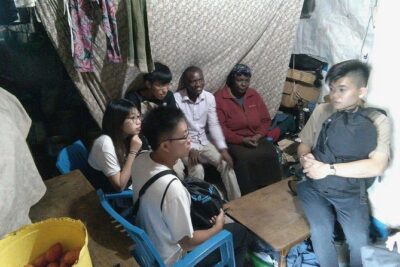
The home visit is the most personal part of the experience. You enter a residential house and learn how residents manage basic needs, including water, electricity, bathing, bathrooms, and the size of a typical home.
This stop turns general statements about poverty into specific information. You can understand how a household is arranged, how limited space affects family life, and how systems many people take for granted work in Kibera. It is one of the clearest ways to replace assumptions with real context.
It is also the point where good manners matter most. You are entering someone’s home because they have agreed to receive you. Ask before taking photographs, do not handle household items without permission, and avoid treating the visit as a photo opportunity.
Several guides have brought the area to life through humor and direct answers. Benta is one of the named guides, and other tours have been led by Emmanuel, Kevin, Zack, Clyde, Oscar, and others. The guide assigned to your booking may vary, but the important qualification is local experience and a connection to the community.
Stop four: recycled crafts and local enterprise

At the Kibera Handicrafts Centre, you see local makers recycle and upcycle materials into jewelry and other handmade goods. This is a useful counterpoint to the home visit because it shows creativity and income generation rather than focusing only on hardship.
Buying something here can be a practical way to support local work. The final curio shop offers handmade African crafts at fixed, clearly marked prices. There is no bargaining and no inflated starting price designed to test your negotiating skills.
That fixed-price system is helpful for visitors who dislike haggling. It also makes the purchase easier to judge: you know the cost, and you can decide if the item is worth it. Ask about the craft if you are interested. The point is not to collect a souvenir from poverty, but to buy something made by people in the community and understand where your money goes.
Stop five: the KCOOP Community Centre

The community center serves people in need and gives you a closer look at KCOOP’s work on the ground. Depending on the day and the group, this may include contact with children or activities connected to the organization’s education and child support programs.
Children are often a memorable part of the visit. They may greet you, play, or show interest in your group. That warmth can make the experience feel welcoming, but it also creates a responsibility to behave thoughtfully.
The organizers say gifts are optional. If you choose to bring something, practical supplies are the safest choice: pencils, pens, crayons, books, indoor games, sports equipment, hygiene products, food, used clothes, biscuits, rice, or sugar. A useful tip is to bring enough for the group present, or donate items for the center rather than handing out individual treats.
Some visitors have brought supplies for roughly 50 children, while others have prepared snacks for 80 to 100 children. Numbers can vary, and giving to a few children in front of many others can create an awkward situation. Ask the guide how to distribute anything you bring.
Please do not assume that children want to be photographed. Ask permission through the guide and respect a refusal. One visitor specifically found it uncomfortable when other tourists photographed children without consent. That is a fair warning and one worth taking seriously.
Walking safely and respectfully in Kibera

Safety is a natural concern, especially if you have never walked through a large informal settlement. The strongest practical reason to book this experience is that you are accompanied by local guides who know the area and its people.
The guiding team includes residents of Kibera, and many groups are accompanied by more than one guide. Solo women and families with children have reported feeling comfortable with their guides, but that should not be treated as a promise that every moment will feel easy. Stay with the group, follow instructions, and keep your valuables secure as you would anywhere in Nairobi.
The more important question is respectful behavior. Dress simply, avoid flashy displays of wealth, and do not point a camera at homes, workers, or children. Let the guide introduce you when a conversation begins. A short greeting and a genuine question are better than a hurried photograph.
You should also be ready for mud, dust, uneven walking surfaces, and crowded passages. The experience is not suitable for wheelchair users. Comfortable shoes are essential, and sunscreen and water will make the three hours much easier.
What the $15 really buys you

At $15 per person, this is one of the least expensive organized experiences in Nairobi. The price includes the expert English-speaking guide, the community walk, the home visit, access to the listed stops, and the contribution to KCOOP’s work. Meals and drinks are not included.
The value is not measured by how many attractions you check off. It comes from access that would be difficult to arrange responsibly on your own, plus the interpretation provided by people who live in Kibera. A cheap walk without context could feel intrusive. Here, the local guides and community programs give the visit a clearer purpose.
Still, you should not book this expecting entertainment from start to finish. The walk may be educational, friendly, funny, uncomfortable, and sad within the same hour. If you want only polished attractions and relaxed photo stops, choose a different Nairobi activity.
Who will get the most from this experience
I would recommend this tour to you if you want to understand how Nairobi functions beyond its central districts. It suits visitors interested in community projects, social issues, local enterprise, African crafts, and first-hand conversations.
It can also work well for families with older children and teenagers, provided you prepare them beforehand. Explain that this is someone’s home and neighborhood, not a theme park. The visit can help young people think about housing, education, resources, and community action without turning residents into objects of pity.
This is a strong choice for solo visitors, too. The guides help with orientation, and the small-group feel makes it easier to ask questions. It may suit people working in education, nonprofit work, or community development especially well because KCOOP’s programs offer more than a quick walk through the area.
You should think twice if you dislike walking on rough surfaces, feel uncomfortable seeing serious poverty, or mainly want a light cultural activity. No guide can remove the difficult parts of what you will see.
Booking details worth knowing
The tour lasts about three hours and is conducted in English. You meet at Java House at Prestige Plaza Shopping Mall, then finish at Kibera Town Centre after the walking portion.
You can cancel up to 24 hours before the start for a full refund, and the reserve-now, pay-later option keeps your plans flexible. Check availability for the starting time. Bring water, comfortable shoes, sunscreen, and hand sanitizer or tissues.
No meal or drink is included, so plan around the tour if you need food. Gifts for children or residents are optional, not an obligation. If you want to contribute, practical supplies or a purchase from the local craft shop may be more useful than random sweets.
Should you book the Kibera community tour?
Book it if you want a direct, carefully guided look at everyday life in Kibera and you are willing to meet the neighborhood with humility. The home visit, local guides, handicraft stop, and KCOOP Community Centre give the three hours a clear shape, while the $15 fee supports programs that serve the community.
I would choose this tour for its local leadership and honest setting, not for dramatic photographs. Go ready to listen, ask permission, and accept a few uncomfortable moments. If that sounds worthwhile, this is one of Nairobi’s more meaningful ways to spend half a day.
FAQ
Where does the Kibera tour meet?
Meet outside Java House inside Prestige Plaza Shopping Mall on Ngong Road.
How long does the experience last?
The tour lasts three hours, with about two and a half hours focused on walking through Kibera. The length can be adjusted depending on your interests.
Who leads the tour?
The local guiding team includes Erick, Samuel, Benta, and Jack. Guide assignments can vary, and other guides connected with the organization include Emmanuel, Kevin, Zack, Clyde, and Oscar.
What language is the tour conducted in?
The live tour guide speaks English.
What is included in the $15 price?
The price includes the expert guide and the guided community experience. Meals and drinks are not included.
Can I bring gifts for children or local residents?
Yes, but this is optional. Suggested items include school supplies, snacks, used clothes, sports equipment, art supplies, hygiene products, and basic food supplies. Ask the guide how to distribute gifts fairly.
Is the tour suitable for wheelchair users?
No. The experience is not suitable for wheelchair users because it includes walking through Kibera.
Can I buy locally made souvenirs?
Yes. The curio and souvenir shop sells handmade African crafts at fixed, clearly marked prices. Bargaining is not required.
Can I cancel the booking?
You can cancel up to 24 hours in advance for a full refund. You can also reserve now and pay later.
Just added around Nairobi
- Visit kibera Slum the chocolate city★ 4.8 · 3 reviews
- Day Tour to Nairobi national park, Elephants, and Giraffe Center★ 3.5 · 8 reviews
- Explore local Market matatu ride & Make Kenyan Cuisines with a home cook★ 5.0 · 8 reviews
- Kibera Slum Tour with a Local★ 5.0 · 15 reviews
- Urban Forest Tour in Nairobi★ 5.0 · 7 reviews
- Vegans special safari★ 4.5 · 4 reviews
- Private Mini Safari Tour in Nairobi★ 5.0 · 6 reviews
- Private Kenyan Cooking Class in Nairobi with a Local★ 5.0 · 3 reviews
Kibera Slum Tours, compared.


Nairobi: Kibera Slum Tour with Local Social Entrepreneurs
Read our review →



Memorable Daily KIBERA Slums/Toi Market Tour with Locals (2 hours)
Read our review →Browse the lists this tour appears in