

Reviewed · KIBERA SLUM TOURS
Kibera Chocolate City Tour
Kibera is not a sightseeing backdrop. It is a living Nairobi community, and this tour works best when you arrive ready to listen, ask thoughtful questions, and let a local guide set the pace. Collins, who grew up in Kibera, is often the guide, with Allan and Rama also leading tours. I like the direct contact with residents and the visit to Agape Hope’s school and library. I also like that the walk includes working places such as Toi Market and Victoria Bones Craftshop, not just viewpoints.
The main consideration is that conditions can be rough, especially after rain. Paths may be muddy, the setting can feel intense, and the tour asks you to think carefully about photography and personal space. This is a small price for a meaningful look at Nairobi, but it is not a polished city attraction.
Key points at a glance

- Local guides with personal roots: Collins grew up in Kibera and explains the community from lived experience.
- A working neighborhood, not a staged show: The route includes Toi Market, local businesses, a craftshop, a school, and the railway.
- A chance to support Agape Hope: The tour visits the school and library where children learn and play.
- Two to three hours on foot: You begin and finish at Kibera Town Centre, at Kamukunji Grounds.
- Good value at $22: The price buys a guided local experience and a closer look at community projects.
- Flexible arrangements: Private tours and visits focused on particular interests can be requested.
Why this Kibera walk feels different
Many Nairobi excursions keep you at a distance from everyday life. This one takes you into Kibera with guides who know the area personally and can explain more than a guidebook can.
That matters here. Kibera is often reduced to a headline about poverty. The walk adds people, work, schools, markets, hopes, and local pride to that picture. You will hear about challenges, but you will also see the effort that goes into earning a living, educating children, and building stronger neighborhoods.
Collins is the name most closely associated with the experience. He was born and raised in Kibera and works with Agape Hope for Kibera Tours. Allan and Rama are also named as guides, so your guide may vary. The important point is that the tour is led by someone connected to the area, not by a distant operator explaining it from outside.
I especially like the way the tour combines conversation with places that matter to residents. You are not simply led to a high point for photographs. You walk through the community, meet people, see local businesses, and visit an education project.
More guided Kibera walks:
- Nairobi: Explore Kibera Slum with Local Guides
★ 4.9 · 365 reviews - Kevins Kibera Slum Tours
★ 5.0 · 213 reviews - Nairobi: Kibera Slum storytelling tour with a Local
★ 5.0 · 185 reviews
Starting at Kibera Town Centre

The meeting point is Kibera Town Centre at Kamukunji Grounds in Nairobi. The activity returns to this same point at the end, which makes planning easier if you are using public transport or arranging a taxi pickup.
The walk lasts about two hours in the stated route, though the wider experience is described as two to three hours. Allow the longer amount of time so you are not rushing afterward. The tour operates daily between 8:00 in the morning and 6:00 in the evening, subject to the time you reserve.
Your guide begins by helping you understand how people live in Kibera. That opening context is important. Without it, you might focus only on crowded paths, modest housing, or visible hardship. With it, you have a better chance of seeing the area as a home and workplace rather than as a spectacle.
The group can include up to 30 people. That is not a tiny private walk, so the experience may feel more public if the group is full. You can ask about a private tour if you want a quieter pace, have mobility concerns, or wish to focus on a particular topic.
Toi Market and the business of daily life
The first major stop is Toi Market, an active part of local commerce. The market is useful because it shifts the focus from what Kibera lacks to what people create and sell.
You will see local businesses and get a sense of how trade supports daily life. The market also gives your guide a natural place to explain how residents make a living. Several accounts of the tour highlight this part of the experience, especially the chance to see how people build income in difficult conditions.
Toi Market is not a museum. It is a working market, so you should stay close to your guide and avoid blocking sellers or shoppers. Ask before taking photographs. A friendly conversation is more valuable than a quick picture, and it shows respect for people who are carrying on with their day.
The market may be the liveliest section of the route, but the point is not simply the noise or movement. It is the reminder that Kibera contains enterprise and ambition along with serious challenges.
Victoria Bones Craftshop and local creativity

The next stop is Victoria Bones Craftshop. The name may sound unusual, but the broader value of the visit is clear: you see a local creative business and learn how practical skills can become a source of income.
This is one of the tour’s more useful stops for anyone interested in community enterprise. You are shown something made locally rather than being given only a verbal explanation of economic hardship. If you are interested in crafts, ask how the shop operates and how purchases support the people involved.
The supplied details do not specify exactly which items are sold or how long the stop lasts. I would treat it as an introduction to a local workshop, not a guaranteed shopping session. You may want to carry some Kenyan shillings if you hope to buy something, but no purchase requirement is stated.
A few more Nairobi trips worth comparing
- Nairobi National Park Half-Day Tour; Free Wi-Fi connection
★ 5.0 · 878 reviews - Nairobi: National Park & Optional Elephants & Giraffe Center
★ 4.8 · 874 reviews - NAI NAMI: Nairobi Storytelling Tour with Street Children
★ 5.0 · 792 reviews - Nairobi National Park Half-Day Game Drive
★ 4.5 · 738 reviews
Agape Hope school and library

The school and library are likely to be the emotional center of the walk. Agape Hope provides education and a place for children to learn and play with friends. This stop gives you a clearer view of the practical work behind the tour’s community focus.
You can expect to hear about the children’s education and the organization’s hopes for the future. Several accounts describe the guides as deeply involved in helping local children, and one account specifically notes that much of the money paid goes toward the children. The supplied information does not give a precise donation breakdown, so I would not assume that every dollar goes directly to the school. Still, the visit helps you understand where the community project fits into the experience.
This is also the point where good manners matter most. Follow the guide’s instructions about photographs and interaction. Children may be curious and welcoming, but they are not part of a performance. Speak to them naturally, avoid handing out sweets or money unless your guide specifically advises it, and let the school remain a school.
For me, the value of this stop is not a dramatic story. It is the simple fact that education, play, and a safe place to spend time are central community needs. The school puts the tour’s message into a physical setting.
Walking beside the historic railway
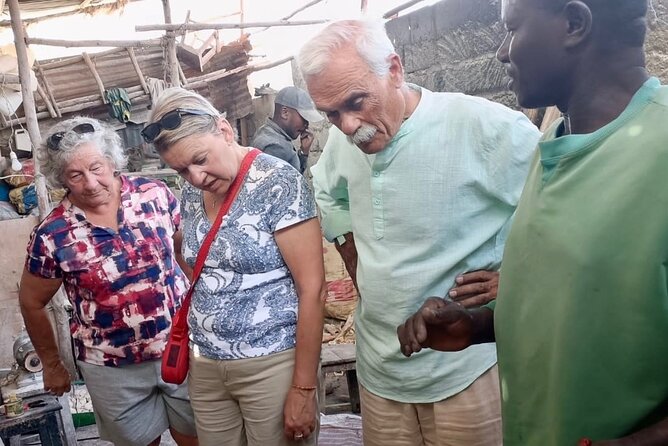
The route finishes by the historic railway, where you gain a broader view of Kibera. This final stretch helps connect the smaller stops to the wider community.
The railway is not presented as a grand monument. Its value is in the perspective it gives you and in the chance to talk with your guide about Kibera’s past, present, and plans for the future. Collins and the other guides can explain the area in a way that connects history with present-day life.
The view also gives you a moment to process what you have seen. You may notice the density of the community and the limits placed on people by infrastructure and income. At the same time, you will have seen shops, classrooms, workshops, and ordinary social life. That fuller picture is the reason to take the walk.
What the $22 price includes in real value

At $22 per person, this is an inexpensive experience by Nairobi tour standards. The value is not in a long list of attractions. It is in access to local guides, a structured route through Kibera, and visits to community places that would be difficult to understand on your own.
You are paying for interpretation and a respectful introduction, not a luxury vehicle or a polished facility. The tour is on foot and lasts only a few hours. If you want a comfortable sightseeing trip with many formal monuments, this is not the right use of your money.
If you want to understand one part of Nairobi through the eyes of people connected to it, the price is fair. The tour also gives you a way to support Agape Hope’s work, though you should ask the operator if you need exact information about how funds are distributed.
The experience currently has a five-star rating and a 100 percent recommendation rate from 13 published ratings. That is a very small sample, so I would not treat it as a guarantee. It does show a clear pattern of appreciation for the guides, the personal connection to Kibera, and the chance to speak with local people.
Safety, comfort, and respectful conduct

The operator says most people can participate, service animals are allowed, and the meeting point is near public transportation. No special fitness requirement is stated, but this is a walking tour through a dense urban area. Wear practical shoes and clothing that can handle dust or mud.
Weather matters. The activity requires good conditions, and rain may make paths uncomfortable or cause the tour to be canceled. If you are visiting during a wet period, keep your schedule flexible.
Your guide is there to help you move safely and understand local customs. Stay with the group, listen to instructions, and ask before taking photographs. A camera can quickly change the mood of a place, especially around homes, children, and businesses.
You should also avoid treating poverty as entertainment. The tour itself is designed to challenge stereotypes, but your behavior is part of that effort. Pay attention to names, work, schools, and conversations. A respectful question is better than a judgment based on one narrow view.
Who should book this walk
I would recommend it to you if you want a direct look at Nairobi beyond the usual monuments and wildlife excursions. It suits people interested in local enterprise, education, social issues, and community-led work.
It is also a good choice for visitors who prefer a guide with personal ties to the area. Collins’ background helps give the tour a human voice, while Allan and Rama may bring their own experiences and explanations.
Families may find the school visit meaningful, but adults should prepare children for an environment that may feel unfamiliar or uncomfortable. The tour can also work well for students, photographers who are willing to follow strict etiquette, and anyone who wants to support a local project while learning.
I would skip it if you want complete privacy, a fixed museum-style presentation, or an easy walk with guaranteed dry paths. A group of up to 30 can feel less personal, and the route may be emotionally demanding.
Booking advice and cancellation terms
The experience is often booked about 17 days ahead, so I would reserve early if your Nairobi dates are fixed. Mobile tickets make it easy to keep the confirmation on your phone.
You can cancel for a full refund up to 24 hours before the start time. Changes or cancellations inside that window are not accepted and are not refunded. If poor weather causes the operator to cancel, you are offered another date or a full refund.
Private tours and visits focused on particular places or topics can be requested. Ask before booking if you want that format, since the standard experience may include a larger group.
Should you book the Kibera Chocolate City Tour?
Book it if you want to meet Kibera through its people, businesses, school, and community projects rather than through a distant viewpoint. The strongest reasons are the local guides, the visit to Agape Hope, and the chance to see everyday work at Toi Market and Victoria Bones Craftshop.
Go with patience and respect. You may encounter mud, crowded paths, and difficult subjects. But if you can accept those conditions, this $22 walk offers a thoughtful and useful side of Nairobi that a standard city tour rarely provides.
FAQ
How much does the Kibera Chocolate City Tour cost?
The tour costs $22 per person.
How long does the tour last?
The experience takes about two to three hours. The stated walking route is listed as approximately two hours.
Where does the tour start?
It starts at Kibera Town Centre, at Kamukunji Grounds in Nairobi, Kenya.
Where does the tour finish?
The activity ends back at the same meeting point.
Which places are visited?
The route includes Toi Market, Victoria Bones Craftshop, the Agape Hope school and library, and the historic railway in Kibera.
Who may lead the tour?
Collins is a named local guide who grew up in Kibera. Allan and Rama are also identified as guides for the experience.
How far in advance is the tour usually booked?
It is booked an average of 17 days in advance, so reserving ahead is sensible if your schedule is fixed.
What is the cancellation policy?
You receive a full refund if you cancel at least 24 hours before the start time. Cancellations or changes made less than 24 hours before the start are not refunded or accepted. If bad weather causes the tour to be canceled, you can choose another date or receive a full refund.
Just added around Nairobi
- Visit kibera Slum the chocolate city★ 4.8 · 3 reviews
- Day Tour to Nairobi national park, Elephants, and Giraffe Center★ 3.5 · 8 reviews
- Explore local Market matatu ride & Make Kenyan Cuisines with a home cook★ 5.0 · 8 reviews
- Kibera Slum Tour with a Local★ 5.0 · 15 reviews
- Urban Forest Tour in Nairobi★ 5.0 · 7 reviews
- Vegans special safari★ 4.5 · 4 reviews
- Private Mini Safari Tour in Nairobi★ 5.0 · 6 reviews
- Private Kenyan Cooking Class in Nairobi with a Local★ 5.0 · 3 reviews
Kibera Slum Tours, compared.



Nairobi: Kibera Slum Tour with Local Social Entrepreneurs
Read our review →



Browse the lists this tour appears in