
Reviewed · KIBERA SLUM TOURS
Kibera Slum Tour with a Local
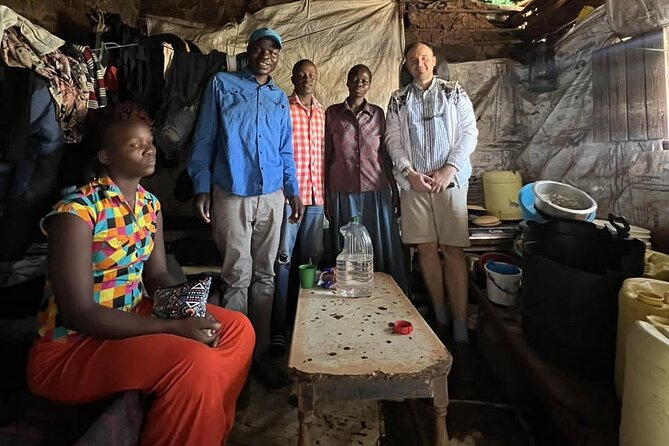
Kibera is not a backdrop for sightseeing. It is a lived-in community, and this three-hour walk is led by people who were born, raised, and still live here. Guides such as Erick and Sammy explain daily life with the familiarity of neighbors, not outsiders. You will see recycled crafts, visit a local home, meet children, and hear how residents earn a living.
I like the local ownership and the clear social purpose: half of each booking fee helps pay school fees for children in the community. I also like the practical welcome at the office, with Wi-Fi, clean washrooms, a briefing, and a secure guest room for people arranging a longer Kibera stay.
The main consideration is that this is an honest look at poverty and crowded living conditions. Some people may find the visit humbling or uncomfortable. You should book it only if you can listen respectfully, ask thoughtful questions, and avoid treating residents as photo subjects.
Key points to know before you go

- Led by Kibera residents: The four local guides were born and raised in the community, and still live there.
- Five clear stops: The route includes an office briefing, crafts center, meeting with children, a home visit, and a cafeteria stop.
- Half the fee supports children: Fifty percent of the $25 booking fee goes toward school fees for needy children.
- A small group option: The maximum group size is 30, so ask about group size when booking if personal conversation matters to you.
- A flexible format: The guides can adjust the experience to match your interests.
- Simple practical comforts: Bottled water or soda is provided, and the starting and ending point is Prestige Plaza Shopping Mall on Ngong Road.
Meeting Kibera through local eyes
The strongest reason to choose this tour is the people leading it. OAC Kenya Tours is run by four guides who grew up in Kibera and continue to live there. That changes the tone of the walk. You are not simply being shown a place. You are being introduced to a community by people who know its streets, residents, challenges, and daily routines.
That local connection also matters for safety and comfort. The guides are known in the area, which helps the walk feel more like a guided visit than a solo attempt to find your way through an unfamiliar part of Nairobi. One account describes children greeting the guides warmly and following along for part of the walk. You should still remember that this is their neighborhood, not an open-air attraction.
The guides aim to explain how people live and earn money, rather than presenting Kibera only through hardship. You will hear about the difficulties residents face, but also about work, creativity, family life, and the effort required to keep children in school.
This approach gives the tour more balance. If you want a quick, polished sightseeing stop, this may not be the right choice. If you want direct conversation and a clearer sense of everyday life, it offers far more than a drive past the area.
More guided Kibera walks:
- Nairobi: Explore Kibera Slum with Local Guides
★ 4.9 · 365 reviews - Kevins Kibera Slum Tours
★ 5.0 · 213 reviews - Nairobi: Kibera Slum storytelling tour with a Local
★ 5.0 · 185 reviews
Starting at the office on Ngong Road

The experience begins at Prestige Plaza Shopping Mall on Ngong Road, with the activity ending back at the same meeting point. From there, the team welcomes you to its office in Kibera for introductions and a briefing.
This first stop is useful. A briefing gives you a chance to understand the route, ask questions, and hear how to behave respectfully before entering residential areas. It also lets you meet the person guiding your group and settle any nerves.
The office has free Wi-Fi and clean washrooms, which are practical details worth noting. Public facilities can be hard to find during a long walk, so having a comfortable base at the beginning and end makes the outing easier.
There is also a secure guest room for people interested in exploring Kibera at night and possibly spending a night in the community for an extra cost. That option is not part of the three-hour tour, so treat it as a separate arrangement and ask the provider for details before making plans.
Seeing useful objects at the crafts center
The next stop focuses on recycling and handmade goods. You will see local people turning discarded materials into jewelry and other crafts.
This is a good part of the route because it connects the environmental problem of waste with an income opportunity. Instead of hearing only about what the community lacks, you see how skill and imagination can turn available materials into something useful or saleable.
You may have time to look at the work and possibly buy an item, though the supplied details do not promise a purchase opportunity or specify prices. If you are interested in supporting local makers, ask the guide how purchases work and who receives the money.
The crafts stop also gives you an easier way to begin conversations. Asking how an item was made or where the materials came from is more respectful than asking broad questions about poverty. Keep your attention on the work and the maker, not only on the setting around you.
Meeting children with care

The tour includes a stop to meet children in the community. This can be one of the most memorable parts, but it requires the most care from you.
The children may be curious about visitors, and the guides have friendly relationships with young people in the area. Still, you should follow the guide’s lead. Ask before taking photographs, and do not assume that giving out sweets or money is appropriate.
One account specifically recommends bringing a small item such as a lollipop, noting that children were happy to receive it. I would treat that as a personal tip, not a tour rule. The tour’s stated social contribution is the stronger way to help, since half of the booking fee supports school fees for children who need assistance.
If you bring anything, ask the guide in advance about the best approach. A well-meant gift can create competition among children or leave some out. Listening, showing patience, and allowing the guides to manage the interaction is the better choice.
A few more Nairobi trips worth comparing
- Nairobi National Park Half-Day Tour; Free Wi-Fi connection
★ 5.0 · 878 reviews - Nairobi: National Park & Optional Elephants & Giraffe Center
★ 4.8 · 874 reviews - NAI NAMI: Nairobi Storytelling Tour with Street Children
★ 5.0 · 792 reviews - Nairobi National Park Half-Day Game Drive
★ 4.5 · 738 reviews
Entering a local home

A home visit provides the closest look at ordinary domestic life on the route. You will be welcomed into one local house, where the guide can explain how residents live in a private setting rather than from a street view.
This stop can make the tour more personal. Streets and public spaces tell you something about a community, but a home visit helps you understand how people organize daily life indoors. It also creates a direct meeting between you and a resident, so manners matter.
You should enter only when invited, ask before taking photographs, and avoid judging the home by standards from your own country. The point is not to inspect someone’s belongings. It is to listen and understand what the host chooses to share.
The home visit may feel more intimate than the crafts center or office. If you are uncomfortable entering a private home, tell the guide. The tour is described as flexible, so you can discuss your concerns and interests with the team.
Taking a break at the cafeteria

The final stop is a cafeteria, where you can rest with a soft drink or local food while the guides explain more about Kibera. Bottled water or soda is included, along with all fees and taxes.
This pause matters because three hours of walking and conversation can be tiring. It also gives you a quieter setting for questions that may not fit naturally on the street. You can ask about local income, education, community projects, or the way the organization uses tour money.
The details do not specify which dishes are served or whether a full meal is included. Plan on a short refreshment stop, not a guaranteed lunch. If food is important to you, ask the provider what is available when you book.
How the social purpose works

OAC Kenya Tours operates as a social-impact business, and the stated arrangement is straightforward: 50 percent of booking fees from this experience helps pay school fees for needy children in Kibera.
The team also runs OAC Kenya Crafts and KCOOP Organization. KCOOP was officially established and registered in 2022, with work in Kibera and rural parts of Kenya. The organization shares updates through its website and social media, including the Instagram account @kcoop.organization.
For you, this means the $25 price is not only paying for a guide and a walk. It helps fund a specific community aim. That makes the cost good value if you want a locally led experience and prefer your spending to support a stated project.
You should still ask questions if you want a detailed breakdown of how funds are used. The tour clearly states the 50 percent contribution, but it does not provide individual school-fee amounts, the number of children supported, or a full financial report in the information available here.
Is the $25 price fair?

At $25 per person for about three hours, the price is reasonable for a private-community style tour with four possible local guides, refreshments, office facilities, and an organized route. The social contribution adds value, especially for visitors who want their money to support local education.
The strongest value comes from access and context. You are not just walking through Kibera without direction. You are meeting people through guides who live there and can explain what you are seeing.
The maximum group size is 30. That is not a small group if every place is full, and a larger party can make a home visit or personal conversation feel less relaxed. If you care about a quieter experience, ask how many people are booked for your date.
The tour is booked an average of 12 days ahead, so you should not leave it until the last minute if your Nairobi schedule is tight. Confirmation is provided at booking, and the mobile ticket makes the entry process simple.
Who will enjoy this experience most?
I would recommend this tour to you if you want:
- Direct conversation with people who live in Kibera
- A clear look at local work, homes, education, and daily life
- A community benefit built into the price
- A flexible walk that can respond to your interests
- A short Nairobi activity with a strong human focus
It suits solo visitors, couples, families with older children, and anyone interested in social enterprise or community projects. Most people can participate, and service animals are allowed.
It may not suit you if you want a conventional sightseeing tour, a polished museum-style presentation, or a private setting at every stop. You should also think carefully about the emotional side. Seeing poverty up close can challenge your assumptions and leave you with difficult questions. That is part of the value, but it is not light entertainment.
Practical details that affect your day
The tour lasts approximately three hours and begins and ends at Prestige Plaza Shopping Mall, Ngong Road, Nairobi. Bottled water or soda is supplied, and all fees and taxes are included.
The experience requires good weather. If poor weather causes a cancellation, you are offered another date or a full refund. You can cancel for a full refund up to 24 hours before the start time. Cancellations or changes made within 24 hours are not refunded or accepted.
Wear comfortable walking shoes and clothing suited to Nairobi’s weather. The provided information does not give a detailed route or terrain description, so ask the provider if you have mobility concerns. Most people can participate, but the tour takes place in an active residential area rather than a purpose-built attraction.
Keep your group together and follow the guide’s instructions. Ask before photographing people or homes, and let the local guides decide how to handle interactions with children.
Should you book the Kibera Slum Tour with a Local?
Book it if you want an honest, locally led introduction to Kibera and you are willing to approach the community with respect. The guides’ personal connection, the five-stop route, and the 50 percent contribution to school fees give the experience a clear purpose.
Do not book it simply to collect dramatic photographs or to satisfy curiosity about poverty. The best reason to go is to listen, learn, and support a community business while seeing how residents work, create, live, and care for their families.
At $25, this is a strong choice for a thoughtful half-day in Nairobi. The most important preparation is not special equipment. It is an open mind and good manners.
FAQ
How long does the Kibera Slum Tour with a Local last?
The tour lasts approximately three hours.
How much does the experience cost?
The price is $25 per person.
Where does the tour start and end?
The tour starts at Prestige Plaza Shopping Mall on Ngong Road in Nairobi and ends back at the same meeting point.
Who leads the tour?
The experience is led by a team of four local guides who were born, raised, and still live in Kibera. Erick and Sammy are named among the guides connected with the experience.
What stops are included?
The five stops are the local office, a crafts center, a meeting with children, a local home visit, and a cafeteria.
Does the booking support the local community?
Yes. Fifty percent of the booking fee helps pay school fees for needy children in the community.
Can I cancel for a refund?
Yes. You can cancel at least 24 hours before the start time for a full refund. Cancellations or changes made less than 24 hours before the start time are not refunded or accepted.
Just added around Nairobi
- Visit kibera Slum the chocolate city★ 4.8 · 3 reviews
- Day Tour to Nairobi national park, Elephants, and Giraffe Center★ 3.5 · 8 reviews
- Explore local Market matatu ride & Make Kenyan Cuisines with a home cook★ 5.0 · 8 reviews
- Urban Forest Tour in Nairobi★ 5.0 · 7 reviews
- Vegans special safari★ 4.5 · 4 reviews
- Private Mini Safari Tour in Nairobi★ 5.0 · 6 reviews
- Private Kenyan Cooking Class in Nairobi with a Local★ 5.0 · 3 reviews
- Tour Giraffe Centre, David Shedrick, Karen Blixen & city tour.★ 5.0 · 3 reviews
Kibera Slum Tours, compared.



Nairobi: Kibera Slum Tour with Local Social Entrepreneurs
Read our review →



Browse the lists this tour appears in