
Reviewed · KIBERA SLUM TOURS
Visit Kibera The Largest Slum With a Local
Kibera is not a backdrop for a quick photo. It is a living Nairobi community, and this three-hour walk with Jack Williams gives you a local guide who was born and raised there. You visit a crafts center, open-air market, home, and cafeteria, with time for street food and conversation along the way.
I like two things right away: the money has a stated social purpose, with half of the booking fee going toward school supplies and fees for orphans and vulnerable children, and Jack stays with you throughout the experience. The low $10 price also makes this one of Nairobi’s more accessible guided walks.
The main consideration is that Kibera is a poor, densely settled community, not a polished sightseeing district. A home visit and close look at living conditions can feel confronting, so book this only if you can approach the area with respect and listen more than you photograph.
Key points to know before you go

- Meet Jack at Prestige Plaza Mall: Find the Java House inside the mall on Ngong Road.
- See four distinct parts of Kibera life: The walk includes a crafts center, open-air market, home visit, and cafeteria.
- Support a local education effort: Fifty percent of the booking fee helps pay school fees and buy supplies for vulnerable children.
- Your guide is from the community: Jack and his team of four guides were born and raised in Kibera.
- Expect a walking experience: Transportation is not included, although one account describes an enjoyable matatu ride connected with the outing.
- Allow three hours: The tour begins and ends at Prestige Plaza Shopping Mall.
Why this Kibera walk feels different from a standard Nairobi tour
The heart of this experience is the guide relationship. Jack Williams introduces himself as a social entrepreneur, social worker, and volunteer. He also works with OAC Kenya, a social enterprise connected with tours and crafts, and KCOOP, a community-based organization.
That background matters because Kibera is best understood through people, not statistics alone. Jack grew up in the community and lost both parents at age nine. His work with vulnerable children is not an added slogan around the tour. It is the reason he created the experience.
You are not simply driven past Kibera and given a few facts through a vehicle window. You walk with a person who knows the streets, the people, and the daily routines. The tour aims to explain how residents earn money, shop, socialize, and manage family life in a place where many households have very limited resources.
The provider describes Kibera as Africa’s largest slum and one of the largest in the world. That wording gives scale, but the better reason to come is more personal. You see a local market, speak with people at a cafeteria, enter a home, and watch crafts being made from recycled materials.
Jack works with a team of four guides, all born and raised in Kibera. Your booking may therefore be led by Jack or another member of the team. English is the listed tour language.
More guided Kibera walks:
- Nairobi: Explore Kibera Slum with Local Guides
★ 4.9 · 365 reviews - Kevins Kibera Slum Tours
★ 5.0 · 213 reviews - Nairobi: Kibera Slum storytelling tour with a Local
★ 5.0 · 185 reviews
Starting at Prestige Plaza on Ngong Road
The meeting point is easy to identify: Java House inside Prestige Plaza Shopping Mall on Ngong Road. Meet in front of the coffee shop, and use the supplied WhatsApp number, 0112011131, if you need to call or text the team.
The tour lasts three hours and returns you to Prestige Plaza. That return arrangement is useful if you are fitting the walk between other Nairobi plans. You do not need to work out a separate ending point in an unfamiliar part of the city.
Transportation is not included in the $10 price. Plan to reach the mall independently. The activity itself is described as a guided walk, though a local account also refers to an enjoyable matatu ride connected with the experience. Confirm the day’s transport plan with Jack if that detail matters to you.
Stop one: a briefing at the local office
Jack first welcomes you at the office, which is described as safe and very clean. This is where introductions take place and where you receive a briefing about the walk.
Do not treat this as wasted time. A short explanation before entering the community helps set the right tone. You can ask questions about the route, the stops, and the social work supported by the booking fee.
The office also gives you a clear starting point. You have a chance to meet your guide, understand how the three hours will run, and discuss any particular interest you have. The provider says the experience can be customized, so tell Jack if you are especially interested in crafts, food, community life, or the education work.
Stop two: recycled crafts and local enterprise

At the crafts center, you see how local makers turn discarded or recycled materials into jewelry and other handmade goods. This stop adds an economic side to the visit that is easy to miss if you focus only on housing conditions.
Look closely at the work and ask how it is made. You can also shop for crafts, and the tour encourages you to bargain with your guide for a local price. That advice is useful, but bargain with good humor and restraint. A small purchase can mean more when you understand the labor behind it, yet the aim should not be to push a maker down over a tiny amount.
This is also one of the more comfortable places to start spending money locally. If you want a souvenir with a direct connection to the area, handmade jewelry offers more meaning than a generic Nairobi item from a hotel shop.
A few more Nairobi trips worth comparing
- Nairobi National Park Half-Day Tour; Free Wi-Fi connection
★ 5.0 · 878 reviews - Nairobi: National Park & Optional Elephants & Giraffe Center
★ 4.8 · 874 reviews - NAI NAMI: Nairobi Storytelling Tour with Street Children
★ 5.0 · 792 reviews - Nairobi National Park Half-Day Game Drive
★ 4.5 · 738 reviews
Stop three: the open-air market

The open-air market shows where local residents buy second-hand goods. It is a practical stop, not a staged display of traditional life.
You can look at the products, watch how buying and selling works, and ask Jack about prices and shopping habits. The chance to bargain with a local guide gives you some help with the process, especially if you are unfamiliar with Kenyan market customs.
Keep your attention on the people and the setting rather than turning every exchange into a photo. The market is part of everyday life. It is also a place where the difference between a tourist’s spending power and a local household budget becomes clear.
If you buy something, carry only what you need and keep payment simple. The activity information does not promise a particular range of goods, so arrive ready to browse rather than expecting a fixed shopping list.
Stop four: entering a local home

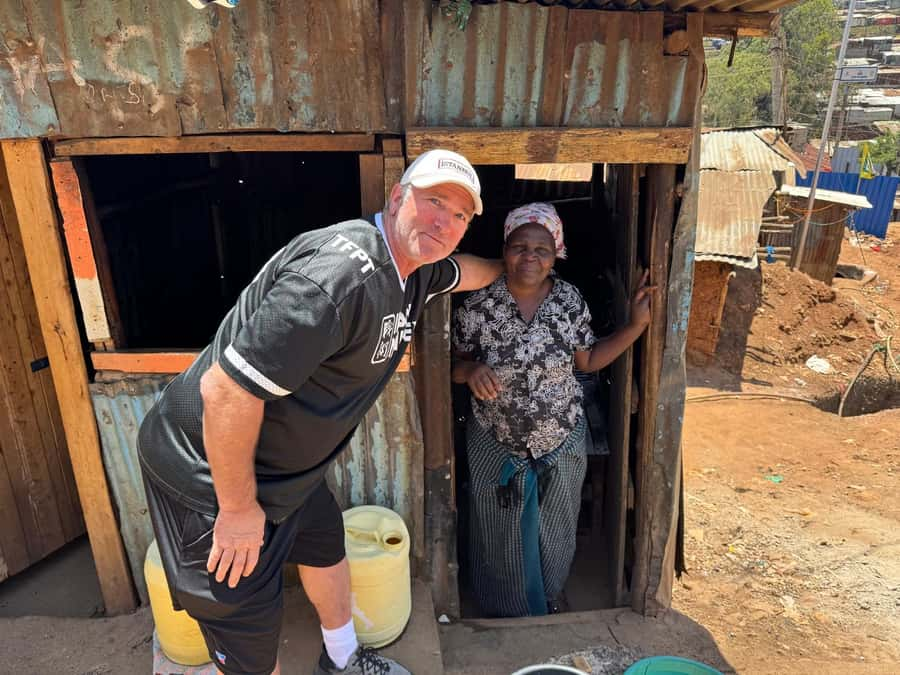
The home visit is likely to be the most revealing part of the tour. Jack welcomes you into one house so you can see the inside living conditions for yourself.
This stop can turn general information into something concrete. A home is not an exhibit, and the value comes from meeting the resident and hearing about life in the community, not from inspecting someone’s private space. Follow Jack’s lead, ask permission before taking photographs, and accept a no without hesitation.
Some people will find this part difficult. The experience is designed to show living standards, and that can challenge comfortable assumptions about housing and privacy. I would not book this walk if you want only light sightseeing or an easy afternoon.
At the same time, the home visit helps keep the tour from reducing Kibera to poverty statistics. You see a place where people live, raise children, work, and welcome visitors. That balance is important. Kibera has hardship, but it is not defined by hardship alone.
Stop five: food, tea, and conversation

The final listed stop is a cafeteria, where you can take a short rest, have soft drinks or local food, and continue talking about the community.
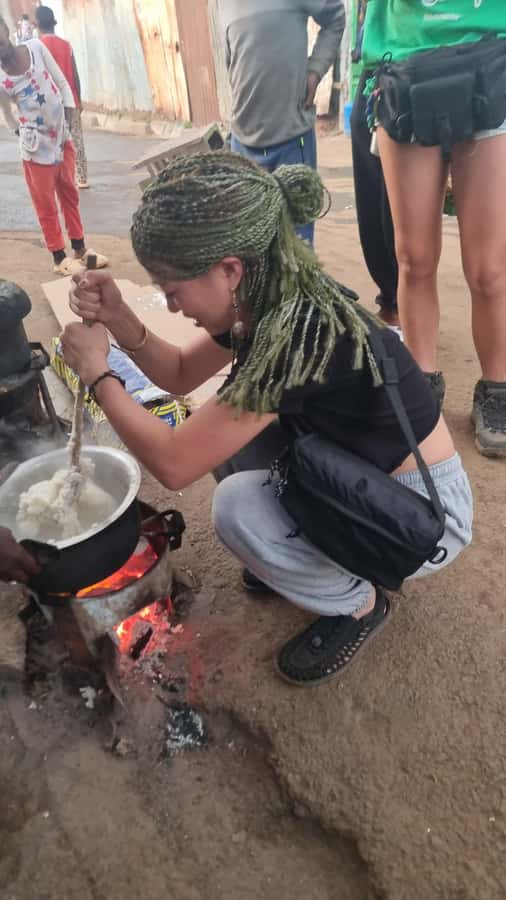
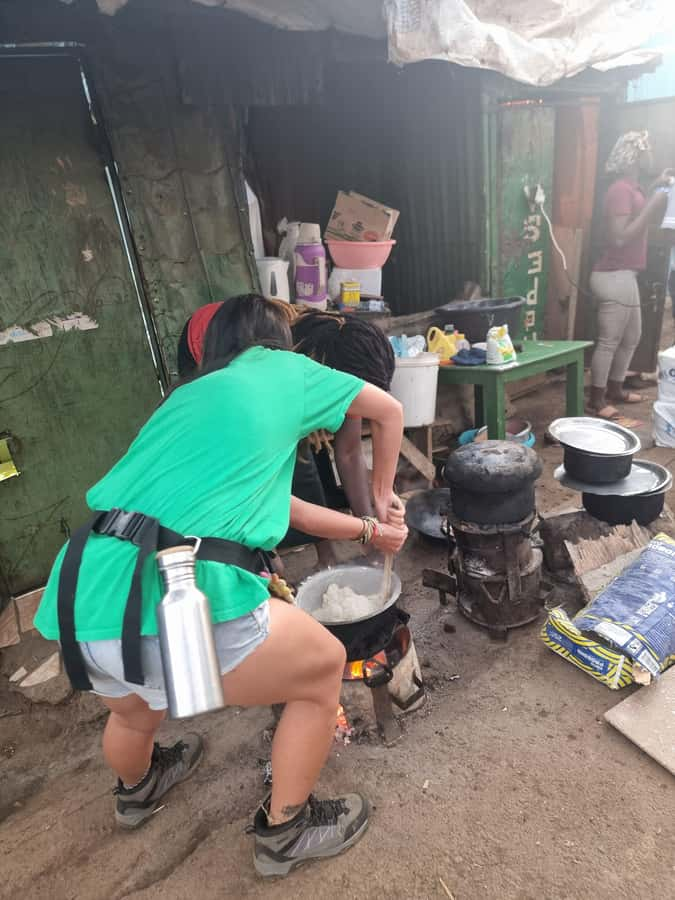
The experience also highlights street food and tea with mechanics. These small encounters may become the most memorable part of the walk because they put ordinary working life at the center. You are not simply receiving information from a guide. You have a chance to sit, eat, and talk in places used by local residents.
Food is not specified in detail, so do not expect a set tasting menu. Think of this as an informal break where local food may be available and Jack can explain more about Kibera.
If you have dietary restrictions, ask in advance. The supplied details do not list vegetarian, allergy, or religious food arrangements.
Safety, comfort, and the right attitude

The strongest practical message from the experience is that Jack stays with you and brings you back to the meeting point. Several accounts describe him as warm, polite, attentive, and clear in his explanations. One person who arrived late was still met with a handshake and friendly welcome.
That personal care is useful in a neighborhood where you may not know which paths to take or how to approach conversations. A Japanese visitor specifically found the guide’s explanations easy to understand, while another person described the walk as safe and said local people were friendly.
Still, no guided visit removes every need for common sense. Stay with the guide, listen to instructions, and avoid wandering away from the group. Dress for a three-hour walk and wear practical shoes. The information confirms wheelchair accessibility, but it does not explain the exact surface conditions or route details, so contact the provider before booking if you need specific mobility arrangements.
The community should not be treated as a human zoo. Put the camera away when it feels intrusive, ask before photographing people or homes, and spend money thoughtfully. A respectful attitude will improve the experience for you and for the people who make the tour possible.
What the $10 price really covers

At $10 per person, this is a low-cost Nairobi activity. The price includes an expert guide, and the walk covers three hours with several stops. Transportation, food, drinks, crafts, and market purchases are not included.
The value becomes stronger because 50 percent of the booking fee goes back to the community. The money helps pay school fees and buy school supplies for orphans and vulnerable children. Jack’s connection with OAC Kenya and KCOOP gives the social purpose a specific structure.
That does not mean every dollar of your personal spending at the market or cafeteria goes to the education effort. Those purchases are separate. The clearest contribution is the booking fee itself, followed by any local buying and eating you choose to do during the walk.
Compared with many Nairobi excursions, the cost is modest. More important, the activity offers access to places you would not understand well on your own. The value is not luxury, transport, or a large number of attractions. It is the time, local guidance, and direct community benefit.
Who should book this experience
This walk suits you if you want to understand Nairobi beyond major sights and hotel districts. It is especially useful for people interested in community work, social enterprise, education, local markets, and everyday urban life.
It also suits a visitor who wants a personal guide rather than a scripted group excursion. Jack’s story and his connection with Kibera give the tour a human center. The guide’s job is not only to point out places but to explain what they mean.
Families may appreciate meeting children who are described as joyful, but parents should decide whether the home visit and living conditions are suitable for their children. The activity is listed as unsuitable for people over 95, and its wheelchair accessibility is confirmed.
You should skip it if you dislike walking, do not want to see poverty directly, or expect a polished cultural show. The experience asks you to listen, adapt, and accept that some moments may be uncomfortable.
Practical booking advice for your three hours
Book with enough time to reach Prestige Plaza Mall on Ngong Road. The meeting point is in front of Java House, so the coffee shop is the landmark to remember.
The activity has a live English-speaking guide. Free cancellation is available up to 24 hours before the start for a full refund, and you can reserve now and pay later. Check the available start times before committing, since the exact departure schedule is not fixed here.
Bring money if you want to buy crafts, shop at the market, eat local food, or have tea and drinks. These extras are not included in the $10 price.
Keep your plan flexible. The provider says the tour can be customized, so mention your interests at the start. If you want to focus on children’s education, crafts, food, or local work, Jack can help shape the conversation around those subjects.
Should you book the Kibera walk with Jack?
I would recommend it for an open-minded visitor who wants a direct, locally guided look at Nairobi and accepts that the subject is serious. Jack’s personal connection, the small price, the stated community contribution, and the mix of home, market, crafts, and food stops give the tour real substance.
Book it with respect, not curiosity alone. You will see poverty, but you will also meet working people, makers, children, mechanics, market sellers, and a guide committed to helping vulnerable students. If that balance appeals to you, this is one of the more meaningful low-cost experiences in Nairobi.
FAQ
Where does the Kibera tour begin?
The meeting point is in front of Java House inside Prestige Plaza Shopping Mall on Ngong Road, Nairobi.
Where does the tour finish?
The experience returns you to Prestige Plaza Shopping Mall.
How long does the experience last?
The guided experience lasts three hours.
How much does the tour cost?
The listed price is $10 per person.
Is transportation included?
No. Transportation is not included in the price. The activity begins and ends at Prestige Plaza Shopping Mall.
Who leads the tour?
Jack Williams leads the experience, and he works with a team of four guides. The guides were born and raised in Kibera.
What language is the tour offered in?
The live tour guide language is English.
What will I see during the walk?
The route includes the local office, a crafts center, an open-air market, a home visit, and a cafeteria. You can also have local food or tea and shop at local markets.
Does the booking support the local community?
Yes. Fifty percent of the booking fee helps pay school fees and buy school supplies for orphans and vulnerable children in the community.
Can I cancel the booking?
Yes. You can cancel up to 24 hours in advance for a full refund. You can also reserve now and pay later.
Just added around Nairobi
- Visit kibera Slum the chocolate city★ 4.8 · 3 reviews
- Day Tour to Nairobi national park, Elephants, and Giraffe Center★ 3.5 · 8 reviews
- Explore local Market matatu ride & Make Kenyan Cuisines with a home cook★ 5.0 · 8 reviews
- Kibera Slum Tour with a Local★ 5.0 · 15 reviews
- Urban Forest Tour in Nairobi★ 5.0 · 7 reviews
- Vegans special safari★ 4.5 · 4 reviews
- Private Mini Safari Tour in Nairobi★ 5.0 · 6 reviews
- Private Kenyan Cooking Class in Nairobi with a Local★ 5.0 · 3 reviews
Kibera Slum Tours, compared.



Nairobi: Kibera Slum Tour with Local Social Entrepreneurs
Read our review →



Browse the lists this tour appears in