

Reviewed · KIBERA SLUM TOURS
Nairobi: Chocolate City Kibera Slum Walking Tour
Kibera is not a sightseeing backdrop. It is a living Nairobi neighborhood, and this tour puts you on its streets with guides who know the community firsthand. You visit the Agape Hope Children Centre, see local beadwork, and learn how families manage daily life here.
I like the tour’s direct local benefit: your $15 helps support children’s programs and community projects. I also like the practical care from guides such as Collins and Allan, who answer questions, help with photos, and even wait while you get into your taxi.
The main consideration is that this can be an intense visit. Conditions are basic, walking surfaces may be uneven, and a language selected during booking may not guarantee a guide fluent in that language. English appears to be the safest choice.
Key points at a glance
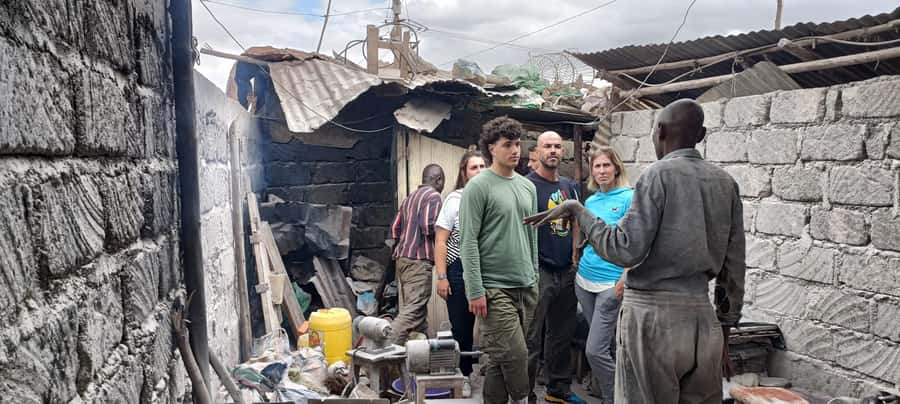
- Local guides lead the way: Collins and Allan are named guides who come from or work closely with the community.
- Agape Hope Children Centre is central to the visit: You see how local education and care efforts fit into everyday Kibera.
- Beadwork has a real purpose: The tour includes a community beadwork project and a visit to a beadwork factory.
- Toi Market adds street-level context: You pass through one of the area’s colorful commercial centers rather than seeing Kibera from a vehicle alone.
- Safety is handled thoughtfully: Guides lead the route, provide a safety briefing, and may assist with your onward taxi.
- The price is modest: At $15 per person, the tour offers a low-cost way to support local work, though you should be ready for a serious and sometimes confronting visit.
Why this Kibera walk is different from a standard Nairobi outing

Kibera, also called Chocolate City in the tour material, is one of Nairobi’s best-known informal settlements. A visit here can easily become uncomfortable if it treats residents as scenery. This tour is built around local guiding, a children’s center, beadwork, and conversation, which gives the visit a more useful purpose.
You are not simply driven past rows of homes. You walk through the neighborhood and receive explanations about what you are seeing. That matters because Kibera cannot be understood from a quick roadside glance. The settlement is also not one simple story. Alongside hardship, you find work, small businesses, community projects, schools, markets, and ordinary family life.
I would approach this tour with curiosity and restraint. Ask questions, listen carefully, and take photographs only when it is appropriate. Your guide can help you understand where photos are welcome and where they are not.
The tour has a 4.9 rating from 13 recorded ratings, with praise focused on local guides, safety, clear explanations, and the chance to meet people in the community. That is a small sample, so I would treat the rating as encouraging rather than final proof. The written feedback does, however, point to a consistent strength: guides make the visit feel organized and personal.
More Walking Tours in Nairobi
- Nairobi: Historic and Modern Highlights Walking Tour
★ 4.8 · 703 reviews - Nairobi Historical Walking City Tour
★ 5.0 · 258 reviews - Nairobi Walking tour:Explore History Culture and Traditions
★ 4.8 · 222 reviews
Starting at Ayany or Prestige Plaza
The meeting point depends on the option you book. The listed choices include Agape Hope for Kibera, Prestige Plaza Shopping Mall, and, in the tour description, Ayany Equity Bank Kibera. Because these details are not identical, confirm your exact starting point before setting out.
Ayany Equity Bank is described as the main place where the tour begins. It is a practical meeting spot in an active part of Kibera, where your guide can give the initial safety briefing and explain how the walk will work.
Prestige Plaza offers a different kind of start. If you are directed there, do not assume you should make your own way to Ayany Equity Bank. Use the meeting instructions for your chosen option, and check the location before the day of your visit.
The tour is advertised as lasting two hours, while the detailed route describes around two and a half hours in Kibera. Allow at least that much time, plus a little extra for meeting your guide and arranging your return. The published drop-off choices are Prestige Plaza Shopping Mall and Agape Hope for Kibera.
Walking through Kibera with a resident guide

The heart of the visit is the walk itself. Your guide leads you through the streets, explains the setting, and helps you move through the area with confidence. The route includes a mix of guided walking, photo stops, and time to understand the community around you.
The greatest value comes from having someone interpret what you see. A settlement can look confusing from the outside, but a local guide can explain the purpose of different places and put daily life into context. Collins, named in several bookings, is from the area and is described as attentive to questions and photo stops. Allan is also praised for being helpful and for making sure a visitor reached a taxi safely.
Safety is a repeated focus of the tour. That does not mean the visit is risk-free or carefully sealed off from the neighborhood. It means you have a guide who knows the route, gives direction, and remains with you. One important practical lesson is to stay close to the group and follow instructions about cameras, bags, and personal space.
You may see children and residents going about their business. Keep your attention on the guide rather than turning every moment into a photo opportunity. A good visit depends on treating people as neighbors, not as objects for dramatic pictures.
Agape Hope Children Centre and community support
The Agape Hope Children Centre is one of the clearest reasons to choose this tour instead of a simple walk through Kibera. The center represents local work in education, healthcare, and economic support. Your visit helps connect tourism spending with a community initiative rather than only with an outside operator.
The supplied information does not promise a particular class, performance, or activity at the center, so you should not expect a fixed presentation. You will visit the center and learn about its role. The exact interaction may depend on the day and the center’s schedule.
This is also where the tour’s ethical purpose becomes most visible. A visit to a poor neighborhood can feel questionable if money flows only to a guide or booking company. Here, the advertised route includes a direct community connection through Agape Hope and the beadwork work. That does not solve Kibera’s larger problems, but it gives your visit a more responsible shape.
You may find the stop emotionally difficult. Seeing children living with fewer comforts than you may be used to can provoke strong reactions. Try to avoid treating the center as a place for pity. Listen to the guide, respect the staff, and remember that the purpose is support and understanding, not spectacle.
More guided Kibera walks:
- Nairobi: Explore Kibera Slum with Local Guides
★ 4.9 · 365 reviews - Kevins Kibera Slum Tours
★ 5.0 · 213 reviews - Nairobi: Kibera Slum storytelling tour with a Local
★ 5.0 · 185 reviews - Kibera Slum Tour with Lucas
★ 5.0 · 119 reviews
Beadwork, the factory, and a chance to buy thoughtfully
The tour includes participation in a community-based beadwork project and a visit to a beadwork factory. These stops add a work and income angle to the visit. You see more than housing conditions. You also see skills and enterprise.
The beadwork project can help show how local production supports families and community programs. The factory visit gives you a closer look at the making and selling of crafts. If you want a meaningful souvenir from Kenya, this is a more personal place to consider buying one than a generic shop.
There is no pressure to purchase. One visitor specifically noted that buying was not forced at any of the stops. That is important. You can ask about prices and how proceeds are used, then decide for yourself.
Keep your expectations reasonable. The tour does not promise a long workshop or a guaranteed chance to make a finished item. The details may vary by day. Still, the inclusion is useful because it moves the conversation from poverty alone toward work, skill, and local initiative.
Toi Market and the everyday rhythm of the neighborhood

Toi Market is described as a busy trading area filled with color, noise, smells, and movement. It gives you a look at commerce within and around Kibera. This is not a staged cultural show. It is a working market, so your guide’s advice about where to walk and when to stop matters.
The market is likely to be one of the most stimulating sections of the route. You may see clothing, household goods, food, and other everyday trade, though the exact stalls and activity can change. Keep your belongings secure and avoid blocking shop entrances while taking photos.
Toi Market also helps balance the visit. Kibera is often described only through its challenges, but a market shows people buying, selling, earning, and managing daily needs. It is a reminder that this is a functioning neighborhood, not an abandoned place.
For some people, the market will be the most enjoyable stop. For others, the noise and tight walking space may be tiring. Closed-toe, comfortable shoes are essential, and high heels are specifically unsuitable.
The home visit requires tact

A home visit is included, but the supplied details do not specify the home, the length of the stop, or exactly who you will meet. Treat it as a privilege rather than a guaranteed photo stop.
Your guide should explain what is appropriate before you enter. Follow that lead. Ask permission before taking photographs, keep your questions respectful, and do not make comparisons that could sound judgmental. The point is to understand daily life, not to inspect someone’s private space.
This may be the most personal part of the tour. It can also be the part that needs the most care. If you are uncomfortable with entering a private home, speak with the guide before the visit and ask how the stop will work.
What the $15 price really covers
At $15 per person, this is an inexpensive Nairobi activity. The fee includes a professional English-speaking guide, bottled water, the Kibera walk, the Agape Hope Children Centre visit, the community beadwork project, the beadwork factory, and a home visit.
I see the value in two ways. First, you receive several hours of local interpretation for less than the cost of many standard city excursions. Second, the money is connected to community-based projects, which gives the price a purpose beyond transport and guiding.
The low price should not lead you to expect a polished museum-style production. This is a street-level visit in a working neighborhood. Meeting arrangements may need clarification, the route may change, and the experience depends heavily on the guide and the day.
That is not necessarily a flaw. It is part of choosing a community walk rather than a packaged attraction. If you want a neat, predictable activity with fixed displays, this may not suit you. If you want direct contact with a part of Nairobi that many visitors never see, the price is strong.
Safety, comfort, and who should skip it
The tour provides a safety briefing and a professional guide. The strongest practical benefit is that you are not expected to find your own way through Kibera. Guides are described as staying attentive throughout the walk, and Allan and Collins are specifically associated with helpful, careful service.
Wear comfortable closed-toe shoes. Avoid high heels and bare feet. Bring only what you need, and keep your attention on your belongings in crowded areas.
The listed restrictions are important. The activity is not suitable for wheelchair users or people with mobility impairments. It is also not recommended for pregnant women, people with epilepsy, people with motion sickness, or very young children. The information gives several overlapping age restrictions, including children under two, three, and four, plus babies under one. Confirm the age rule at booking if you are bringing a child.
The tour accepts cancellation up to 24 hours in advance for a full refund, and a reserve-now-pay-later option is available. These policies help if your Nairobi schedule is still moving, but they do not replace checking the start point and language arrangements.
Language choices need a careful check
The activity lists English, French, German, Japanese, Italian, and Spanish. However, Japanese-speaking visitors named a consistent concern: selecting Japanese did not necessarily produce a Japanese-language tour, and the actual guiding was in English.
If you need a language other than English, contact the provider before paying and ask for confirmation. Do not assume that a language displayed in the booking menu guarantees availability on your date. If you are comfortable in English, the guides named in the feedback, especially Collins and Allan, appear to be the safer match.
Who will get the most from this visit
I would recommend this tour to you if you want:
- A direct look at daily life in Kibera
- A locally guided walk rather than a drive-by view
- A visit tied to children’s and community projects
- A chance to understand local work through beadmaking
- A short activity that fits into a Nairobi itinerary
- A low-cost way to support local initiatives
I would think twice if you want a relaxed sightseeing stroll, have difficulty walking on uneven surfaces, dislike crowded markets, or are uncomfortable with visits involving poverty and private homes. This is not a light break between safari activities. One visitor described the contrast with a safari as a shock, and that is a fair warning.
The tour can also suit people who want to ask questions. Collins is described as regularly checking whether visitors had questions and explaining photo stops along the route. That kind of interaction makes a real difference, especially if this is your first visit to an informal settlement.
Should you book the Chocolate City Kibera walk?
Book it if you want a short, serious, locally guided look at Nairobi beyond the usual city sights. The combination of Kibera streets, Agape Hope Children Centre, beadwork, Toi Market, and a home visit gives you more context than a simple photo stop.
Go with the right attitude. You are not buying an attraction where every moment is designed for comfort. You are paying for guidance, access, conversation, and support for local work. At $15, that is good value, provided you are physically able to walk and ready to meet the community with respect.
Before confirming, check three details: the exact meeting point, the actual tour language, and the expected duration, since the booking information gives both two hours and about two and a half hours. If those points work for you, this is a worthwhile addition to a Nairobi stay.
FAQ
How long does the Kibera walking tour last?
The activity is advertised as two hours, while the detailed route describes about two and a half hours in Kibera. Check the starting time and expected duration when booking.
How much does the tour cost?
The listed price is $15 per person.
Where does the tour start?
The meeting point depends on the option booked. Listed starting choices include Agape Hope for Kibera, Prestige Plaza Shopping Mall, and Ayany Equity Bank Kibera. Confirm the exact location before the tour.
What places are included?
The route includes a Kibera walking tour, Agape Hope Children Centre, a community beadwork project, a beadwork factory, Toi Market, and a home visit.
Is the tour available in languages other than English?
English, French, German, Japanese, Italian, and Spanish are listed. However, Japanese-speaking participants reported that the tour was conducted in English, so confirm your preferred language before booking.
Can I cancel the booking?
You can cancel up to 24 hours in advance for a full refund. A reserve-now-pay-later option is also available.
Just added around Nairobi
- Visit kibera Slum the chocolate city★ 4.8 · 3 reviews
- Day Tour to Nairobi national park, Elephants, and Giraffe Center★ 3.5 · 8 reviews
- Explore local Market matatu ride & Make Kenyan Cuisines with a home cook★ 5.0 · 8 reviews
- Kibera Slum Tour with a Local★ 5.0 · 15 reviews
- Urban Forest Tour in Nairobi★ 5.0 · 7 reviews
- Vegans special safari★ 4.5 · 4 reviews
- Private Mini Safari Tour in Nairobi★ 5.0 · 6 reviews
- Private Kenyan Cooking Class in Nairobi with a Local★ 5.0 · 3 reviews
Kibera Slum Tours, compared.



Nairobi: Kibera Slum Tour with Local Social Entrepreneurs
Read our review →



Browse the lists this tour appears in