

Reviewed · KIBERA SLUM TOURS
Nairobi: Kibera Slum storytelling tour with a Local
Kibera is not a sightseeing backdrop. It is a large, working community, and this three-hour walk gives you a local guide to help you understand its streets, homes, markets, schools, and small businesses. Guides such as Elijah, Peter, Effie, and Lucas grew up in or around Kibera, so the experience is built around personal stories rather than distant commentary.
I like the visit to the community school, where tour income helps support education, and the chance to enter a local home with permission. I also like the direct, human style of the walk: you meet artists, market sellers, teachers, and residents instead of simply looking at Kibera from a viewpoint. The main consideration is that conditions are basic, streets can be muddy or crowded, and the subject matter may feel confronting.
Key points
- Local guides with personal ties: Elijah, Peter, Effie, and Lucas have guided visitors through places connected to their own lives.
- A school visit with a clear purpose: The tour supports a Kibera school, with 20 percent of ticket money reported as going toward local education.
- More than a street walk: The route can include Toi Market, Hope and Shine Kibera Centre, homes, workshops, public facilities, and community projects.
- Private three-hour format: Your group participates alone, which makes it easier to ask direct questions and set a comfortable pace.
- Bring practical clothes: Wear shoes and clothing that can handle dust, mud, and narrow lanes. Do not bring anything you would be upset to dirty.
- A serious but hopeful experience: You will see hardship, but the focus also falls on local ideas, work, education, and mutual support.
Starting at Greenhouse Mall in Kilimani

The meeting point is the entrance of Greenhouse Mall in Kilimani. If you arrive early, there is a bench near the fountain on the ground floor where you can wait.
This arrangement is useful because it gives you a clear, public place to meet before entering the informal settlement. You do not need to find your way through Kibera alone. Your guide takes over from the mall and leads you into the neighborhood.
The experience lasts about three hours. It is a private activity, so only your own group joins the walk. That makes a real difference here. You can ask about sensitive subjects, stop to clarify something, or spend longer at a community project without feeling that you are holding up a large group.
The tour is conducted in English. Audio guides are listed in French, Spanish, German, and Chinese, but you should confirm the exact arrangement when booking if language support matters to you.
More guided Kibera walks:
- Nairobi: Explore Kibera Slum with Local Guides
★ 4.9 · 365 reviews - Kevins Kibera Slum Tours
★ 5.0 · 213 reviews - Kibera Slum Tour with Lucas
★ 5.0 · 119 reviews
Entering Kibera through its narrow lanes

Kibera is often described in simple terms, but the walk gives you a more varied picture. It is a dense residential area with shops, markets, workshops, schools, religious and community projects, transport routes, and homes packed along narrow streets.
Your guide helps you handle the maze of unmarked lanes. This is one of the strongest reasons to book with someone from the area. A map or independent walk would not give you the same context, and you could easily miss the meaning of what you are seeing.
Expect to walk on uneven ground. The route may include narrow alleys, muddy sections, busy market passages, and places where you need to watch your footing. The tour is not suitable for people with back or heart problems, and you should be comfortable walking for several hours.
The first impression may be difficult. Waste collection, limited facilities, and crowded living conditions are part of the story. A good guide keeps the focus on people rather than poverty as spectacle. Elijah, Peter, Effie, and Lucas are praised for explaining Kibera with calmness and respect, while also showing the work residents are doing to improve life around them.
Toi Market and the working side of Kibera
Toi Market is presented as the largest market in Kibera. It is a useful stop because it moves the visit beyond housing conditions and toward the everyday economy.
You may see clothing, household goods, food, crafts, and other items for sale. The market also gives you a chance to understand how residents earn money, find useful goods, and meet daily needs close to home.
Some routes include opportunities to buy beads, jewelry, artwork, or other handmade items. Several local groups use recycled materials in their work, and a women’s organization creates jewelry and clothing while supporting women living with HIV. These stops are not just shopping breaks. They show how skills, small businesses, and mutual support operate within the community.
I would bring some Kenyan shillings if you want to buy something, but do not feel pressured to purchase. A thoughtful souvenir from a local group can be a more meaningful buy than a generic airport item. Ask your guide which purchases directly support the artists or organizations you visit.
Photography needs care here. You will be invited to take pictures of the area in some places, but you should ask before photographing people, especially children. The guide can help you read the situation and avoid turning someone’s home or workday into a photo prop.
Hope and Shine Kibera Centre and local initiatives
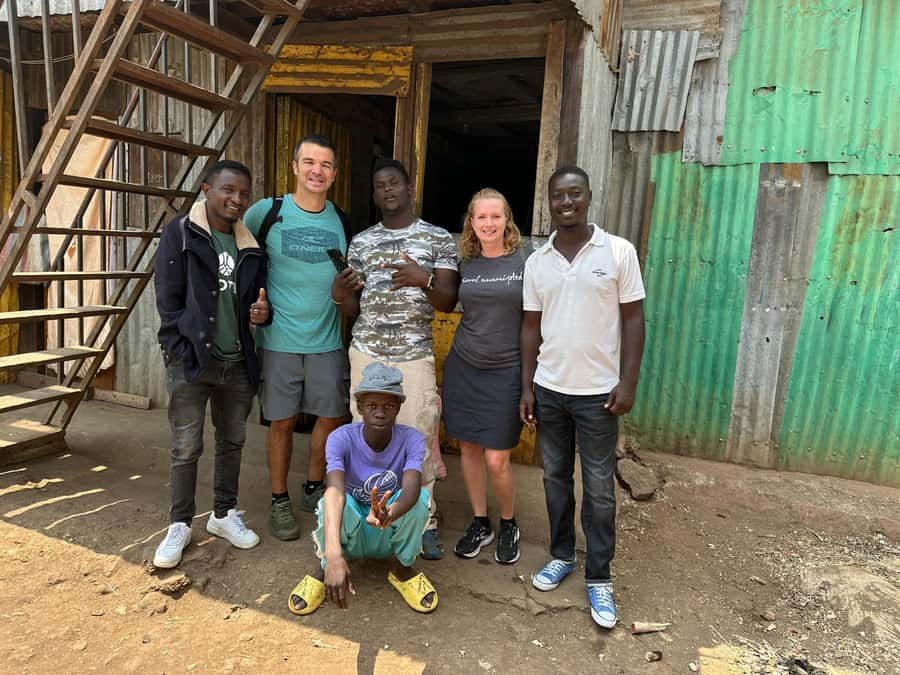
Hope and Shine Kibera Centre is one of the named stops. It provides education and support for local residents, giving you a look at organized community work rather than only the physical challenges of the settlement.
The route may also include youth projects, recycled-material art, women’s groups, sanitation facilities, a garbage collection point, a viewpoint, or a railroad area. The exact order can vary, and not every group will necessarily spend the same amount of time at every stop.
These places matter because they show local action in practical form. You may see people making art, teaching children, supporting women, collecting waste, or creating income from limited resources. The tour does not pretend that these efforts solve every problem. It shows how residents are responding with the tools and space they have.
That balance is important. Kibera should not be presented as either a hopeless place or a feel-good lesson in resilience. You will encounter both serious hardship and impressive initiative. The guide’s job is to connect those two realities.
A few more Nairobi trips worth comparing
- Nairobi National Park Half-Day Tour; Free Wi-Fi connection
★ 5.0 · 878 reviews - Nairobi: National Park & Optional Elephants & Giraffe Center
★ 4.8 · 874 reviews - NAI NAMI: Nairobi Storytelling Tour with Street Children
★ 5.0 · 792 reviews - Nairobi National Park Half-Day Game Drive
★ 4.5 · 738 reviews
The school supported by tour income

A visit to a Kibera school is included. This is often the emotional center of the walk, but it is also one of the most concrete parts of the experience.
The school provides education for local children and is described as being built and supported through income from these tours. The organizers state that 20 percent of ticket money goes to the school. You can ask your guide how the funding is used and what the school still needs.
The children may welcome you with songs or conversation. That can be a warm moment, but you should follow the guide’s direction and avoid treating the students as entertainment. If you bring anything, keep it simple and discuss it with the organizers first. Some visitors have brought biscuits or sweets, but direct donations or school-approved supplies may be more useful than an unplanned handout.
What I appreciate here is the link between your booking and a visible local project. You are not being asked to donate at a separate stop or make a vague promise of support. Part of the tour fee is connected to a school that the guides can show you.
Still, the school visit should not be the only reason to book. The wider value comes from seeing how the guides connect education with local work, family life, and community organization.
Entering a local home

The tour includes a visit to a resident’s home. Depending on your guide, this may be a home connected to the guide or their family. Past routes have included meeting Elijah’s mother and seeing the home of Peter.
This is a personal part of the tour, and it should be approached with humility. You are being invited into someone’s living space, not a staged museum room. Keep the visit polite, ask before taking pictures, and do not assume that every detail needs to be discussed.
The homes help explain the scale of daily life in Kibera in a way that a street view cannot. You gain a better sense of how families arrange domestic space and how much ordinary life takes place within a small area.
This stop can also feel intrusive if you are not comfortable with poverty-focused tourism. That reaction is worth taking seriously. The visit works best when the guide and resident control the exchange and you treat it as a conversation rather than a display.
Safety, tone, and the question of slum tourism

Safety is the first concern for many people considering this walk. The private format and local guides are important advantages. The guides know the routes, explain where you are going, and help you move through places that would be confusing to someone visiting for the first time.
Many bookings have felt safe throughout the walk, including afternoon tours that continued after dark. Still, do not treat that as a promise that every moment will feel comfortable. Follow your guide, keep valuables secure, stay with your group, and ask before taking out a camera or phone.
The harder question is ethical: does a tour of Kibera turn poverty into entertainment? It can, if handled poorly. This experience makes a stronger case for itself because the guides have local roots, the route includes community organizations and a school, and a stated share of the ticket money supports education.
Your own behavior matters too. Listen more than you speak. Ask about work, family, education, and hopes as well as problems. Buy only what you want. Do not hand out money or sweets without asking the guide. A respectful visit should leave dignity with the people you meet.
What the three-hour schedule feels like
Three hours is enough time for a meaningful introduction, but not enough to understand every part of Kibera. You will spend much of the time walking, listening, and stopping at several projects.
The tour may feel fast in the market and slower at the school or home. Narrow lanes make movement less predictable than a normal city walk. Give yourself extra time before any later appointment, especially if you are returning to a hotel or catching transport.
The experience can be taken in the afternoon, and some visits finish when it is dark. That timing may allow you to see more activity as people return from work and children return from school, but it also means you should be ready for changing light and cooler conditions.
Good footwear matters more than fashionable clothing. Wear modest, practical clothes and shoes that can get dirty. Smoking is not allowed.
Is the $20 price good value?

The listed price is $20 for a private group of up to one person, which is an unusual way to display the cost. Confirm the final price for your party before booking, particularly if you are traveling with more than one person.
At this rate, the value is strong if you want a local-led experience with direct community connections. Your fee includes the guide, safety support, taxes and fees, and the school visit. You also receive three hours of walking and explanation rather than a short photo stop.
The real value depends on what you want from Nairobi. If you prefer polished attractions, air-conditioned transport, and a predictable route, this is not the best match. If you want to understand how people live and organize their community, the price is modest, especially with the stated contribution to the school.
Free cancellation up to 24 hours before the activity and reserve-now, pay-later booking make it easier to fit into a changing Nairobi schedule. Poor weather can cancel the walk, in which case you are offered another date or a full refund.
Who should book this Kibera walk?
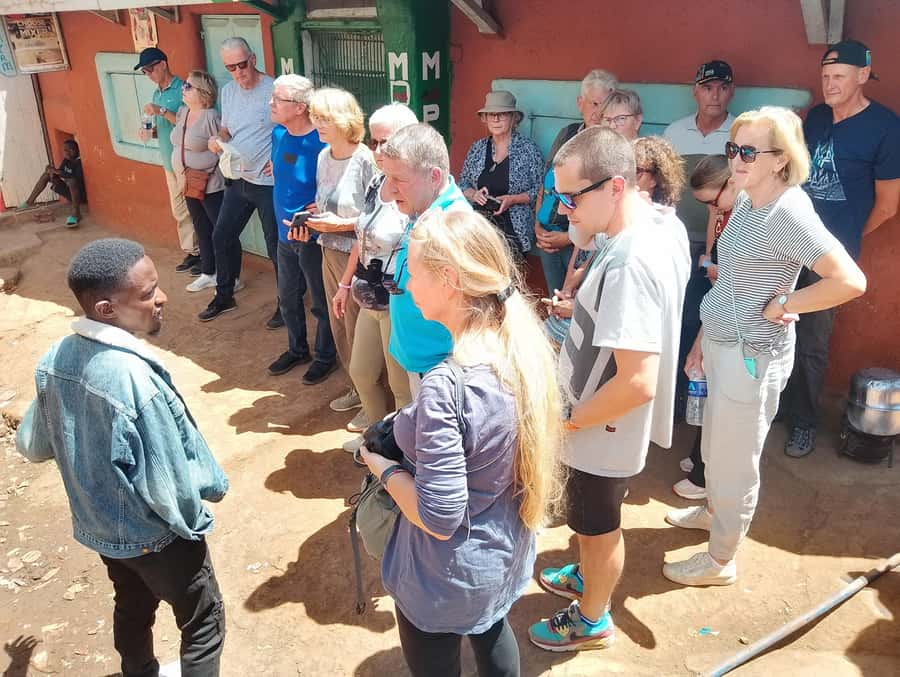
I would recommend it to adults and older children who can handle a serious subject without reducing it to a simple lesson. It suits people who want personal conversation, local enterprise, and community projects alongside the difficult realities of informal settlement life.
It is also a good choice if you have only a short time in Nairobi. The three-hour format gives you a focused introduction, and the Greenhouse Mall meeting point is easier than arranging an independent visit.
I would think twice if you have mobility, back, or heart problems. The ground is uneven, the lanes are narrow, and there is no promise of an easy walking surface. I would also avoid booking if you mainly want cheerful photographs or a quick tourist attraction. This is a serious encounter that asks for attention and respect.
Should you book it?
Book this tour if you want to see Nairobi through the eyes of people who live in Kibera and are willing to listen carefully. The strongest reasons are the local guides, the school connection, the home visit, and the chance to meet community groups making useful work from difficult conditions.
Go with practical clothes, modest expectations, and a willingness to ask thoughtful questions. You may leave troubled by what you see, but you are also likely to leave with a clearer sense of Kibera as a place where people work, teach, create, raise families, and support one another.
FAQ
Where does the Kibera tour begin?
The meeting point is at the entrance of Greenhouse Mall in Kilimani. A bench near the ground-floor fountain is available if you arrive early.
How long does the tour last?
The activity lasts about three hours and is described as a private half-day visit.
Is this a private tour?
Yes. Only your own group participates in the activity.
What language does the guide speak?
The live guide speaks English. Audio guide options are listed in French, Spanish, German, and Chinese.
Will I visit a school?
Yes. A visit to a Kibera school is included.
Does the tour include a local home visit?
Yes. The itinerary includes a visit to a local home so you can see how residents live inside the settlement.
Will I visit Toi Market?
Yes. Toi Market, described as the largest market in Kibera, is included in the walking route.
Is photography allowed?
You can take pictures of the local area, but ask permission before photographing residents, homes, children, or community activities.
Is the tour suitable for people with back or heart problems?
No. The activity is not suitable for people with back problems or heart problems.
What happens if the weather is poor?
The tour requires good weather. If poor weather causes a cancellation, you are offered another date or a full refund.
Just added around Nairobi
- Visit kibera Slum the chocolate city★ 4.8 · 3 reviews
- Day Tour to Nairobi national park, Elephants, and Giraffe Center★ 3.5 · 8 reviews
- Explore local Market matatu ride & Make Kenyan Cuisines with a home cook★ 5.0 · 8 reviews
- Kibera Slum Tour with a Local★ 5.0 · 15 reviews
- Urban Forest Tour in Nairobi★ 5.0 · 7 reviews
- Vegans special safari★ 4.5 · 4 reviews
- Private Mini Safari Tour in Nairobi★ 5.0 · 6 reviews
- Private Kenyan Cooking Class in Nairobi with a Local★ 5.0 · 3 reviews
Kibera Slum Tours, compared.



Nairobi: Kibera Slum Tour with Local Social Entrepreneurs
Read our review →



Browse the lists this tour appears in