
Reviewed · KIBERA SLUM TOURS
Nairobi: Kibera Street Art Tour with Local Artists
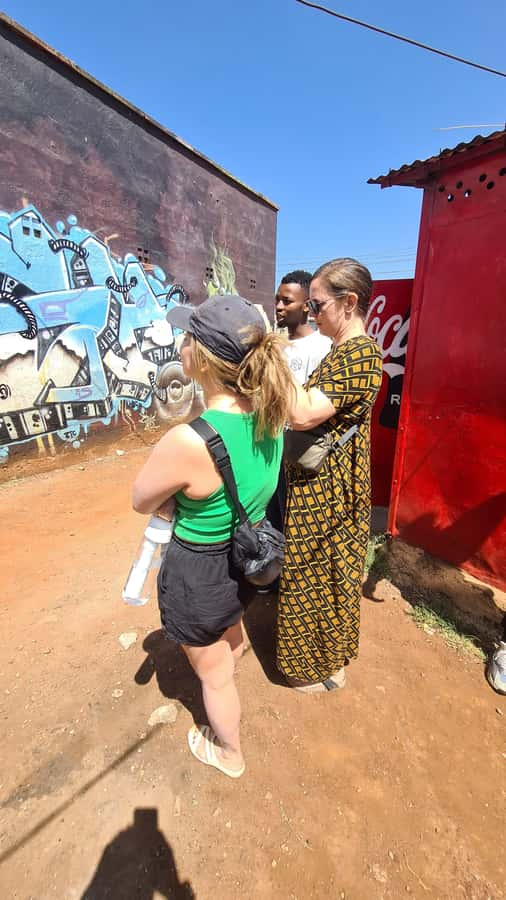
Kibera’s murals are more than bright paint on concrete. They carry messages about education, health, politics, hope, and daily life, and local artists such as Saviour, Tony, and Anthony help you read them in context. I like the small guide ratio, with one guide for every two guests, and the chance to meet artists in their studios rather than only seeing finished work on a wall.
I also like that your money and attention support the Sun Valley Art Collective, a group of artists raised in Kibera. The main consideration is that this is a real walking tour through a busy residential area, not a polished gallery visit. You need comfortable closed-toe shoes, a respectful attitude, and patience when the route gets crowded or uneven.
Key points to know before you go

- Meet local artists at work: Guides from Sun Valley Art Collective share their own stories and explain the meaning behind murals and paintings.
- See Kibera beyond stereotypes: The walk introduces community efforts in education, healthcare, sports, and creative programs alongside the difficult realities of settlement life.
- Sample local street food: Food stops are available on request, giving you a small taste of everyday life rather than a restaurant version of Nairobi.
- Visit more than painted walls: The route can include artist homes, studios, a metalworker’s work, a gallery, and the collective’s own premises.
- Buy art directly from creators: Paintings, recycled-metal objects, blown glass, and other local work may be available, with purchases separate from the tour price.
- Plan for a two-and-a-half-hour walk: The tour starts at Gateway Supermarket and finishes near HOF Gallery Kibera, close to transport options.
Why this Kibera walk feels different

Many tours show Kibera from the outside. This one asks you to walk through it with people who grew up there and now use art to explain their home. That shift matters. You are not simply looking at poverty, taking photographs, and leaving with a simplified story. You are hearing from artists who work, live, and organize within the community.
The focus is street art, but the conversation reaches well beyond paint. You can learn how local groups support education, healthcare, sports, and creative programs. The murals become an entry point into questions about identity, public space, politics, and the future.
I especially value the role of the guides. Saviour, Tony, and Anthony have been named as guides on this experience, and they are also practicing artists. That means you can ask about technique, inspiration, and the practical side of making art, as well as about Kibera itself. Their connection to the area gives the walk a personal point of view that a general city guide could not provide.
The tone is not a glossy presentation. You will pass people going about ordinary business, and the hosts will tell you when photography is suitable. That is a useful rule. Kibera is a home and workplace, not a stage built for visitors.
More guided Kibera walks:
- Nairobi: Explore Kibera Slum with Local Guides
★ 4.9 · 365 reviews - Kevins Kibera Slum Tours
★ 5.0 · 213 reviews - Nairobi: Kibera Slum storytelling tour with a Local
★ 5.0 · 185 reviews
Starting outside Gateway Supermarket
The meeting point is outside Gateway Supermarket on Kibera Station Road, near Jamhuri Estate. The location is described as safe, but parking is not available, so an Uber or taxi is the sensible choice.
Give yourself enough time to find the meeting point. The experience starts with a walk through the area, and arriving rushed can make the first few minutes awkward. Your guide can also provide the exact map location.
The small group format is one of the tour’s strongest practical features. One guide for every two guests allows you to ask direct questions without shouting across a crowd. It also makes conversations at studios and art spaces more natural.
From the start, listen for the difference between an artist explaining a place and a guide reciting facts about it. That is where much of the value lies. You are likely to learn how a mural came together, why a subject was chosen, and how art can give young people a way to speak publicly.
Reading Kibera’s murals on foot

The main walk lasts about two hours, with the full experience listed at 150 minutes. Along the route, you visit murals and urban artworks placed around Kibera. Some are collaborative pieces, and the artists explain their themes, sources of inspiration, and social or political meaning.
This is the part of the tour that rewards attention. A photograph may capture colors and faces, but it will not tell you why a wall was painted or what the artist hoped people would discuss. Ask about the people shown, the symbols used, and the audience the work is meant to reach.
You will also see daily life continuing around the art. That can be eye-opening, but it requires care. Follow the guidance on photography, do not photograph people casually, and avoid treating private homes or personal activity as attractions.
The walk may feel more demanding than a standard central Nairobi sightseeing tour. The information provided does not promise a smooth route, and the experience is not suitable for wheelchair users or people with mobility impairments. Wear sturdy closed-toe shoes and bring water. A hat is useful in strong sun.
Studios, artist homes, and community creativity

The route can include artist houses, studios, and other creative spaces. These stops make the art personal. Instead of seeing only a finished mural, you can hear about an artist’s long relationship with painting, metalwork, or other forms of making.
At the Sun Valley Art Collective premises, you may see paintings and objects made from recycled metal. The collective includes about 15 local artists who grew up in Kibera. Their work offers a practical example of how creative activity can become a platform for expression and a source of hope for young people.
The walk can also introduce you to artists outside the collective. One stop may feature a welder who turns recycled metal into animal figures. Another can include a gallery showing work by several artists, including blown glass made from recycled glass.
These visits add range to the tour. You are not seeing one artist’s style repeated from start to finish. You get a sense of a wider creative network, with different materials, skills, and working methods.
A purchase is optional, of course. If you buy something, you are buying directly from the maker or local art space rather than from a generic souvenir shop. Ask about the artist and the materials before choosing a piece. That makes the object more meaningful and helps you understand what your money supports.
A few more Nairobi trips worth comparing
- Nairobi National Park Half-Day Tour; Free Wi-Fi connection
★ 5.0 · 878 reviews - Nairobi: National Park & Optional Elephants & Giraffe Center
★ 4.8 · 874 reviews - NAI NAMI: Nairobi Storytelling Tour with Street Children
★ 5.0 · 792 reviews - Nairobi National Park Half-Day Game Drive
★ 4.5 · 738 reviews
Street food and ordinary routines
Street-food samples are included on request. This is a modest detail, but it can make the walk feel more connected to local routines. Your guide can point out favorite vendors and help you understand what you are trying.
Do not expect a full meal. Bring water and snacks of your own, especially if you have dietary restrictions or simply want more food than the samples provide. The supplied information does not specify which dishes are served, so ask the guide what is available on the day.
The food stop also comes with the same conduct rule as the rest of the route. You are passing through a working community. Buy respectfully, keep your surroundings clean, and do not litter. The tour specifically lists littering as not allowed.
I like that the food is part of the walk rather than the whole point of it. You are not being taken to a staged restaurant designed to represent Kibera. You are stopping at places the guides themselves enjoy.
What makes the social context worthwhile
Kibera is often reduced to a stereotype. This experience tries to correct that without pretending that difficult conditions do not exist. You see an informal settlement, but you also hear about people organizing schools, healthcare, sports groups, and creative programs.
That balance is important. A good visit should leave you with a fuller picture, not a sentimental one. The artists present their community as a place with serious challenges and real initiative.
The hosts’ own work gives the discussion weight. They are not speaking only about what other people should do. They are using art to build a public voice and to create opportunities for younger people. Their effort to improve community life is part of what your booking helps support.
Still, you should come prepared for some discomfort. The route may expose you to crowded paths, limited space, and the realities of life in an informal settlement. If you want a carefully controlled attraction with clear separation between you and local residents, choose a different Nairobi activity.
Is $45 good value for 150 minutes?

At $45 per person, this is not the cheapest way to spend two and a half hours in Nairobi. The value depends on what you want from a tour.
You are paying for a very small guide ratio, local artist leadership, access to studios and collectives, interpretation of murals, and a community-focused experience. Street-food samples are available on request, while artwork costs extra. If you plan to buy a painting or sculpture, set a separate budget.
For me, the strongest value is the access. A regular walk through Kibera would not give you the same introductions or context. The artists help you understand what you are seeing and connect the murals to wider community work.
The price is less compelling if you mainly want a quick photo stop or a broad overview of Nairobi. The tour moves at a local, conversational pace. You will spend time listening, asking questions, and walking between several small creative spaces.
With one guide for every two guests, the cost also buys personal attention. That matters if you want to ask about art, local life, or the practical work of running a creative collective.
Timing, transport, and what to bring

The tour lasts about 150 minutes, though the description also gives a two to three hour range. Allow room for the walk, conversations, food stops, and the possibility that a studio visit takes longer than expected.
You finish at HOF Gallery Kibera, near Olympic stage. From there, you can call an Uber or taxi, or take a matatu to your next stop. That end point is useful because you are not required to return to the starting location.
Bring:
- Comfortable, closed-toe shoes
- Water and personal snacks
- A hat
- A camera, used only when your guide says it is appropriate
The experience is offered in English and Swahili. If you have a special request, contact the provider ahead of time. The hosts describe themselves as flexible, but the route is not suitable for wheelchair users or people with mobility impairments.
Who should book this experience?

You should book if you want to meet local artists, understand public art in context, and see a side of Nairobi that is rarely covered by standard sightseeing routes. It is a good fit for people interested in social issues, photography, painting, recycled materials, community programs, or contemporary African art.
It also suits visitors who prefer a small group and direct conversation. The guides can spend time with your questions, and the route offers several chances to talk with artists rather than simply pass their work.
Families with older children may find the themes worthwhile, but the walk requires maturity and respect. The setting is a working residential area, and the experience is not designed as a light entertainment outing.
You may want to skip it if mobility is an issue, if you dislike walking on uncertain surfaces, or if you are uncomfortable following strict photography guidance. You should also think twice if you want only a gallery visit. This is a community walk first, an art tour second.
Should you book the Kibera street art tour?
I would book this tour if you want your visit to Nairobi to include real conversation and local creative work. The strongest elements are the personal guidance from artists such as Saviour, Tony, and Anthony, the small group size, and the chance to see murals alongside studios, recycled-metal work, galleries, and street food.
Book with the right expectations. You will walk through an active community, not a set piece. Dress simply, bring water, ask before taking photographs, and leave room in your budget for art if something speaks to you.
The $45 price is fair for the access and attention, especially with one guide for every two guests. It is a good choice for a thoughtful visitor who wants to look beyond simple stereotypes and support artists working in their own community.
FAQ
How long does the Kibera street art tour last?
The activity lasts 150 minutes, with the experience also described as taking between two and three hours.
Where does the tour meet?
Meet outside Gateway Supermarket on Kibera Station Road, near Jamhuri Estate. An exact map location can be provided.
Where does the tour finish?
The tour finishes at HOF Gallery Kibera, near Olympic stage. From there, you can call an Uber or taxi or take a matatu.
Who leads the tour?
Local artists from the Sun Valley Art Collective lead the tour. Guides named in the provided information include Saviour, Tony, and Anthony.
What languages are available?
The tour is available in English and Swahili.
Is street food included?
Street-food samples are available on request. The tour information does not specify the dishes served.
Can I buy artwork during the tour?
Yes. Artwork is available to purchase directly from local artists, but it is not included in the tour price.
Is the tour suitable for wheelchair users?
No. The experience is not suitable for wheelchair users or people with mobility impairments.
Just added around Nairobi
- Visit kibera Slum the chocolate city★ 4.8 · 3 reviews
- Day Tour to Nairobi national park, Elephants, and Giraffe Center★ 3.5 · 8 reviews
- Explore local Market matatu ride & Make Kenyan Cuisines with a home cook★ 5.0 · 8 reviews
- Kibera Slum Tour with a Local★ 5.0 · 15 reviews
- Urban Forest Tour in Nairobi★ 5.0 · 7 reviews
- Vegans special safari★ 4.5 · 4 reviews
- Private Mini Safari Tour in Nairobi★ 5.0 · 6 reviews
- Private Kenyan Cooking Class in Nairobi with a Local★ 5.0 · 3 reviews
Kibera Slum Tours, compared.



Nairobi: Kibera Slum Tour with Local Social Entrepreneurs
Read our review →



Browse the lists this tour appears in