

Reviewed · KIBERA SLUM TOURS
Afternoon Kibera Slum Tour
Kibera is not a sightseeing backdrop. It is a working community, and this afternoon walk puts you in the middle of its busiest hours. You’ll pass through Toi Market, meet community groups, and hear how residents build businesses and support vulnerable families.
I like two things right away: the local guides, including Lucas and Elijah, bring a personal touch, and the route gives real weight to education, recycling, women’s work, and child welfare. The main drawback is simple: this is a long walking tour through a crowded urban area, so you should be ready for several hours on your feet.
Key points to know before booking

- Afternoon timing: You see Kibera during its peak working hours, when markets and local enterprises are active.
- A walking-first experience: Plan for roughly four to six hours on foot, with no sightseeing vehicle carrying you between stops.
- A local meeting point: Your guide meets you at Greenhouse Mall along Ngong Road.
- Community-led stops: The route includes Kibera Pride Orphanage, Victorious Bone Craft, and Power Women Group.
- Private format: Only your own group takes part, which allows more room for questions and conversation.
- Strong guide feedback: Lucas and Elijah are specifically praised for professional, personal hosting and clear answers.
Why the afternoon timing matters in Kibera

Many city tours show a place at a convenient hour. This one chooses the more revealing option: afternoon, when Kibera is operating at full speed. The tour description presents Kibera as a place of peace, unity, and social enterprise, not simply as an area marked by hardship.
That timing gives the walk its point. You are not just being shown streets and buildings. You are seeing the market economy at work, meeting groups that create income or support local families, and hearing how people manage daily life in a dense settlement.
I like this approach because it avoids reducing Kibera to poverty tourism. The focus is on people and projects. You will still see difficult conditions, but the route also points to initiative, creativity, and community action.
There is an ethical question here, and you should think about it before booking. A slum tour can feel uncomfortable if it treats residents as scenery. This experience is strongest when you approach it with respect, listen more than you photograph, and remember that you are entering someone’s home and workplace.
More guided Kibera walks:
- Nairobi: Explore Kibera Slum with Local Guides
★ 4.9 · 365 reviews - Kevins Kibera Slum Tours
★ 5.0 · 213 reviews - Nairobi: Kibera Slum storytelling tour with a Local
★ 5.0 · 185 reviews
Meeting at Greenhouse Mall on Ngong Road
The arranged meeting point is Greenhouse Mall along Ngong Road. An accredited guide meets you there before leading the walking route into Kibera.
This is useful if you prefer a clear starting point rather than trying to find a guide inside an unfamiliar area. Pickup is offered, and the experience is near public transportation, but the exact pickup arrangements should be confirmed when you book.
The format is private, so only your group takes part. That matters here. A small private group can pause for questions without holding up a large crowd, and you can discuss sensitive subjects with more care. It also gives the guide a better chance to adjust the conversation to your interests.
Allow extra time around the meeting point. The advertised duration is approximately four to six hours, while the itinerary describes a four-hour visit. Either way, this is not a quick city stop. You should plan your afternoon around it.
Toi Market, the economic heart of the route
The first major stop is Toi Market, described as Nairobi’s second-largest open-air market. It serves as a backbone of Kibera’s economy, so this is more than a colorful place to walk through.
You can expect a busy market setting and a close look at how commerce supports daily life. The afternoon schedule is important here because the market is seen during active working hours rather than at a quiet time set only for sightseeing.
Your guide’s role makes a real difference. Lucas and Elijah are named as guides for this experience, and their job is to explain what you are seeing rather than leave you to guess. That context can help you understand the market as a source of income and connection, not merely as a photo opportunity.
A practical warning: market streets and the route through Kibera can be crowded. Keep your belongings secure, follow your guide’s instructions, and ask before taking photographs. The supplied information does not promise photography stops or specific shopping opportunities, so treat any purchases as incidental rather than the main purpose of the tour.
Kibera Pride Orphanage and the focus on children
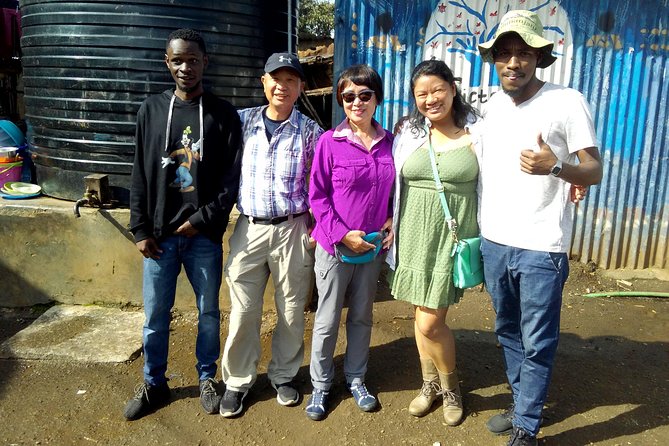
Kibera Pride Orphanage houses more than 25 vulnerable children from the area. Its place on the route shifts the discussion from markets and work to care, education, and the needs of young people.
This is one of the more serious stops. You may hear about the children’s circumstances and the role of local support. One Japanese-language account of the tour describes leaving with a renewed sense of the importance of education, which helps explain why this visit can stay with you after the walk ends.
The orphanage should be approached with sensitivity. You are not visiting a display. The children’s lives are not part of a performance for outsiders, and respectful behavior matters. Ask the guide how to conduct yourself, and do not assume that photographs, gifts, or direct contact are appropriate.
For me, this stop adds meaning to the rest of the route. It shows why community support matters and why education is often discussed alongside housing, work, and health. Still, it may feel emotionally heavy, so consider that before booking if you want a light afternoon outing.
A few more Nairobi trips worth comparing
- Nairobi National Park Half-Day Tour; Free Wi-Fi connection
★ 5.0 · 878 reviews - Nairobi: National Park & Optional Elephants & Giraffe Center
★ 4.8 · 874 reviews - NAI NAMI: Nairobi Storytelling Tour with Street Children
★ 5.0 · 792 reviews - Nairobi National Park Half-Day Game Drive
★ 4.5 · 738 reviews
Victorious Bone Craft and practical recycling
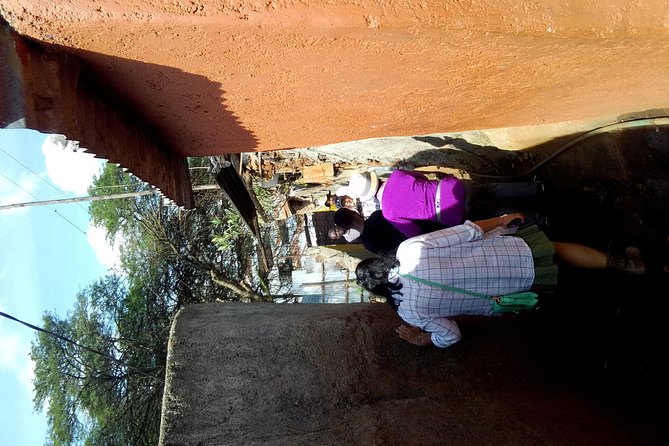
Victorious Bone Craft specializes in recycling domestic animal bones into jewelry. This is one of the most unusual details in the tour, and it gives you a concrete example of a local enterprise turning discarded material into useful products.
The stop connects craft, recycling, and income. Instead of hearing only broad claims about social enterprise, you see a particular group and a particular method. The work also offers a different view of creativity in Kibera, one based on available materials and practical opportunity.
You may have a chance to learn about the jewelry and the group’s work, but the supplied details do not promise a demonstration or require a purchase. Go with interest rather than an expectation of a formal workshop.
I especially like this stop because it gives the tour a hands-on subject without turning the whole experience into shopping. It also breaks up the heavier parts of the visit with a look at skill, design, and resourcefulness.
Power Women Group and personal stories

The Power Women Group is made up of women who are victims of HIV/AIDS. The route gives you a chance to hear their stories and learn how the group works.
This is another stop that calls for care. HIV/AIDS is a personal and sensitive subject, and the value of the visit depends on listening respectfully. The tour presents these women as active members of a support and enterprise group, not only through the illness they have faced.
The conversation may be one of the most meaningful parts of the afternoon, but it can also be difficult. If you prefer tours that keep social issues at a distance, this may not suit you. If you want to understand how local groups respond to health and economic challenges, it gives the walk more substance.
The information provided does not spell out every activity at the group’s shop, so you should not expect a fixed workshop or presentation. What is clear is that the stop centers on their stories and work.
What the guides add to the experience
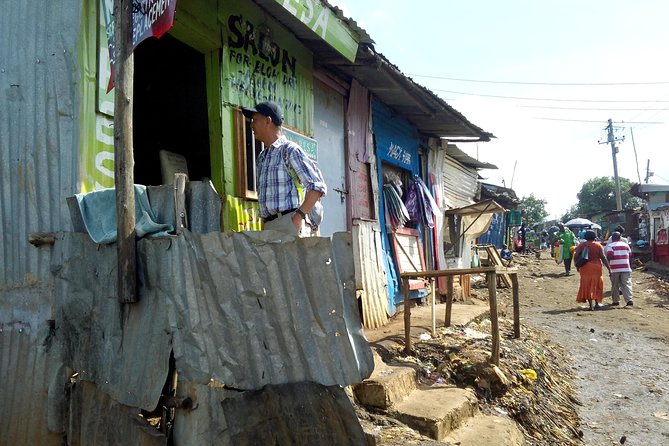
A good guide is essential on a tour like this. The route is not valuable simply because it passes through Kibera. It works when someone explains the people, places, and projects in a fair and understandable way.
Lucas receives repeated attention in the feedback, including praise for his personal hosting. Lucas and Elijah are also described as professional and ready to answer questions. That combination matters. You need someone who can explain difficult subjects without turning the walk into a lecture, while also helping you move through an unfamiliar place with confidence.
I would prepare a few questions before you go. You might ask how Toi Market supports local households, how the craft group operates, or what role education plays for children in Kibera. Specific questions usually create a better exchange than waiting for a standard speech.
The private format helps here. Your group can spend more time on subjects that interest you and less time on topics that do not. The tradeoff is that the quality of your experience depends heavily on the guide assigned that day, although Lucas and Elijah are identified by name in the available information.
The walking demands and who should book

This is a walking tour first. One account makes the point plainly: come prepared to walk a lot. The full duration is approximately four to six hours, so comfortable footwear is more important than dressing for a polished city excursion.
Most people can participate, according to the tour information, but that does not mean the route is effortless. The exact condition of every path is not provided, so you should be ready for a busy urban walk and ask the operator about any personal mobility concerns before booking.
The experience suits you best if you:
- Want a private, guide-led look at Kibera
- Prefer community projects and personal stories to standard city monuments
- Can walk for several hours
- Are comfortable discussing poverty, HIV/AIDS, orphan care, and education
- Want to support a locally guided experience centered on enterprises and community groups
It may not suit you if you want a short outing, a vehicle-based tour, or a carefully staged attraction with predictable facilities at every stop.
Is $60 a fair price?
The cost is $60 per person, with all fees and taxes included. Alcoholic drinks are not included, though that is hardly the reason to book this experience.
Value here is not about the number of attractions you can tick off. You are paying for a private guide, several hours of local interpretation, and access to a set of community-focused stops that would be difficult to understand on your own. The price makes more sense if you value time, context, and direct conversation.
It is less compelling if you measure value by comfort or volume. You will not be receiving a luxury vehicle, a meal, or a long list of major Nairobi landmarks. The experience earns its price through the guide and the depth of the walk.
A private tour also changes the calculation. Only your group participates, so you are not sharing the route with a large crowd. If you are two people or a small group, the per-person price may feel reasonable for a half-day of guided time. Larger groups should compare the total cost with other private options in Nairobi.
Booking, weather, and cancellation details
Confirmation is provided when you book. Free cancellation is available if you cancel at least 24 hours before the start time, based on local time. Cancel within 24 hours, or make changes during that period, and you will not receive a refund.
The experience requires good weather. If poor weather causes the operator to cancel, you will be offered another date or a full refund. Keep that in mind when arranging a tightly packed Nairobi schedule.
Pickup is offered, and the meeting point is Greenhouse Mall along Ngong Road. Since the tour is near public transportation, you have more than one way to reach the start, but confirm the exact pickup details in advance.
Should you book the Afternoon Kibera Slum Tour?
Book it if you want to meet Kibera through its people, local enterprises, and community groups rather than simply pass through for photographs. The combination of Toi Market, the orphanage, bone craft, and Power Women Group gives the afternoon a clear purpose.
I would especially recommend it to visitors who value social context and direct conversation. The guides, particularly Lucas and Elijah, appear to be a major part of the experience, and the private format gives you room to ask thoughtful questions.
Skip it if you dislike long walks, feel uncomfortable discussing difficult social issues, or want an easygoing sightseeing loop. For the right person, though, this is a serious and useful Nairobi experience, one that asks you to look closely and listen carefully.
FAQ
Where does the Afternoon Kibera Slum Tour begin?
The accredited guide meets you at Greenhouse Mall along Ngong Road. Pickup is also offered.
How long does the tour last?
The experience lasts approximately four to six hours. The itinerary describes a four-hour visit.
Is this a walking tour?
Yes. The experience is a walking tour through Kibera, including Toi Market and several community stops. You should be prepared to walk a lot.
Is the tour private?
Yes. Only your group participates in this private tour or activity.
What places are included?
The route includes Kibera, Toi Market, Kibera Pride Orphanage, Victorious Bone Craft, and Power Women Group and Shop.
Who are the guides?
The available information identifies Lucas and Elijah as guides for the experience. Lucas is also the provider contact associated with Visit Kibera Expeditions.
What happens if the weather is poor?
The experience requires good weather. If it is canceled because of poor weather, you will be offered a different date or a full refund.
Just added around Nairobi
- Visit kibera Slum the chocolate city★ 4.8 · 3 reviews
- Day Tour to Nairobi national park, Elephants, and Giraffe Center★ 3.5 · 8 reviews
- Explore local Market matatu ride & Make Kenyan Cuisines with a home cook★ 5.0 · 8 reviews
- Kibera Slum Tour with a Local★ 5.0 · 15 reviews
- Urban Forest Tour in Nairobi★ 5.0 · 7 reviews
- Vegans special safari★ 4.5 · 4 reviews
- Private Mini Safari Tour in Nairobi★ 5.0 · 6 reviews
- Private Kenyan Cooking Class in Nairobi with a Local★ 5.0 · 3 reviews
Kibera Slum Tours, compared.



Nairobi: Kibera Slum Tour with Local Social Entrepreneurs
Read our review →



Browse the lists this tour appears in