

Reviewed · KIBERA SLUM TOURS
Tembea Kibera
Kibera is not a sightseeing backdrop. It is a working neighborhood where people cook, trade, create, and organize their daily lives. This private half-day tour gives you a local guide’s view, with time for conversation, food, street art, and community projects rather than a quick drive past.
I like the personal scale and the chance to meet people in their homes and workplaces. I also like the practical touch of learning how to prepare a Kenyan dish, then tasting local food. The main consideration is that Kibera can feel confronting, and you need to approach the visit with respect, patience, and a willingness to listen.
Key points
- Local guide with a personal connection: Luca is identified as a guide from Kibera, giving the visit a direct local perspective.
- Private group format: Only you and your companions take part, which allows more room for questions and conversation.
- A real cultural exchange: The tour can include a visit to a typical Kibera home and conversation with the family living there.
- Food is part of the lesson: You learn how traditional Kenyan food is prepared and have a chance to eat local dishes.
- Community work takes center stage: The route can include organizations working to improve life in the settlement.
- Simple Nairobi logistics: Pickup and drop-off are offered along Ngong Road, with a total duration of about three to four hours.
Meeting Kibera on Its Own Terms

The most useful way to approach this tour is as a guided introduction to a community, not as a poverty spectacle. Kibera is often described in broad statistics, but the visit brings the subject down to ordinary details: how people earn a living, prepare meals, move around, support one another, and find practical answers to difficult conditions.
Your guide helps explain those details. Luca, who is described as being from Kibera, can offer a perspective that an outside observer cannot. That personal connection matters. It gives you a chance to ask about daily life directly and to hear about the neighborhood from someone who knows its streets and people.
You should still keep your expectations in check. This is not a polished attraction with fixed displays and tidy pathways. The surroundings may be intense for someone used to more orderly urban settings. The best experience comes when you listen carefully, avoid treating residents as photo subjects, and recognize that you are entering a lived-in neighborhood.
More guided Kibera walks:
- Nairobi: Explore Kibera Slum with Local Guides
★ 4.9 · 365 reviews - Kevins Kibera Slum Tours
★ 5.0 · 213 reviews - Nairobi: Kibera Slum storytelling tour with a Local
★ 5.0 · 185 reviews
A Three to Four Hour Private Walk
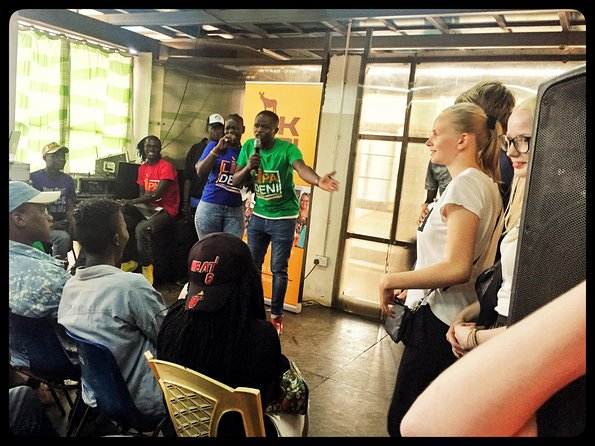
The tour lasts roughly three to four hours, long enough to move beyond a short introduction. You have time to walk, ask questions, meet people, and pause for food or conversation without being rushed from one stop to the next.
Because the tour is private, your group is the only group taking part. That is a real advantage here. A small party can keep a quieter tone, ask more personal questions, and adjust the pace when a conversation becomes especially useful. It also reduces the feeling of moving through the area in a large organized pack.
Pickup and drop-off are offered from any hotel or commercial address along Ngong Road. Confirm that your address falls within that area before booking. If you are staying elsewhere, the supplied information does not promise pickup there, so you should check the meeting arrangement in advance.
One account describes the journey to Kibera by matatu, Nairobi’s shared minibus transport. The guide explained the transport system and matatu culture along the way. If that arrangement is part of your planned visit, it adds a useful city lesson, though you should confirm the transport details before you go because the published information only clearly guarantees pickup and drop-off along Ngong Road.
Entering the Neighborhood With a Local Guide
The first portion is a walk through Kibera, with the guide explaining how residents live and work. The value is not in ticking off a list of sights. It is in learning how the neighborhood functions as a community and seeing the many ways people respond to limited resources.
You may meet people from different cultural backgrounds and hear about the variety within Kibera. That helps correct the common mistake of treating a large settlement as one uniform place. The area has many kinds of residents, occupations, family arrangements, and community groups.
The guide can also help you understand what you are seeing. A market stall, workshop, home, or public space may look simple at first glance, but conversation gives it meaning. You learn how residents use available materials, organize services, and build small businesses.
This is where the tour’s tone matters most. Ask before taking photographs, follow your guide’s advice, and do not assume that children or families want to be filmed. A respectful visit is not only more ethical, it is also more rewarding. People are more likely to speak openly when they are treated as neighbors for the day, not as scenery.
Meeting a Family in a Typical Kibera Home
A particularly personal part of the experience can be a visit to a typical Kibera home. You may speak with the family who lives there and learn about routines, customs, difficulties, and ways of managing daily life.
This kind of meeting can be more revealing than a general explanation. You hear how housing and family life work from the people directly involved. It also gives you a chance to ask thoughtful questions about subjects that are often reduced to statistics.
There is an important line to respect. You are entering someone’s home, so let the host set the tone. Listen more than you speak, avoid intrusive questions, and remember that hospitality does not make a private home public property. The experience works best as a conversation between people, not as a staged performance.
A few more Nairobi trips worth comparing
- Nairobi National Park Half-Day Tour; Free Wi-Fi connection
★ 5.0 · 878 reviews - Nairobi: National Park & Optional Elephants & Giraffe Center
★ 4.8 · 874 reviews - NAI NAMI: Nairobi Storytelling Tour with Street Children
★ 5.0 · 792 reviews - Nairobi National Park Half-Day Game Drive
★ 4.5 · 738 reviews
Preparing Kenyan Food and Trying Street Dishes

Food gives the tour a practical, friendly focus. You learn how to prepare traditional Kenyan food and have a chance to eat local dishes. This is not just a snack stop. It shows you what goes into an everyday meal and how cooking connects to family life and local habits.
The hands-on element is useful because it turns a general cultural lesson into something you can remember. You see the steps, ask about ingredients, and take part rather than simply watching. If you enjoy learning through food, this may be one of the most satisfying parts of the visit.
The exact dish and food stop are not specified, so do not book this expecting a named menu. Street food is also not the same as a restaurant meal. If you have allergies, dietary restrictions, or concerns about unfamiliar food, tell the guide before eating and ask what is included.
I would also bring a sensible attitude toward comfort. This is a neighborhood tour, not a cooking school with a formal kitchen. The appeal lies in the local setting and personal instruction, not in polished presentation.
Street Art and Community Projects

Street art is another part of the route. In a place often described only through hardship, public art offers a different view. It shows creativity, local expression, and the desire to shape how the neighborhood is seen.
You may also visit organizations that are working to improve conditions in Kibera. These projects can include community efforts aimed at education, support, or practical improvement, though the supplied information does not name each organization or list every service.
That uncertainty is worth keeping in mind. The tour is not a formal aid-project inspection, and you should not expect a detailed development report. Instead, the guide gives you a closer look at local efforts and the people trying to create better options within the community.
I like this part because it keeps the visit from becoming a one-note account of deprivation. You see problems, but you also see initiative. The community is presented as a place where people make things, organize, teach, feed families, and work toward change.
Why the Private Format Matters

At $40.90 per person, the tour is priced as a personal half-day experience rather than a basic sightseeing transfer. The value depends on what you want from Nairobi. If your goal is a quick photo stop, the price may feel high. If you want direct conversation, a local guide, food, and several hours in one neighborhood, it is easier to justify.
A private group gives you more control than a large bus tour. You can ask questions without holding up strangers, spend longer with a family or community project, and keep the pace comfortable. This matters in a setting where rushing can feel especially awkward.
The price does not appear to include a long list of separate attractions. You are paying for the guide’s time, local access, interpretation, and the structure that makes a complex visit easier to understand. That is the part you should evaluate.
The tour is often booked well ahead, with an average booking lead time of 71 days. If this visit is important to your Nairobi plans, reserve early rather than assuming you can arrange it at the last minute.
What the Experience Does Best

The strongest feature is the cultural exchange. You are not simply looking at Kibera from a vehicle or hearing a short speech from outside the community. You can speak with residents, enter a home, share food, and hear about daily life from someone with local ties.
The guide’s personal connection is also important. Luca is described as being from Kibera, and that gives the tour a human point of reference. A local guide can explain customs and situations that would otherwise be easy to misunderstand.
The transport lesson is a welcome bonus if included in your arrangement. Learning about matatus and their role in Nairobi gives you a better sense of the city beyond the tour itself. It turns the journey into part of the experience rather than dead time.
Finally, the tone can be unusually warm. The visit is not limited to hardship. Smiling children, family hospitality, street art, food, and community organizations all show a neighborhood with energy and social ties. That does not erase the difficult conditions, but it gives you a fuller picture.
What to Consider Before You Book

Kibera can be emotionally demanding. You may see poverty and living conditions that are far removed from your own. The experience is likely to challenge comfortable assumptions, which can be valuable, but it may not suit someone looking for a light or easy afternoon.
You should also be ready for an active walk. The information says most people can participate, but it does not provide a detailed accessibility description. If you have mobility concerns, ask the provider about surfaces, walking distance, and access to homes or community sites before booking.
The tour requires good weather. If poor weather forces cancellation, you are offered another date or a full refund. You can cancel for a full refund up to 24 hours before the start time, but cancellations or changes inside that window are not refunded or accepted.
Dress and behavior should be modest and considerate. The information does not prescribe a dress code, but you are visiting homes and a residential community. Comfortable clothing, practical shoes, and a respectful manner make sense.
Who Will Get the Most From It
I would choose this tour if you want to meet people and understand Nairobi through personal contact. It suits visitors who value conversation, food, local transport, and community stories more than a polished sightseeing route.
It is also a good fit for a private group of friends, couples, or family members who want to discuss what they are seeing as they go. The format gives you space to process the visit together and ask the guide follow-up questions.
You may want to skip it if you are uncomfortable entering a low-income neighborhood, do not want to eat unfamiliar food, or prefer formal museums and historic monuments. This experience asks for emotional maturity and courtesy. It is not a place to collect dramatic photographs.
Should You Book Tembea Kibera?
Book it if you want a direct, human introduction to Kibera and are prepared to treat the neighborhood with respect. The combination of a local guide, private group, home visit, food preparation, street art, and community projects offers more depth than a quick drive-by tour.
At $40.90, the value is strongest for people who want conversation and context. Confirm the Ngong Road pickup area, ask about the day’s food and transport arrangements, and be ready for a serious but welcoming experience. If you approach it as a chance to listen and learn, it can become one of the most meaningful parts of your time in Nairobi.
FAQ
How long does the Tembea Kibera tour last?
The tour lasts approximately three to four hours.
Where does the tour take place?
The experience takes place in Kibera, Nairobi, Kenya.
Is this a private tour?
Yes. Only your group participates in the activity.
Is pickup available?
Yes. Pickup and drop-off are offered from any hotel or commercial address along Ngong Road.
What can I do during the tour?
You can learn about daily life in Kibera, meet local residents, try Kenyan street food, see street art, visit community projects, and learn how to prepare traditional Kenyan food.
Will I meet a local guide?
Yes. The guide is identified as Luca in the supplied information, and he is described as being from Kibera.
Can I learn about Nairobi’s matatu transport?
A described tour arrangement includes traveling to Kibera by matatu, with an explanation of the transport system and matatu culture. Confirm whether this is included in your specific booking.
Can most people participate?
The activity information says most travelers can participate. Detailed accessibility information is not provided.
Is mobile ticketing available?
Yes. The experience offers a mobile ticket.
What is the cancellation policy?
You can cancel at least 24 hours before the start time for a full refund. Cancellations or changes made less than 24 hours before the start time are not accepted or refunded. If poor weather causes the tour to be canceled, you are offered another date or a full refund.
Just added around Nairobi
- Visit kibera Slum the chocolate city★ 4.8 · 3 reviews
- Day Tour to Nairobi national park, Elephants, and Giraffe Center★ 3.5 · 8 reviews
- Explore local Market matatu ride & Make Kenyan Cuisines with a home cook★ 5.0 · 8 reviews
- Kibera Slum Tour with a Local★ 5.0 · 15 reviews
- Urban Forest Tour in Nairobi★ 5.0 · 7 reviews
- Vegans special safari★ 4.5 · 4 reviews
- Private Mini Safari Tour in Nairobi★ 5.0 · 6 reviews
- Private Kenyan Cooking Class in Nairobi with a Local★ 5.0 · 3 reviews
Kibera Slum Tours, compared.



Nairobi: Kibera Slum Tour with Local Social Entrepreneurs
Read our review →



Browse the lists this tour appears in