

Reviewed · KIBERA SLUM TOURS
Kibera Slum Tour with Lucas
Kibera is not a sightseeing backdrop. It is a working neighborhood, and this private walking tour puts you in the company of people who live, work, teach, and raise families here. With Lucas as the named guide, you’ll follow narrow, often unmarked paths, visit Toi Market, step inside a local home, and learn why some residents call Kibera the City of Hope.
I like two things especially: the local access and the human scale. You are not looking down from a vehicle. You can meet community members, visit Hope and Shine Kibera Centre, and hear about the ideas residents use to support themselves. I also like the private format, since Lucas can adjust the pace and conversation to your group.
The main consideration is that this is a walking tour through uneven and sometimes muddy ground. The subject matter can be emotionally difficult, and you’ll need to approach homes, children, and photography with care. Also confirm your guide when booking, since some tour details name Lucas while several experiences were led by Elijah.
Key points to know before you go

- Toi Market adds everyday energy: This is a chance to see local buying and selling rather than only residential lanes.
- A local home visit gives context: You can see how daily life works beyond the street.
- Hope and Shine Kibera Centre links tourism with education: Donations may be invited, and tour proceeds support the school project.
- The tour is private: Only your group participates, which makes questions and pace easier to manage.
- Expect a slow three-hour walk: Reviews describe an easy but uneven route, with muddy or slippery tracks after rain.
- The $35 price is only part of the budget: Hotel pickup and drop-off may cost extra, with one account citing $25 for that service.
Entering Kibera with a local guide

Kibera is one of Nairobi’s largest informal settlements, a broad community made up of homes, workshops, market stalls, schools, churches, and service businesses. The tour is designed to show more than hardship. Its central idea is resilience: how residents earn money, organize projects, educate children, and make homes and businesses work with limited space and resources.
The meeting point is Greenhouse Mall in Kilimani. From there, the walk continues into Kibera and ends at Equity Bank Kibera. The stated duration is about three to four hours, though one account describes the walking portion as closer to two hours. Allow a half-day, since the exact timing can depend on the route, conversations, and stops.
Lucas is the guide named in the tour title, and his responses show a personal connection to the area. He has hosted visitors at his mother’s home and speaks about Kibera as his neighborhood, not as a place viewed from outside. Some supplied accounts name Elijah as the guide, so I would confirm who will lead your visit before setting out. The positive descriptions of both guides focus on a welcoming manner, local knowledge, and careful attention to safety.
The private setup matters here. You can ask why a market works a certain way, how a community project operates, or what you are seeing without being lost in a large group. If you have mobility concerns, tell the guide in advance. One 75-year-old participant was helped over uneven ground and walked at a manageable pace, but this is still not a smooth urban stroll.
More guided Kibera walks:
- Nairobi: Explore Kibera Slum with Local Guides
★ 4.9 · 365 reviews - Kevins Kibera Slum Tours
★ 5.0 · 213 reviews - Nairobi: Kibera Slum storytelling tour with a Local
★ 5.0 · 185 reviews
Toi Market and the working side of Kibera
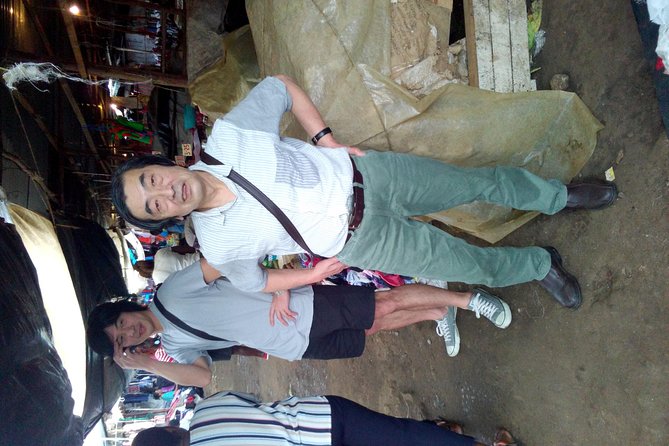
Toi Market is one of the clearest stops for seeing Kibera as an economic center. You may find clothing, household goods, food, and small services arranged along busy paths. The market shows the practical side of the community: people buying what they need, selling what they can, and building livelihoods close to home.
This is a good place to keep your camera away until you know what is appropriate. The tour permits pictures, but permission should come before photographing individuals, especially children. Your guide can help you understand when a picture is welcome and when it would feel intrusive.
The market may also include a stop at a local workshop or an opportunity to buy a small item. This is not presented as a hard-sell shopping trip. One account specifically notes that souvenir shopping was offered without pressure. Buying something directly from a local maker can be a better way to support the neighborhood than handing out money randomly, but you should spend only if you actually want the item.
You will likely meet children during the walk. One person suggested bringing bags of sweets, but I would ask Lucas first before distributing anything. Children are not part of the attraction, and handing out candy can create an awkward crowd. A respectful conversation with your guide about suitable ways to support the community is the better approach.
Inside a local home
The home visit is one of the tour’s most personal elements. You may enter a local residence and see how a family uses its space. The value is not in collecting a dramatic picture. It is in understanding the ordinary details of domestic life that are easy to miss when you only pass through a street.
This stop requires good manners. Ask before taking photographs, follow the guide’s instructions, and remember that you are entering someone’s home, not a museum. If you feel uncertain, keep your questions friendly and practical. Your host is offering access to private space, so gratitude and restraint matter more than getting a perfect image.
The home visit also helps balance the tour. Kibera is often presented only through statistics and poverty. A residence, a market stall, or a community classroom shows people making a life under difficult conditions. That does not erase hardship, but it keeps the story from becoming one-dimensional.
Hope and Shine Kibera Centre
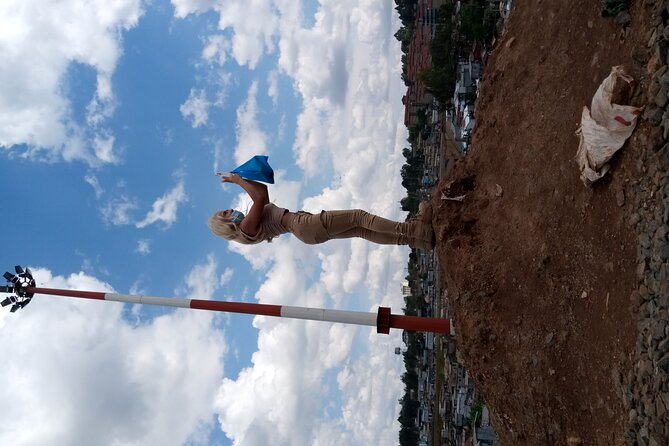
Hope and Shine Kibera Centre is a key stop because it connects the tour to a local education project. The center is presented as a school and community effort, and proceeds from the tour support the project. You may meet children, see the learning environment, and hear about the work involved in providing education.
A donation may be invited at the school. One account says visitors were asked to sign a guest book and make a donation, with the contribution recorded there. The donation is optional, but you should decide in advance how you want to handle charitable giving. Carrying some local currency can be useful if you choose to contribute, though the $35 tour price does not appear to include a donation.
The school stop can be moving, especially if children are present and eager to interact. Keep the focus on the center’s work rather than treating children as photo subjects. If you have a child with you, this may be a useful point for discussing education and community support in a respectful way.
The visit also gives the tour a practical purpose. You are not only hearing about local resilience. You are seeing one project that aims to create opportunities for children. Ask how the center operates and what kind of support is most useful. The guide can explain more than a donation box alone ever could.
A few more Nairobi trips worth comparing
- Nairobi National Park Half-Day Tour; Free Wi-Fi connection
★ 5.0 · 878 reviews - Nairobi: National Park & Optional Elephants & Giraffe Center
★ 4.8 · 874 reviews - NAI NAMI: Nairobi Storytelling Tour with Street Children
★ 5.0 · 792 reviews - Nairobi National Park Half-Day Game Drive
★ 4.5 · 738 reviews
What the walk feels like underfoot
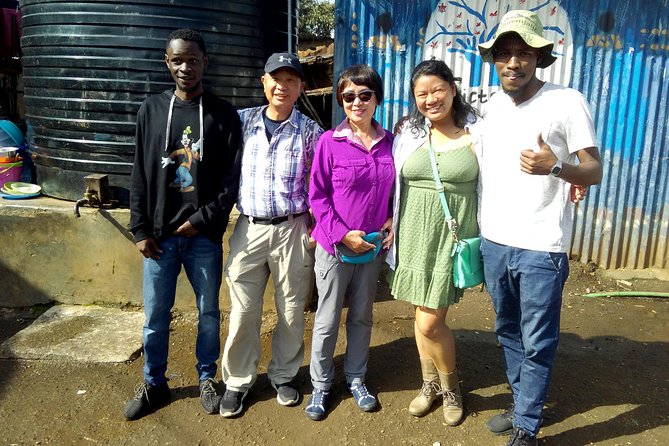
Bring sturdy walking shoes. The route includes narrow alleys, uneven ground, and tracks that can become muddy or slippery in wet weather. Hiking boots are sensible if rain is expected, while open sandals are a poor choice for this outing.
The pace is generally slow and manageable, but the ground can still demand attention. Watch your footing rather than trying to take pictures while walking. If someone in your group has limited mobility, the private format gives you a better chance to adjust the pace, though the route itself remains irregular.
The tour requires good weather. If poor weather causes cancellation, you can receive a different date or a full refund. For your own comfort, check the forecast and wear clothing that can handle dust or mud. You are visiting a lived-in neighborhood, not a polished attraction.
Safety is a major concern for many people considering Kibera. The strongest praise for this outing centers on the guides making groups feel safe and welcome. That does not mean you should stop using common sense. Keep valuables secure, follow the guide’s directions, and avoid wandering away from the group.
Price, transport, and overall value

At $35 per person, the tour offers a private half-day with a local guide, walking access, several community stops, and direct contact with local projects. I consider that a fair price if you want context and conversation rather than a quick drive past the settlement.
The value depends partly on what you expect. If you want polished facilities, a fixed museum route, or a standard sightseeing program, this may feel basic. If you want to understand daily life through markets, homes, schools, and personal stories, the price is more convincing.
The meeting points are Greenhouse Mall in Kilimani at the start and Equity Bank Kibera at the end. Hotel pickup is not clearly part of the $35 base price. One account describes a separately arranged pickup and drop-off costing $25, which was considered more expensive than an Uber. If you are watching your budget, ask for the transport price before agreeing and compare it with a local taxi or Uber.
The tour is often booked about 15 days ahead. That suggests you should reserve before arriving in Nairobi, especially if you need a particular date or guide. Confirmation is provided at booking, and cancellation is free up to 24 hours before the start time. Cancellations within 24 hours are not refunded.
Who will get the most from this tour
I would recommend it to you if you want a direct look at Nairobi’s social and economic realities and are willing to listen more than you photograph. It suits solo visitors, couples, families with older children, and anyone with only a short window in Nairobi. One person even used a half-day airport stop for the tour instead of staying at the airport.
It is also a good fit if you prefer a private outing. You can ask more questions, set a comfortable pace, and spend more time at the school or home if the schedule allows. The guides’ personal ties to the neighborhood add something that a distant guide could not easily provide.
I would be cautious if you dislike uneven walking, feel uncomfortable entering private homes, or want an activity with no emotional weight. Kibera is not presented as a simple sightseeing stop. You will see hardship, but you will also see initiative, humor, trade, education, and ordinary routines. That mixture can be valuable, but it deserves maturity.
For families, discuss the visit beforehand. Explain that people live here and should not be stared at or photographed without permission. Children may enjoy the school and community projects, but the experience should be framed around respect rather than pity.
Should you book the Kibera tour with Lucas?

Book it if you want a personal, locally led introduction to Kibera and you are prepared to walk carefully and behave respectfully. The best reasons to go are the private format, the home visit, Toi Market, and the connection with Hope and Shine Kibera Centre.
Before paying, confirm whether Lucas or Elijah will guide your group, whether hotel transport is extra, and how donations are handled at the school. Wear solid shoes, carry only what you need, and treat photography as a privilege rather than an entitlement.
If that approach suits you, this is one of the more meaningful ways to spend a half-day in Nairobi. It can challenge your assumptions while showing the creativity and determination of the people who call Kibera home.
FAQ
How long does the Kibera tour take?
The experience is scheduled for approximately three to four hours. The walking portion may be shorter depending on the route and stops.
Where does the tour start and end?
It starts at Greenhouse Mall in Kilimani and ends at Equity Bank Kibera.
Is this a private tour?
Yes. Only your group participates in the private activity.
Who guides the tour?
Lucas is the guide named in the tour title. Some supplied tour details also name Elijah as the guide, so confirm the guide’s name when booking.
Does the tour include hotel pickup?
The listed meeting point is Greenhouse Mall. Hotel pickup and drop-off may be arranged separately, and one account gives a price of $25 for that service.
Can I cancel for a refund?
You can cancel at least 24 hours before the start time for a full refund. Cancellations or changes within 24 hours are not refunded. If poor weather causes the operator to cancel, you can choose another date or receive a full refund.
Just added around Nairobi
- Visit kibera Slum the chocolate city★ 4.8 · 3 reviews
- Day Tour to Nairobi national park, Elephants, and Giraffe Center★ 3.5 · 8 reviews
- Explore local Market matatu ride & Make Kenyan Cuisines with a home cook★ 5.0 · 8 reviews
- Kibera Slum Tour with a Local★ 5.0 · 15 reviews
- Urban Forest Tour in Nairobi★ 5.0 · 7 reviews
- Vegans special safari★ 4.5 · 4 reviews
- Private Mini Safari Tour in Nairobi★ 5.0 · 6 reviews
- Private Kenyan Cooking Class in Nairobi with a Local★ 5.0 · 3 reviews
Kibera Slum Tours, compared.


Nairobi: Kibera Slum Tour with Local Social Entrepreneurs
Read our review →




Memorable Daily KIBERA Slums/Toi Market Tour with Locals (2 hours)
Read our review →Browse the lists this tour appears in